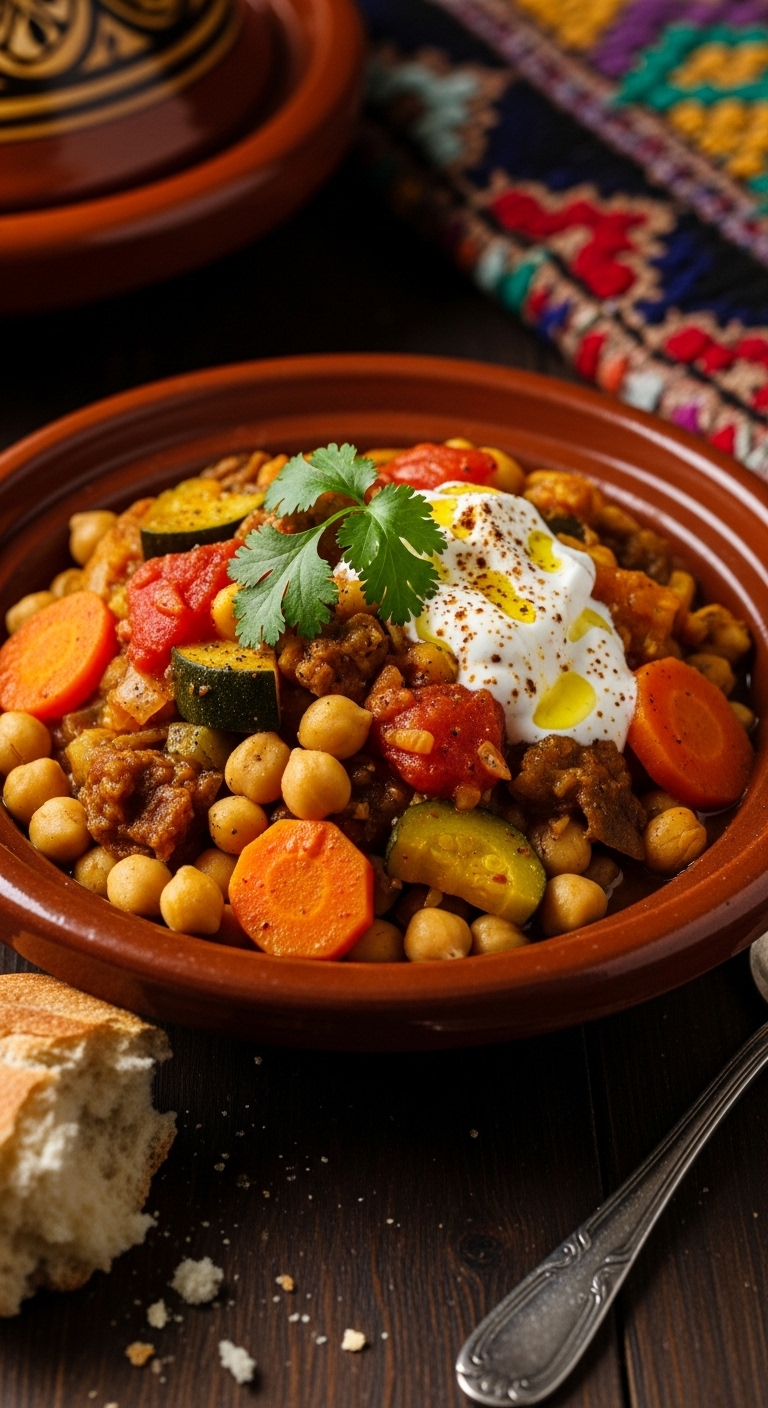
Moroccan Chickpea Stew: A Warm, Flavorful Hug in a Bowl
If you’re craving a meal that’s hearty, fragrant, and full of exotic spice, look no further than Moroccan Chickpea Stew. This North African-inspired dish combines warm spices, tender chickpeas, and colorful vegetables in a luscious tomato base. It’s cozy, healthy, and incredibly satisfying—perfect for chilly evenings or anytime you want a comforting meal without the heaviness of meat.
In this article, we’ll explore the heart of Moroccan cooking, show you how to make an authentic chickpea stew from scratch, share variations, health benefits, and serving ideas that make this dish an all-around favorite.
The Essence of Moroccan Cuisine
Moroccan food is a celebration of flavor, color, and aroma. It blends influences from Berber, Arab, and Mediterranean traditions, resulting in dishes layered with spices like cumin, paprika, cinnamon, and turmeric. Meals are often slow-cooked, creating rich, deep flavors that unfold gradually.
The Moroccan Chickpea Stew reflects this perfectly—it’s comforting, vibrant, and simple to prepare. Each spoonful carries hints of earthiness from chickpeas, sweetness from carrots, acidity from tomatoes, and warmth from spices, making it one of the most balanced plant-based meals you can make.
Key Ingredients for Moroccan Chickpea Stew
This dish is built on a base of humble pantry staples that, when combined, taste extraordinary. Here’s what you’ll need:
- Olive oil – for sautéing and adding richness
- Onion and garlic – essential aromatics that create the flavor foundation
- Carrots and bell peppers – add sweetness, texture, and color
- Tomatoes (fresh or canned) – for the stew’s tangy and hearty base
- Chickpeas (canned or cooked) – the star ingredient, adding protein and substance
- Vegetable broth – keeps the stew rich yet light
- Spices – cumin, paprika, turmeric, cinnamon, coriander, and cayenne (the heart of Moroccan flavor)
- Lemon juice – brightens everything with acidity
- Fresh herbs – cilantro or parsley for garnish
Optional add-ins: spinach or kale for extra greens, raisins or apricots for a subtle sweetness, or potatoes for added heartiness.
Step-by-Step Recipe
1. Sauté the Aromatics
In a large pot, heat 2 tablespoons of olive oil over medium heat. Add diced onion and cook until translucent. Add minced garlic and sauté for another minute until fragrant.
2. Add Vegetables and Spices
Add chopped carrots and bell peppers. Stir in the spices: 1 teaspoon cumin, 1 teaspoon smoked paprika, ½ teaspoon turmeric, ¼ teaspoon cinnamon, and a pinch of cayenne. Toast the spices for about 30 seconds to awaken their aromas.
3. Build the Base
Pour in 1 can of diced tomatoes (or 3–4 fresh chopped tomatoes) and stir to combine. Add 3 cups of vegetable broth and bring everything to a simmer.
4. Add Chickpeas
Add 2 cans of drained chickpeas (or about 3 cups of cooked ones). Stir well, then reduce the heat and let the stew simmer gently for 25–30 minutes, uncovered. This allows all the flavors to meld beautifully.
5. Finish with Freshness
Once the stew has thickened, stir in a squeeze of lemon juice and a handful of chopped cilantro or parsley. Taste and adjust the seasoning with salt, pepper, or a touch of extra spice if you prefer heat.
6. Serve Hot
Ladle the stew into bowls and drizzle with olive oil or top with a spoonful of Greek yogurt for creaminess. Serve with warm flatbread, couscous, or rice.
Why This Stew Works
What makes Moroccan Chickpea Stew so special is balance—the interplay of sweet, spicy, and savory notes. The cumin and paprika provide depth, the cinnamon adds a subtle warmth, and the lemon cuts through with brightness. Chickpeas bring texture and protein, making the dish both filling and nourishing.
The best part? It’s one-pot cooking at its finest—minimal cleanup, maximum flavor.
Variations to Try
- With Lentils: Add ½ cup of red or green lentils for a thicker, heartier stew.
- With Coconut Milk: Stir in ½ cup coconut milk at the end for a creamy, rich texture.
- With Dried Fruit: Add chopped apricots or raisins to introduce sweetness and a hint of Moroccan authenticity.
- With Greens: Stir in spinach or kale for added nutrients and a pop of color.
- Spicier Version: Double the cayenne or add harissa paste for North African heat.
Serving Suggestions
Moroccan Chickpea Stew is versatile and pairs well with several sides:
- Couscous or quinoa: The classic Moroccan pairing—light, fluffy grains that soak up the sauce.
- Crusty bread: Perfect for dipping and scooping every last drop.
- Rice: A comforting, neutral base for the rich stew.
- Yogurt or Labneh: The cool creaminess contrasts beautifully with the spice.
- Roasted vegetables: Serve alongside roasted eggplant, zucchini, or cauliflower for a wholesome meal.
Make-Ahead and Storage Tips
This stew is even better the next day—the flavors deepen overnight.
- To store: Keep in the refrigerator for up to 5 days.
- To freeze: Portion into airtight containers and freeze for up to 3 months.
- To reheat: Warm gently on the stovetop, adding a splash of broth or water to loosen the texture.
Meal prep tip: make a large batch and store individual servings for quick, ready-to-eat lunches throughout the week.
Health Benefits
Moroccan Chickpea Stew isn’t just delicious—it’s packed with nutrients that make it a smart choice for healthy eating.
- High in protein and fiber: Chickpeas keep you full longer and support digestive health.
- Rich in antioxidants: Tomatoes, garlic, and spices are powerful sources of anti-inflammatory compounds.
- Heart-healthy fats: Olive oil provides monounsaturated fats that promote cardiovascular wellness.
- Plant-based nutrition: It’s naturally vegan and gluten-free, making it suitable for all diets.
- Immune support: Ingredients like turmeric, garlic, and lemon boost immunity and overall vitality.
The Cultural Connection
In Moroccan homes, stews like this are often cooked in a tagine, a traditional clay pot with a conical lid that traps steam and infuses the dish with moisture and aroma. While you don’t need a tagine to make this recipe, its spirit lies in slow-cooked comfort and shared enjoyment—qualities that define Moroccan dining culture.
Meals are often enjoyed family-style, with everyone dipping bread into communal bowls. Cooking this stew at home captures that sense of warmth, hospitality, and togetherness that Moroccan cuisine embodies.
Pro Tips for Success
- Toast your spices: It’s the secret to unlocking their full potential.
- Don’t rush the simmer: Letting the stew cook low and slow builds deeper flavor.
- Add acidity at the end: Lemon juice or vinegar lifts the dish and balances richness.
- Garnish generously: Fresh herbs, olive oil, or chili flakes make a big difference.
Why You’ll Love This Recipe
This Moroccan Chickpea Stew ticks every box—it’s easy, healthy, budget-friendly, and bursting with flavor. Whether you’re vegetarian, vegan, or simply looking to eat more plant-based meals, this dish delivers complete satisfaction without compromise.
It’s perfect for meal prep, cozy dinners, or impressing guests with global flavors that feel both exotic and comforting. Each bite tells a story of spice markets, slow cooking, and the timeless beauty of simple ingredients made extraordinary.
Final Thoughts
A bowl of Moroccan Chickpea Stew is more than just food—it’s an experience. The warmth of the spices, the heartiness of the chickpeas, and the depth of flavor in every spoonful make it a dish that nourishes not only your body but also your soul.
Serve it with love, share it with family, and savor the comforting blend of tradition and taste that defines Moroccan cooking. Once you make it, it’ll become a regular part of your kitchen rotation—especially on nights when you need a flavorful, wholesome escape.