Keto Diet for Beginners: Your Complete Guide to Starting (and Succeeding) with Low-Carb Living
So you’ve heard about the keto diet. Maybe your coworker dropped 20 pounds, your doctor suggested it for better blood sugar control, or you’re just tired of feeling sluggish and want more energy. Whatever brought you here, welcome—you’re about to discover how cutting carbs and embracing healthy fats can completely transform the way you feel.
But let’s be real: starting keto can feel overwhelming. What can you eat? What’s a “macro”? Why does everyone keep talking about something called “ketosis”? And how do you survive without bread?
Take a deep breath. This guide breaks down everything you need to know in plain English, without the confusing jargon or unrealistic expectations. Whether you’re looking to lose weight, boost mental clarity, stabilize your energy, or just feel better in your own skin, you’ll find practical, actionable steps to start your keto journey with confidence.
What Is the Keto Diet? (The Simple Explanation)
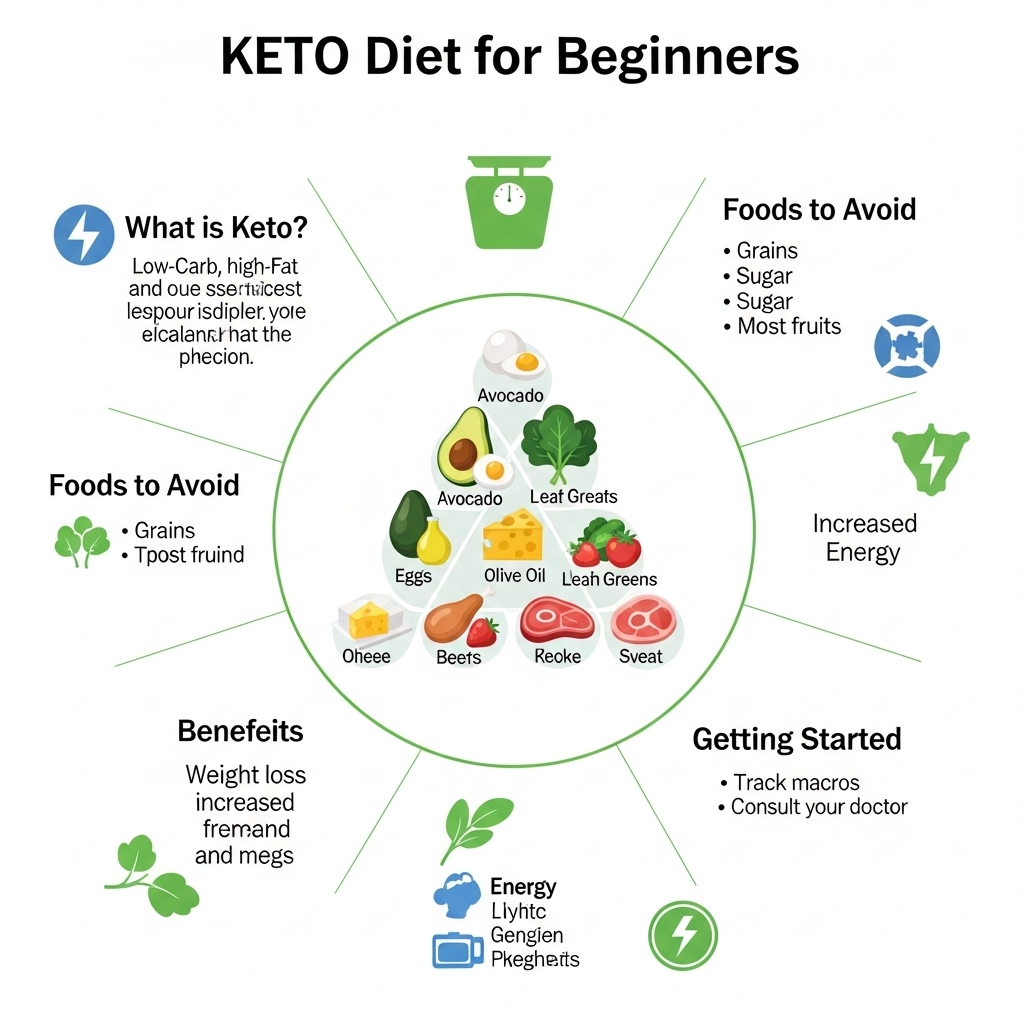
The ketogenic diet is a high-fat, moderate-protein, low-carb eating plan that shifts your body’s primary fuel source from glucose (sugar) to ketones (fat).
Here’s what that means in real life:
Standard Diet: Your body burns carbs (bread, pasta, sugar) for energy.
Keto Diet: Your body burns fat (both from food and stored body fat) for energy instead.
When you drastically reduce carbs (usually to 20-50g net carbs per day), your liver starts converting fat into molecules called ketones. Your body enters a metabolic state called ketosis, where it becomes incredibly efficient at burning fat for fuel.
The Typical Keto Breakdown:
- 70-75% of calories from fat (butter, oils, avocados, fatty meats, nuts)
- 20-25% of calories from protein (meat, fish, eggs, cheese)
- 5-10% of calories from carbs (mostly from vegetables)
Why Do People Choose Keto?
Weight Loss: When your body burns fat for fuel, you tap into stored body fat more efficiently. Many people lose weight quickly on keto, especially initially.
Steady Energy: No more blood sugar roller coaster. Ketones provide stable, long-lasting energy without the crashes.
Mental Clarity: Many keto followers report sharper focus and improved cognitive function—your brain loves ketones!
Appetite Control: Fat and protein keep you fuller longer, reducing cravings and constant hunger.
Blood Sugar Management: Keto can help stabilize blood sugar levels, making it popular for people with type 2 diabetes or prediabetes.
Other Benefits: Some people report better sleep, reduced inflammation, clearer skin, and improved cholesterol markers.
What Can You Eat on Keto?
Foods to Enjoy Freely:
Healthy Fats (Your New Best Friend):
- Butter and ghee
- Olive oil, avocado oil, coconut oil
- Heavy cream and cream cheese
- Avocados
- MCT oil (optional but popular)
Proteins:
- Beef, pork, lamb (fattier cuts are great!)
- Chicken thighs, wings, and skin-on breasts
- Bacon and sausage (check for added sugars)
- Salmon, sardines, mackerel, and other fatty fish
- Eggs (the ultimate keto food!)
- Full-fat cheese (cheddar, mozzarella, cream cheese, goat cheese, feta)
Low-Carb Vegetables:
- Leafy greens (spinach, kale, lettuce, arugula)
- Cruciferous veggies (broccoli, cauliflower, Brussels sprouts, cabbage)
- Zucchini and summer squash
- Bell peppers (in moderation)
- Asparagus, green beans, mushrooms
- Cucumber and celery
Nuts and Seeds (in moderation):
- Almonds, macadamia nuts, pecans, walnuts
- Chia seeds, flax seeds, hemp seeds
- Nut butters (almond, peanut—check labels for added sugar)
Beverages:
- Water (lots of it!)
- Coffee and tea (unsweetened or with heavy cream)
- Bone broth
- Sugar-free drinks (in moderation)
Foods to Avoid:
High-Carb Foods (These Will Kick You Out of Ketosis):
- Bread, pasta, rice, cereal, tortillas
- Potatoes, sweet potatoes, corn
- Beans and legumes (chickpeas, lentils, black beans)
- Most fruits (except small amounts of berries)
- Sugar (table sugar, honey, maple syrup, agave)
- Candy, cookies, cakes, ice cream
- Chips, crackers, pretzels
- Soda, juice, sweet tea, sports drinks
- Beer and sweet cocktails
Sneaky High-Carb Items:
- Ketchup and BBQ sauce (loaded with sugar)
- Milk (even skim—lactose is a sugar)
- Low-fat products (often packed with added sugars)
- “Healthy” granola and energy bars
- Breaded or fried foods with regular breading
Your First Week on Keto: What to Expect
Days 1-3: The Adjustment Period
What You Might Feel:
- Increased hunger as your body adjusts
- Fatigue or “brain fog”
- Possible headaches
- Strong carb cravings
Why It Happens: Your body is transitioning from burning glucose to burning fat. This is normal and temporary!
What Helps:
- Drink LOTS of water (aim for 8-10 glasses daily)
- Add extra salt to your food (you lose sodium when cutting carbs)
- Don’t restrict calories yet—eat when hungry
- Get adequate sleep
- Be patient with yourself
Days 4-7: The “Keto Flu” (And How to Beat It)
Some people experience flu-like symptoms as their body adapts. This is called the “keto flu,” and it’s NOT the actual flu—it’s your body adjusting.
Common Symptoms:
- Headache
- Fatigue and weakness
- Irritability
- Muscle cramps
- Nausea
- Dizziness
The Fix (This Is Important!):
Electrolytes are key! When you cut carbs, your body dumps water and electrolytes. Replenish them:
- Sodium: 3,000-5,000mg daily (salt your food generously, drink bone broth, or try pickle juice)
- Potassium: 1,000-3,500mg daily (avocados, spinach, salmon, mushrooms, or use a salt substitute like Morton’s Lite Salt)
- Magnesium: 300-400mg daily (almonds, spinach, dark chocolate, or take a supplement)
Most people who struggle with keto flu simply aren’t getting enough electrolytes. Fix this and you’ll feel dramatically better!
Week 2 and Beyond: Finding Your Groove
By week two, most people report:
- Significantly reduced cravings
- More stable energy throughout the day
- Better sleep
- Initial weight loss (expect 5-10 lbs in the first week, mostly water weight—that’s normal!)
- Clothes fitting better
You’re officially becoming fat-adapted! Your body is getting efficient at burning fat for fuel.
How to Plan Your Keto Meals (Simple Template)
Breakfast Ideas:
- Scrambled eggs with cheese and avocado
- Bacon and eggs with sautéed spinach
- Keto smoothie (coconut milk, protein powder, spinach, nut butter)
- Bulletproof coffee (coffee + butter + MCT oil) if you’re not hungry
- Egg muffins with vegetables and sausage
Lunch Ideas:
- Large salad with grilled chicken, olive oil, and avocado
- Lettuce wrap burgers with cheese and all the fixings
- Chicken Caesar salad (skip the croutons)
- Deli meat and cheese roll-ups with veggies
- Leftover dinner from the night before
Dinner Ideas:
- Grilled steak with roasted broccoli and butter
- Baked salmon with asparagus and hollandaise
- Chicken thighs with cauliflower mash and gravy
- Taco salad with ground beef, cheese, sour cream, and guacamole
- Zucchini noodles with meatballs and marinara
Snacks (When Needed):
- Hard-boiled eggs
- Cheese cubes or string cheese
- Handful of almonds or macadamia nuts
- Celery with cream cheese or almond butter
- Pork rinds with guacamole
- Full-fat Greek yogurt (plain, unsweetened)
Understanding Macros (Made Simple)
“Macros” are the three main nutrients: fat, protein, and carbohydrates. On keto, you track these to stay in ketosis.
Your Keto Macro Targets:
Net Carbs: 20-50g per day (most beginners aim for 20g for best results)
- Net carbs = Total carbs – Fiber
- Example: If broccoli has 6g total carbs and 2g fiber, it has 4g net carbs
Protein: 0.6-1g per pound of lean body mass
- Too little = muscle loss
- Too much = can interfere with ketosis (but this is rare)
- Aim for moderate: a palm-sized portion with each meal
Fat: The remainder of your calories
- Use fat to feel satisfied, not to hit a target
- You don’t need to “add fat” unnecessarily—your body will burn stored fat!
Do You Need to Count Macros?
Starting out: Keep it simple. Just focus on staying under 20g net carbs and eating protein + fat until satisfied.
For specific goals: Use a macro calculator or app like Carb Manager, MyFitnessPal, or Cronometer to track precisely.
Common Beginner Mistakes (And How to Avoid Them)
1. Not Eating Enough Fat
If you cut carbs but also avoid fat, you’ll be starving! Remember: fat is your fuel now. Don’t fear it.
2. Eating Too Much Protein
While it’s hard to overdo, eating excessive protein can be converted to glucose. Stick to moderate portions.
3. Forgetting About Electrolytes
This causes 90% of keto flu symptoms. Salt your food, drink broth, and consider supplements.
4. Eating “Low-Carb” Processed Foods
Just because something says “keto-friendly” doesn’t mean it’s good for you. Focus on whole foods first.
5. Quitting Too Soon
It takes 2-4 weeks to fully adapt. Push through the first week and it gets so much easier!
6. Not Drinking Enough Water
Aim for at least 8-10 glasses daily. Your body needs extra water on keto.
7. Comparing Your Progress to Others
Everyone’s body is different. Focus on how YOU feel, not just the scale.
Shopping List for Your First Keto Week
Print this and take it to the store:
Proteins:
- Eggs (2 dozen)
- Chicken thighs
- Ground beef (80/20)
- Bacon
- Salmon or other fatty fish
- Deli meat (turkey, ham)
Fats:
- Butter
- Olive oil
- Avocados (4-5)
- Heavy cream
- Cream cheese
- Shredded cheddar cheese
Vegetables:
- Spinach
- Broccoli
- Cauliflower
- Zucchini
- Bell peppers
- Mushrooms
- Romaine lettuce
Pantry/Extras:
- Almonds or macadamia nuts
- Salt, pepper, garlic powder
- Italian seasoning
- Sugar-free marinara sauce
- Coconut oil
- Coffee/tea
Tracking Your Progress (Beyond the Scale)
The scale isn’t everything! Track your success in multiple ways:
✅ Energy levels: Do you feel more alert and steady throughout the day?
✅ Cravings: Are sugar cravings decreasing?
✅ How clothes fit: Often a better indicator than the scale
✅ Measurements: Waist, hips, thighs—take before photos and measurements
✅ Mental clarity: Are you thinking more clearly?
✅ Sleep quality: Are you sleeping better?
✅ Blood work: If health-motivated, track markers like blood sugar, A1C, and lipids with your doctor
Tips for Dining Out on Keto
Restaurants are totally doable! Here’s how:
- Burgers: Order bunless or lettuce-wrapped
- Steakhouses: Perfect! Order steak with buttered vegetables
- Mexican: Fajitas (skip tortillas), taco salad (skip the shell)
- Italian: Meatballs, chicken parm (no breading), salad with oil and vinegar
- Chinese: Skip the rice, order stir-fries with extra veggies
- Breakfast spots: Eggs, bacon, sausage, avocado—easy!
Pro tip: Don’t be afraid to ask for substitutions. Most restaurants are happy to swap fries for a side salad or extra veggies.
Creative Variations to Keep Keto Interesting
For Vegetarians:
- Focus on eggs, cheese, tofu, tempeh, and low-carb vegetables
- Use avocados, nuts, and seeds for fats
- Consider a pescatarian approach (adding fish) for easier nutrition
For Dairy-Free:
- Use coconut cream, coconut oil, and ghee
- Replace cheese with nutritional yeast for flavor
- Choose coconut yogurt instead of Greek yogurt
For Budget-Conscious:
- Buy fattier cuts of meat (cheaper and better for keto!)
- Use eggs as your primary protein
- Buy frozen vegetables
- Shop sales and buy in bulk
- Make your own keto snacks
For Meal Preppers:
- Cook large batches on Sunday
- Prep breakfast egg muffins for the week
- Pre-cut vegetables and store in containers
- Make big-batch meals that freeze well
Frequently Asked Questions
Q: Will I be in ketosis right away? A: Most people enter ketosis within 2-4 days of staying under 20g net carbs. You’ll know you’re there when cravings diminish and energy stabilizes.
Q: Can I ever eat carbs again? A: Many people cycle carbs or transition to a more moderate low-carb approach after reaching their goals. Others stay strict keto long-term. It’s personal!
Q: Is keto safe? A: For most people, yes! However, if you have medical conditions (especially kidney disease, liver disease, or are pregnant), consult your doctor first.
Q: Will I lose muscle on keto? A: Not if you eat adequate protein and exercise! Many athletes thrive on keto.
Q: How much weight will I lose? A: This varies wildly. Expect 1-2 lbs per week after initial water weight loss. Some lose faster, some slower—both are normal.
Q: Do I need to buy expensive keto products? A: Absolutely not! Whole foods like meat, eggs, and vegetables are all you need. Save your money.
Q: What if I “cheat”? A: You’ll get kicked out of ketosis temporarily, but just get back on track with your next meal. Don’t spiral—one meal doesn’t ruin everything!
Q: Can I drink alcohol on keto? A: In moderation, yes. Stick to dry wine, spirits (no mixers with sugar), or light beer. But know that alcohol can slow fat burning.
Q: What about exercise? A: Exercise is great but not required for weight loss on keto. If you work out hard, you may need slightly more carbs (30-50g) or follow a targeted keto approach.
Q: How do I know if I’m in ketosis? A: Signs include decreased hunger, steady energy, mental clarity, and sometimes a fruity breath smell. You can test with urine strips, breath meters, or blood ketone monitors (most accurate), but it’s not necessary.
Your Action Plan: Starting Tomorrow
Tonight:
- Clean out your pantry—remove high-carb temptations
- Make your shopping list using the template above
- Plan your meals for the next 3 days
- Set a start date and commit
Tomorrow (Day 1):
- Go grocery shopping
- Prep some basics (hard-boil eggs, cook bacon, chop veggies)
- Eat your first keto meals—keep it simple!
- Drink lots of water and add extra salt
First Week:
- Focus only on staying under 20g net carbs
- Eat when hungry, stop when satisfied
- Prioritize electrolytes if you feel “off”
- Take photos and measurements
- Join a keto support group or find an accountability buddy
First Month:
- Experiment with new recipes
- Find your go-to meals
- Notice how you feel
- Adjust as needed
- Celebrate non-scale victories!
Final Thoughts: You’ve Got This!
Starting keto isn’t about perfection—it’s about progress. You don’t need fancy products, expensive supplements, or an all-or-nothing mentality. You just need real food, a little planning, and patience with yourself as your body adapts.
The first week might feel challenging, but by week two, you’ll likely wonder why you didn’t start sooner. The mental clarity, steady energy, and disappearing cravings are worth pushing through those first few days.
Remember: every keto success story you’ve ever heard started exactly where you are right now—at the beginning, maybe a little nervous, but ready to try something new.
So take that first step. Clear out the pantry tonight. Go shopping tomorrow. Cook that first keto meal. Your transformation starts now, and trust me—your future self will thank you for beginning today. 💪🥑✨