

If you love classic Eggs Benedict but want something a little more substantial, Crab Cake Benedict is a brunch-worthy upgrade. Instead of English muffins and Canadian bacon, this version layers golden crab cakes with gently poached eggs and a silky lemon hollandaise sauce. The result is rich and savory, with sweet crab, crisp edges, and a bright finish.
The most important trick is to keep the crab cake mixture light. Use enough binder to help the cakes hold together, but not so much that the crab disappears under breadcrumbs. Chilling the shaped cakes before cooking also makes them easier to turn. This recipe serves four and includes a practical order of preparation so the crab cakes, eggs, and sauce are ready close together.
What Is Crab Cake Benedict?
Crab Cake Benedict is a variation of Eggs Benedict in which a cooked crab cake replaces the traditional English muffin and Canadian bacon base. Each crab cake is topped with a poached egg and hollandaise sauce. It is especially popular as a seafood-inspired brunch dish and works well for a weekend breakfast, holiday brunch, or special occasion meal.
Why You’ll Love This Recipe
- Plenty of real crab flavor: The mixture uses a modest amount of binder so the crab remains the star.
- A crisp, golden base: Chilling the cakes before pan-frying helps them keep their shape and brown evenly.
- Classic brunch finish: Poached eggs and lemony hollandaise bring the dish together.
- Helpful make-ahead steps: You can shape and chill the crab cakes in advance, then cook them shortly before serving.
Ingredients You’ll Need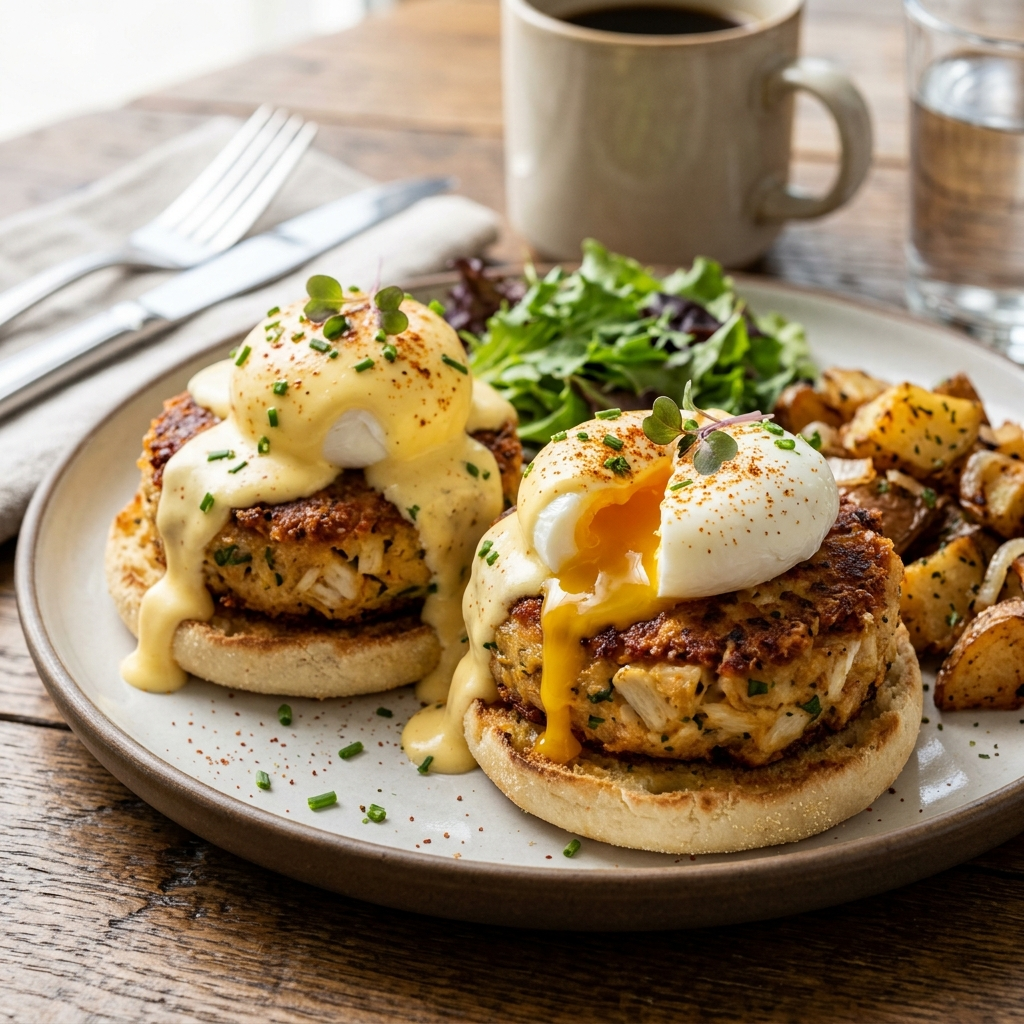
For the Crab Cakes
- 1 pound (about 450 g) lump crab meat, picked over carefully for shell fragments
- 1 large egg, lightly beaten
- 3 tablespoons mayonnaise
- 1 teaspoon Dijon mustard
- 1 teaspoon Worcestershire sauce
- 1 teaspoon seafood seasoning, such as Old Bay
- 1 tablespoon finely chopped fresh parsley
- 1 tablespoon fresh lemon juice
- ⅓ cup panko breadcrumbs, plus a little more only if needed
- 2 tablespoons neutral oil, for pan-frying
- 1 tablespoon unsalted butter, for pan-frying
For the Benedict
- 4 large eggs, for poaching
- 1 tablespoon white vinegar (optional)
- Salt and black pepper, to taste
- Chopped chives or parsley, for garnish
- Lemon wedges, for serving (optional)
For the Hollandaise Sauce
- 3 large egg yolks (use pasteurized yolks for a safer option when the sauce will not be thoroughly cooked)
- 1 tablespoon fresh lemon juice
- ½ cup (1 stick) unsalted butter, melted and warm
- 1 tablespoon warm water, plus more as needed
- A pinch of salt
- A pinch of cayenne or white pepper, optional
Choosing and Preparing the Crab Meat
Lump crab meat gives these cakes a satisfying texture, while backfin crab meat is another good option. Fresh or pasteurized refrigerated crab meat can work; check the package carefully to confirm whether it is already cooked and follow its storage instructions. Canned crab meat can also be used if it is suitable for crab cakes and has been drained well.
Before mixing, spread the crab meat on a plate and gently check for bits of shell or cartilage. If the meat looks wet, drain it and blot away excess moisture. Too much liquid can make the mixture loose and encourage the cakes to break during cooking.
How to Make Crab Cake Benedict
Step 1: Mix the Crab Cake Binder
In a medium bowl, whisk together the beaten egg, mayonnaise, Dijon mustard, Worcestershire sauce, seafood seasoning, parsley, and lemon juice. Stir in the panko breadcrumbs. Let the mixture stand for a minute so the crumbs begin to absorb some moisture.
Step 2: Fold in the Crab Meat
Add the crab meat and gently fold it into the binder with a spatula. Try to keep the larger lumps intact. The mixture should hold together when pressed lightly. If it is too wet to shape, add another tablespoon of panko at a time; avoid adding more than necessary.
Step 3: Shape and Chill the Cakes
Divide the mixture into four equal portions and shape each into a thick patty, pressing just enough to help it hold together. Place the cakes on a lined plate or tray, cover, and refrigerate for at least 30 minutes. Chilling firms the binder and makes the cakes easier to handle in the skillet.
Step 4: Make the Hollandaise
Add the egg yolks, lemon juice, warm water, and salt to a blender. Blend briefly. With the blender running on low, slowly drizzle in the warm melted butter until the sauce becomes smooth and creamy. If it is too thick, blend in a few drops of warm water. Taste and add a little more lemon juice, salt, or cayenne if needed.
Keep the sauce gently warm in a heatproof bowl set over warm—not boiling—water. Do not let the bowl touch the water, and do not overheat the sauce. If it thickens while standing, whisk in a few drops of warm water. Hollandaise is delicate, so it is best made close to serving time. Use pasteurized egg yolks if you want to reduce the risk associated with a sauce that is not thoroughly cooked.
Step 5: Pan-Fry the Crab Cakes
Heat the oil and butter in a large skillet over medium heat. When the butter has melted and the pan is hot, carefully add the chilled crab cakes, leaving space between them. Cook for about 4 to 5 minutes on the first side, until deeply golden and firm enough to turn. Use a thin, wide spatula to flip each cake carefully, then cook the second side for another 4 to 5 minutes.
Because crab meat sold for crab cakes may already be cooked, the goal is to heat the cakes through and develop a crisp crust without drying them out. If you are using raw crab meat, make sure the cakes are cooked thoroughly. Transfer cooked cakes to a plate lined with a paper towel while you poach the eggs.
Step 6: Poach the Eggs
Fill a saucepan with about 2 to 3 inches of water and bring it to a boil. Reduce the heat to a gentle simmer. Add the vinegar if using. Crack each egg into a small cup, then gently slide it into the water. Cook for about 3 to 4 minutes, or until the white is set and the yolk reaches your preferred doneness. Work in batches if the pan is crowded.
Lift each egg out with a slotted spoon and let excess water drain well. A gentle simmer helps the whites stay together; a rolling boil can break them apart. For people who need to avoid undercooked eggs, cook until both the white and yolk are firm or use pasteurized eggs and follow appropriate food-safety guidance.
Step 7: Assemble the Crab Cake Benedict
Place one warm crab cake on each plate. Set a poached egg on top of each cake, then spoon hollandaise over the egg. Finish with chopped chives or parsley, black pepper, and a squeeze of lemon if desired. Serve immediately while the crab cakes are crisp and the sauce is warm.
Tips for Crab Cakes That Don’t Fall Apart
- Remove excess moisture: Wet crab meat makes the mixture difficult to shape. Drain and blot it before mixing.
- Fold gently: Stirring aggressively breaks up the lump crab and can turn the cakes pasty.
- Use just enough binder: Add extra breadcrumbs only if the mixture truly will not hold together.
- Chill before cooking: Give the shaped cakes at least 30 minutes in the refrigerator.
- Wait before flipping: Let the first side form a golden crust before turning the cakes.
- Use a wide spatula: Support the full cake when lifting and turning it.
- Make the cakes evenly sized: Similar thickness helps them cook at the same rate.
How to Time Everything for Brunch
The easiest way to serve Crab Cake Benedict hot is to prepare the crab cakes first. Mix, shape, and chill them. Measure the hollandaise ingredients and set out the poaching pan and eggs. When you are ready to eat, pan-fry the crab cakes, make the hollandaise, and poach the eggs. If you are comfortable poaching eggs ahead, you can chill them promptly after cooking and briefly rewarm them in hot water just before serving, keeping them refrigerated in the meantime.
Do not leave cooked crab cakes, eggs, or hollandaise sitting at room temperature while waiting for the rest of the meal. Keep perishable ingredients chilled until needed and serve the finished dish promptly.
Easy Variations
1. Spicy Crab Cake Benedict
Add a few drops of hot sauce or a pinch of cayenne to the crab mixture. A little extra lemon in the hollandaise keeps the flavors balanced.
2. Chesapeake-Style Benedict
Use a Maryland-style seafood seasoning in the crab cakes and finish with chopped parsley and lemon. Keep the seasoning measured because many seafood blends already contain salt.
3. Crab Cake Florentine Benedict
Add a small layer of sautéed spinach between the crab cake and poached egg. Squeeze out excess liquid from the spinach before using it so the dish does not become watery.
4. Avocado Crab Cake Benedict
Add a few thin slices of ripe avocado on top of the crab cake before adding the egg. Use a little lemon juice to keep the flavor fresh.
5. Lighter Serving Option
Serve one crab cake with a poached egg and a smaller spoonful of hollandaise alongside fresh fruit or a lightly dressed green salad. The dish remains satisfying without needing extra bread.
What to Serve with Crab Cake Benedict
Fresh fruit, citrus segments, a simple green salad, roasted asparagus, or breakfast potatoes all pair well with the rich crab cakes and hollandaise. For a brunch table, offer lemon wedges and extra herbs on the side. Choose sides that can be prepared ahead so the main dish can be served as soon as it is assembled.
Can You Make Crab Cake Benedict Ahead?
Yes. The crab cakes can be mixed, shaped, covered, and refrigerated for several hours before cooking. Keep them cold and cook them close to serving time for the best crust. You can also measure the hollandaise ingredients in advance, but make the sauce near serving time because it is prone to separating if it cools too much or is reheated aggressively.
Cooked crab cakes should be refrigerated promptly in a covered container. Reheat them in a moderate oven or skillet until hot throughout; the exterior may not be quite as crisp as when freshly cooked. Poached eggs can also be prepared ahead, chilled promptly, and briefly reheated in hot water. Assemble only when the components are ready.
How to Store Leftovers Safely
Store leftover crab cakes in a covered container in the refrigerator and use them within 3 to 4 days. Keep cooked eggs and crab cakes separate from hollandaise when possible. Refrigerate perishable foods within 2 hours, or within 1 hour if the temperature is above 90°F (32°C). Reheat leftovers thoroughly. Hollandaise is best made fresh; if you have leftover sauce, refrigerate it promptly and handle it cautiously because it contains egg and butter and may not reheat smoothly.
Never leave seafood or other perishable foods at room temperature for more than 2 hours. When in doubt about how long food has been unrefrigerated or how it was stored, discard it.
Frequently Asked Questions
What kind of crab meat is best for Crab Cake Benedict?
Lump crab meat is an excellent choice because it gives the cakes a generous crab texture. Backfin crab meat is another option. Whichever type you use, check it carefully for shell fragments and drain excess liquid.
Why are my crab cakes falling apart?
The mixture may be too wet, have too little binder, or not have been chilled long enough. Drain the crab well, add breadcrumbs gradually only as needed, and refrigerate the shaped cakes for at least 30 minutes before cooking.
Can I bake the crab cakes instead of pan-frying?
Yes. Place the chilled cakes on a lightly greased baking sheet and bake in a preheated 400°F (200°C) oven until hot through and golden, turning carefully if needed. Exact time depends on cake thickness and whether the crab meat is already cooked, so check for a hot center and avoid overcooking.
Can I use canned crab meat?
Yes, provided it is suitable for crab cakes. Drain it thoroughly, check for shell fragments, and follow the package instructions for storage and use. The texture and flavor can vary by product.
Can I make hollandaise without a blender?
Yes. Whisk the egg yolks and lemon juice in a heatproof bowl over gently simmering water. Slowly drizzle in warm melted butter while whisking constantly. Keep the bowl from touching the water and avoid overheating the yolks.
Can I make this recipe without poached eggs?
You can serve the crab cakes with fried eggs or fully cooked eggs instead. The dish will be different from classic Benedict, but it will still pair nicely with hollandaise.
Crab Cake Benedict Recipe
Prep time: 40 minutes, including chilling
Cook time: 20 minutes
Total time: About 1 hour
Servings: 4
Ingredients
- 1 pound lump crab meat, picked over and drained
- 1 large egg, beaten
- 3 tablespoons mayonnaise
- 1 teaspoon Dijon mustard
- 1 teaspoon Worcestershire sauce
- 1 teaspoon seafood seasoning
- 1 tablespoon chopped parsley
- 1 tablespoon lemon juice
- ⅓ cup panko breadcrumbs, plus more only if needed
- 2 tablespoons neutral oil and 1 tablespoon butter, for frying
- 4 large eggs, for poaching
- 1 tablespoon white vinegar, optional
- 3 egg yolks
- ½ cup unsalted butter, melted and warm
- 1 tablespoon lemon juice
- 1 tablespoon warm water, plus more as needed
- Salt, pepper, chives, and cayenne, as desired
Instructions
- Whisk the beaten egg, mayonnaise, Dijon, Worcestershire, seafood seasoning, parsley, and lemon juice in a bowl. Stir in the panko.
- Gently fold in the crab meat. Shape into four thick cakes and refrigerate for at least 30 minutes.
- Blend the egg yolks, lemon juice, warm water, and salt. Slowly drizzle in the warm melted butter until smooth. Keep gently warm.
- Heat the oil and butter in a skillet over medium heat. Cook the crab cakes for about 4 to 5 minutes per side, until golden and hot throughout.
- Bring a saucepan of water to a boil, reduce to a gentle simmer, and add vinegar if desired. Slide in the eggs from individual cups and poach about 3 to 4 minutes, or until the whites are set.
- Drain the eggs well. Place one crab cake on each plate, top with a poached egg, and spoon hollandaise over the top.
- Garnish with chives, parsley, black pepper, or a little lemon. Serve immediately.
Food-safety note: Use pasteurized egg yolks for hollandaise that is not thoroughly cooked, and cook eggs fully for people at higher risk from foodborne illness. Refrigerate seafood promptly and do not leave perishable food out for more than 2 hours.
Final Thoughts
Crab Cake Benedict brings together two brunch favorites in one memorable plate. The secret to a good result is keeping the crab mixture gentle, chilling the cakes before frying, and making the hollandaise close to serving time. With a little preparation, you can serve a restaurant-style seafood brunch at home without making the process unnecessarily complicated.
Helpful Sources
- Visit Maryland: Faidley Seafood’s Maryland Crab Cakes — a regional reference for crab cake ingredients and gentle handling of lump crab meat.
- U.S. Food and Drug Administration: Selecting and Serving Fresh and Frozen Seafood Safely — seafood storage and serving guidance.
- CDC: Preventing Food Poisoning — safe refrigeration and time limits for perishable foods.
Leave a Reply