
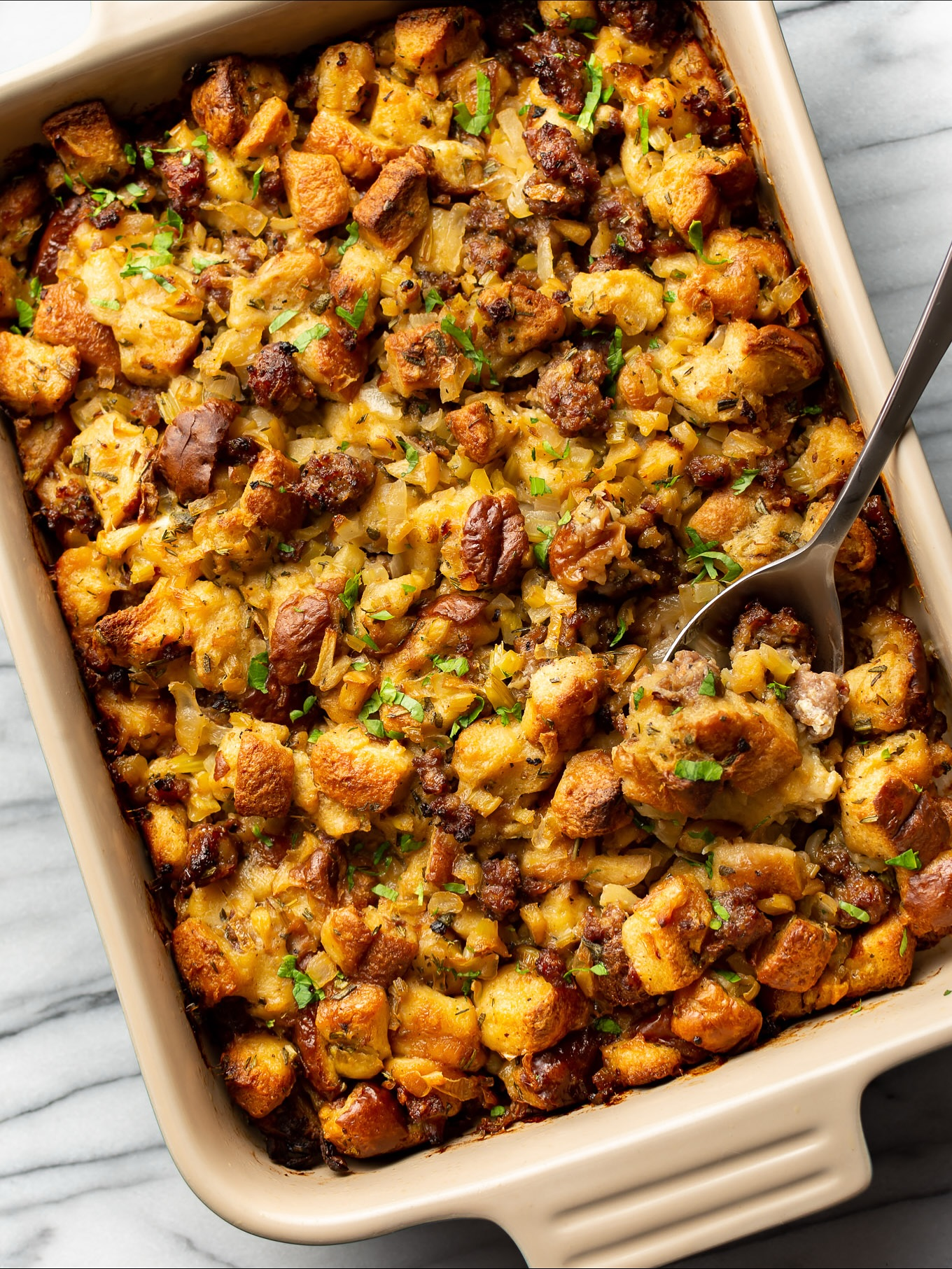
Sausage herb stuffing brings together the savory flavors that make a holiday meal feel complete: browned sausage, tender onion and celery, fragrant herbs, and cubes of bread that turn crisp on top while staying soft in the center. It is hearty enough for a Thanksgiving table but simple enough to serve with roast chicken or pork on a weekend.
This recipe is baked in a separate dish rather than inside the turkey. That makes it easier to control the texture and check that the stuffing reaches a safe temperature without overcooking the bird. The most important steps are drying the bread, browning the sausage, adding broth gradually, and baking covered before uncovering to crisp the top.
Stuffing or Dressing: What’s the Difference?
The terms are often used interchangeably. Traditionally, stuffing is cooked inside poultry, while dressing is baked separately in a casserole dish. This recipe uses the familiar name sausage herb stuffing but follows the separate-dish method for more even cooking and easier food-safety control.
Ingredients You’ll Need
- Day-old bread, 12 cups cubed: Use sturdy white bread, French bread, sourdough, or a mixture. Slightly stale bread absorbs broth without collapsing.
- Breakfast sausage, 1 pound: Mild or sage sausage works well. Remove casings if using links.
- Unsalted butter, 6 tablespoons: Adds richness and helps soften the vegetables.
- Yellow onion, 1 large: Diced small for an even texture.
- Celery, 3 ribs: Diced and cooked until tender.
- Garlic, 2 cloves: Minced.
- Fresh sage, 1 tablespoon chopped: Gives the stuffing its classic savory aroma.
- Fresh thyme, 2 teaspoons leaves: Adds earthy herbal flavor.
- Fresh parsley, ¼ cup chopped: Brightens the mixture.
- Low-sodium chicken broth, 2½ to 3 cups: Add gradually; the exact amount depends on the bread.
- Large eggs, 2: Lightly beaten and used to help bind the dressing.
- Black pepper, ½ teaspoon, and salt to taste: Season after tasting the sausage and broth.
How to Make Sausage Herb Stuffing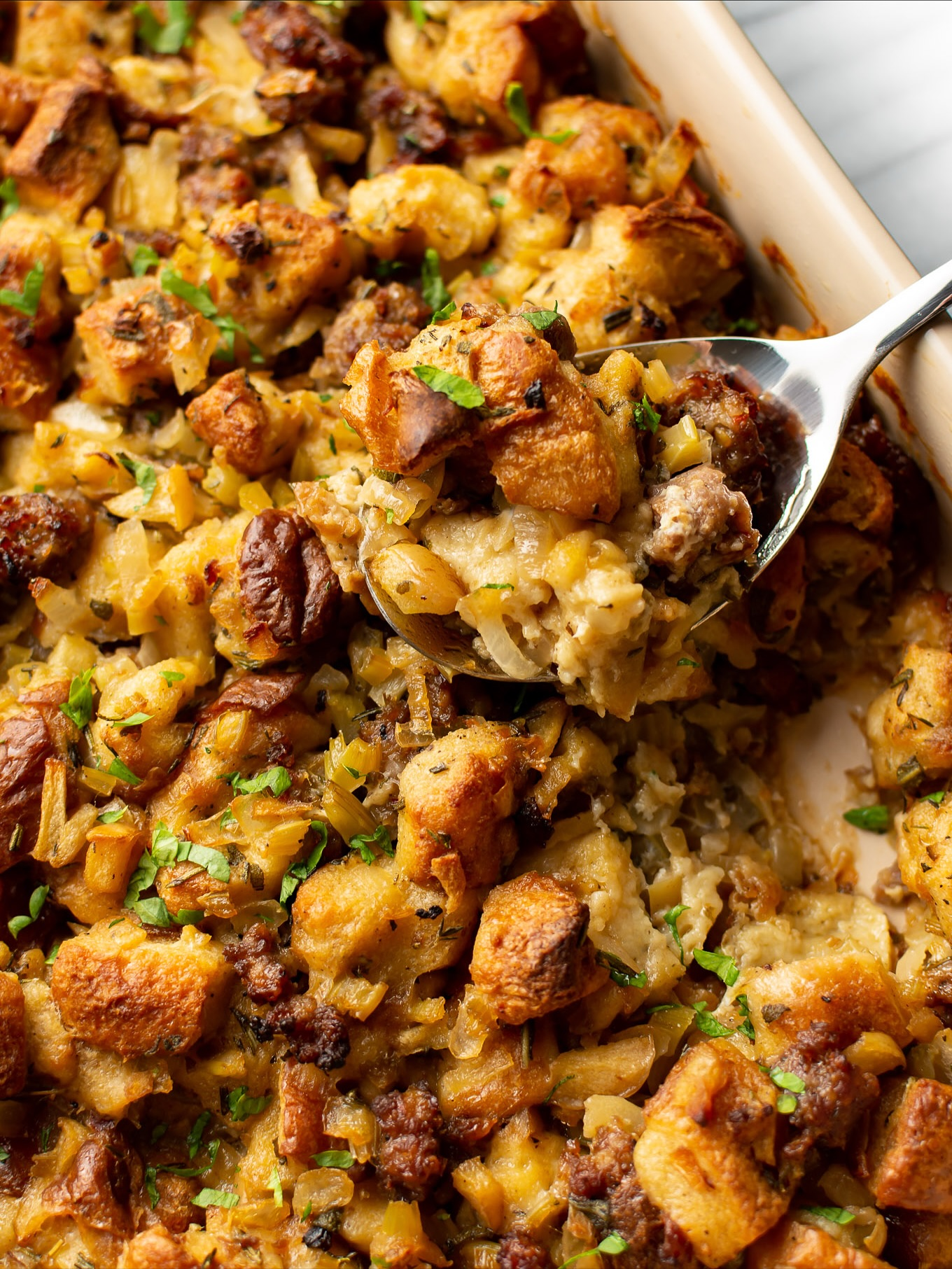
- Dry the bread. Cut bread into roughly ¾-inch cubes. Spread on baking sheets and leave uncovered overnight, or bake at 300°F (150°C) for 20 to 30 minutes, stirring once, until dry but not deeply browned. Cool completely. Dry bread absorbs broth more evenly than soft fresh bread.
- Preheat and prepare the dish. Heat the oven to 350°F (175°C). Butter a 9-by-13-inch baking dish.
- Brown the sausage. Place sausage in a large skillet over medium heat. Break it into small pieces and cook until browned and no longer pink, about 7 to 9 minutes. Transfer to a bowl with a slotted spoon, leaving a little fat in the pan. If the sausage releases a large amount of grease, drain off most of it.
- Cook the vegetables. Add butter to the skillet. Stir in onion and celery and cook for 6 to 8 minutes, until softened. Add garlic, sage, and thyme and cook for another 30 seconds. Remove from heat and stir in parsley.
- Combine bread and sausage. Place the dried bread cubes in a very large mixing bowl. Add the cooked sausage and vegetable mixture. Toss gently to distribute the ingredients.
- Add broth gradually. Whisk the eggs with 2½ cups broth. Pour over the bread mixture in stages, folding gently after each addition. The bread should be moist throughout but should not sit in a puddle of liquid. Add more broth only if dry spots remain.
- Season and transfer. Add black pepper and taste a small cooked piece of sausage mixture before adding salt. Spoon into the prepared baking dish without pressing it down tightly. A loose mixture bakes more evenly.
- Bake covered. Cover the dish with foil and bake for 25 minutes. This allows the center to heat and the bread to absorb the seasoned liquid.
- Uncover and brown. Remove the foil and bake another 20 to 25 minutes, until the top is golden and crisp and the center reaches 165°F (74°C) on an instant-read thermometer.
- Rest before serving. Let the stuffing stand for 5 to 10 minutes so it can settle before spooning.
Choosing the Right Bread
French bread and sturdy sandwich bread create a familiar, mild stuffing. Sourdough adds a pleasant tang and holds its shape well. Cornbread can be used for a Southern-style variation, but it is more delicate and may need less broth. If mixing bread types, dry each type thoroughly and add liquid slowly. The goal is a moist mixture with visible bread cubes, not a smooth paste.
How Much Broth Should You Add?
Different breads absorb different amounts of liquid. Begin with 2½ cups and fold gently. Wait a minute for the bread to absorb the broth before deciding whether it needs more. The cubes should feel damp when squeezed lightly, but they should not release liquid. If the mixture seems too dry, add broth a few tablespoons at a time. If it becomes too wet, fold in a little extra dried bread and allow it to absorb before baking.
Tips for Flavorful, Well-Textured Stuffing
- Dry the bread completely so it absorbs the broth without becoming gummy.
- Brown the sausage well; the browned bits add flavor to the vegetables.
- Soften the onion and celery before combining them with the bread.
- Add fresh herbs with the vegetables so their aroma spreads through the butter.
- Use low-sodium broth because sausage can already be salty.
- Do not pack the mixture tightly into the baking dish.
- Keep it covered for the first part of baking, then uncover to crisp the surface.
- Use a thermometer to check the center reaches 165°F (74°C), especially because the recipe contains eggs and cooked meat.
Variations
Apple sausage stuffing: Fold in one peeled, diced apple with the onion and celery. Mushroom herb stuffing: Add 8 ounces sliced mushrooms and cook until their moisture evaporates. Pecan stuffing: Stir in ½ cup toasted chopped pecans just before baking. Cranberry stuffing: Add ½ cup dried cranberries for a sweet-tart contrast. Spicy sausage: Use hot Italian sausage and reduce added salt. Vegetarian herb dressing: Omit sausage, add sautéed mushrooms, and use vegetable broth; increase the herbs and season to taste.
Make-Ahead Instructions
For easier holiday preparation, dry the bread up to 3 days ahead and store it in an airtight container once completely cool. You can also cook the sausage and vegetable mixture a day ahead and refrigerate it. For the best texture, combine the bread, broth, and eggs shortly before baking. If you assemble the full dish in advance, cover and refrigerate it for no more than 24 hours, then bake until the center reaches 165°F (74°C). A chilled casserole may need extra time; do not rely on the usual timing alone.
Storage and Reheating
Refrigerate leftovers within 2 hours in a shallow airtight container and use within 3 to 4 days. Reheat covered in a 325°F (165°C) oven until the center reaches 165°F (74°C). Add a tablespoon or two of broth before reheating if the bread seems dry. Individual portions can be reheated in the microwave, though the top will not stay crisp. Freeze cooled portions in airtight freezer-safe containers for up to 1 month for best quality. Thaw overnight in the refrigerator and reheat thoroughly.
What to Serve with Sausage Herb Stuffing
Serve it with roast turkey, roast chicken, baked ham, turkey breast, or pork tenderloin. It pairs especially well with green bean casserole, brown sugar glazed carrots, mashed potatoes, and cranberry sauce. Since the stuffing is savory and filling, a fresh salad or lightly dressed green vegetable helps balance the plate.
Frequently Asked Questions
Can I use fresh bread?
Yes, but dry it first. Fresh bread can absorb too much liquid unevenly and turn gummy. Cube it and let it sit uncovered overnight or dry it in a low oven.
Can I bake stuffing inside a turkey?
This recipe is designed for a casserole dish. If you choose to stuff poultry, fill the cavity loosely immediately before roasting and verify that the center of the stuffing reaches 165°F (74°C). The bird may need longer to cook, so a separate baking dish is generally easier to manage.
Why is my stuffing soggy?
Too much broth, insufficiently dried bread, or tightly packed bread can create a wet center. Add liquid gradually and bake uncovered long enough to dry and brown the top.
Can I make it without eggs?
Yes. Omit the eggs and use broth to moisten the bread. The stuffing will be a little looser but can still bake successfully.
Recipe Card
Sausage Herb Stuffing
Prep: 25 minutes (plus bread-drying time) | Cook: 50 minutes | Total: About 1 hour 15 minutes | Serves: 8 to 10
Ingredients
- 12 cups dried bread cubes
- 1 pound breakfast sausage
- 6 tablespoons unsalted butter
- 1 large yellow onion, diced
- 3 celery ribs, diced
- 2 garlic cloves, minced
- 1 tablespoon chopped fresh sage
- 2 teaspoons fresh thyme leaves
- ¼ cup chopped fresh parsley
- 2½ to 3 cups low-sodium chicken broth
- 2 large eggs, lightly beaten
- ½ teaspoon black pepper
- Salt to taste
Instructions
- Dry bread cubes overnight or bake at 300°F (150°C) for 20 to 30 minutes.
- Heat oven to 350°F (175°C). Butter a 9-by-13-inch dish.
- Brown sausage in a skillet; transfer to a bowl.
- Cook onion and celery in butter until soft. Add garlic, sage, and thyme; stir in parsley.
- Toss bread with sausage and vegetables.
- Whisk eggs with 2½ cups broth. Fold into bread; add more broth only as needed.
- Season, transfer loosely to dish, and cover with foil.
- Bake 25 minutes covered, then 20 to 25 minutes uncovered until golden and 165°F (74°C) in the center.
- Rest 5 to 10 minutes before serving.
Storage: Refrigerate 3 to 4 days. Reheat to 165°F (74°C).
Allergen note: Contains wheat and egg; sausage and broth ingredients vary by brand. Check labels for milk, soy, and other allergens.
Leave a Reply