



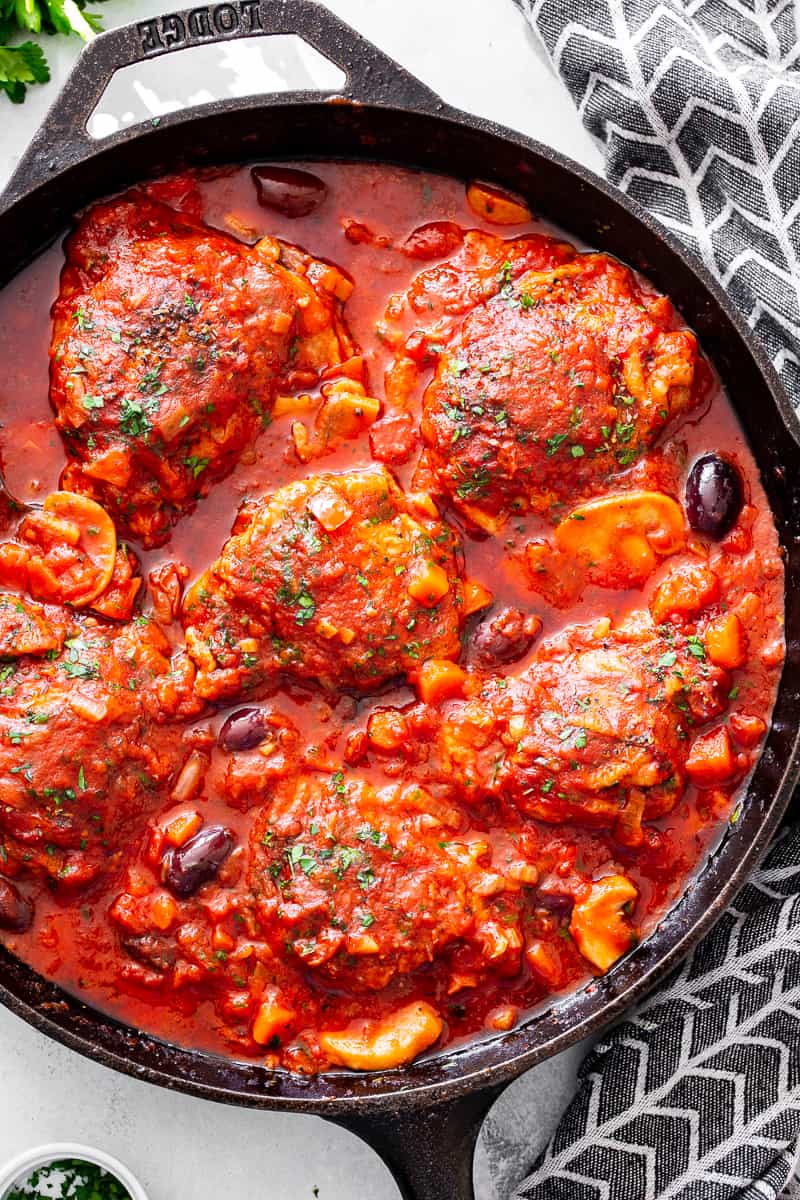
If there is one dish that perfectly captures the heart of rustic Italian cooking, it is Chicken Cacciatore. Rich, comforting, and deeply flavorful, this traditional “hunter-style” chicken dish is made with simple ingredients simmered slowly to create something truly special. It is the kind of recipe that fills your kitchen with irresistible aromas and brings everyone to the table without being called.
Chicken Cacciatore is not fancy or complicated. Instead, it relies on patience, good ingredients, and classic techniques—exactly the kind of cooking that has been passed down through generations. Whether you are making it for a quiet family dinner or serving it to guests, this dish always feels warm, generous, and satisfying.
What Is Chicken Cacciatore?
The word cacciatore means “hunter” in Italian. Traditionally, this dish was prepared by hunters using whatever ingredients were available—chicken or rabbit, tomatoes, onions, herbs, and sometimes wine. The result is a slow-simmered stew with tender meat and a bold, savory sauce.
Today, Chicken Cacciatore is most commonly made with chicken pieces braised in a tomato-based sauce with bell peppers, onions, garlic, herbs, and wine. Every region and household has its own version, but the soul of the dish remains the same: rustic, comforting, and full of flavor.
Why You’ll Love This Chicken Cacciatore Recipe
This version of Chicken Cacciatore is designed to be approachable while staying true to its roots.
- Made in one pan, minimizing cleanup
- Uses simple, everyday ingredients
- Packed with deep, slow-cooked flavor
- Perfect for make-ahead meals
- Tastes even better the next day
It is the kind of recipe that works just as well for a Sunday dinner as it does for meal prep during a busy week.
Key Ingredients That Make the Difference
Chicken
Bone-in, skin-on chicken thighs or drumsticks are ideal. They stay juicy during long simmering and add richness to the sauce. You can use boneless chicken if needed, but bone-in provides the best flavor.
Tomatoes
Crushed or diced tomatoes form the base of the sauce. They bring acidity and sweetness that balance the savory elements.
Bell Peppers and Onions
These vegetables add natural sweetness and texture, giving the sauce body and depth.
Garlic and Herbs
Garlic, oregano, basil, and thyme create that unmistakable Italian flavor profile. Fresh herbs add brightness, while dried herbs bring warmth.
Wine
Red or white wine is traditionally used to deglaze the pan, lifting all the flavorful browned bits. The alcohol cooks off, leaving behind richness and complexity.
Ingredients List
For the Chicken
- Chicken thighs or drumsticks
- Salt and black pepper
- Olive oil
For the Sauce
- Onion, sliced
- Bell peppers, sliced
- Garlic, minced
- Crushed or diced tomatoes
- Tomato paste (optional, for richness)
- Dry red or white wine
- Dried oregano and basil
- Fresh thyme or rosemary (optional)
- Bay leaf
- Salt and pepper, to taste
Optional Add-Ins
- Mushrooms
- Olives or capers
- Red pepper flakes for heat
How to Make Chicken Cacciatore
Step 1: Season and Brown the Chicken
Pat the chicken dry and season generously with salt and pepper. Heat olive oil in a large skillet or Dutch oven over medium-high heat. Brown the chicken skin-side down until golden, then flip and brown the other side. Remove and set aside.
This step builds flavor. Do not rush it.
Step 2: Sauté the Vegetables
In the same pan, add onions and bell peppers. Cook until softened, scraping up the browned bits from the bottom of the pan. Add garlic and cook briefly until fragrant.
Step 3: Deglaze with Wine
Pour in the wine and let it simmer for a few minutes. This reduces the liquid slightly and concentrates the flavor.
Step 4: Build the Sauce
Stir in the tomatoes, tomato paste (if using), herbs, bay leaf, salt, and pepper. Bring the sauce to a gentle simmer.
Step 5: Simmer Slowly
Nestle the chicken back into the sauce. Reduce heat, cover, and let it simmer gently for 35–45 minutes, until the chicken is tender and fully cooked.
Step 6: Finish and Adjust
Taste and adjust seasoning. Remove the bay leaf and garnish with fresh herbs if desired.
Why Slow Simmering Matters
Chicken Cacciatore is not a rush dish. Slow simmering allows:
- The chicken to become tender and juicy
- The sauce to thicken naturally
- The flavors to meld and deepen
This is why the dish often tastes even better the next day—time is an essential ingredient.
Make-Ahead and Storage Tips
Chicken Cacciatore is ideal for planning ahead.
- Refrigerate for up to 4 days in an airtight container
- Freeze for up to 3 months
- Reheat gently on the stovetop for best texture
If freezing, allow the dish to cool completely before storing.
Easy Variations
Rustic Mushroom Cacciatore
Add sliced mushrooms when sautéing the vegetables for an earthier flavor.
Spicy Cacciatore
Add red pepper flakes or chopped chili for heat.
White Chicken Cacciatore
Skip the tomatoes and use white wine, chicken broth, and herbs for a lighter version.
Slow Cooker Version
Brown the chicken first, then transfer everything to a slow cooker and cook on low for 6–7 hours.
What to Serve with Chicken Cacciatore
This dish pairs beautifully with:
- Creamy mashed potatoes
- Buttered pasta or polenta
- Crusty bread for soaking up sauce
- Steamed rice
- A simple green salad
The sauce is too good to waste—serve it with something that can soak up every drop.
Common Mistakes to Avoid
- Skipping the browning step
- Boiling instead of gently simmering
- Under-seasoning the sauce
- Using very lean chicken cuts
Taking a little extra care at each step makes a noticeable difference in the final dish.
Final Thoughts
Chicken Cacciatore is the definition of timeless comfort food. It is humble, hearty, and deeply satisfying—proof that simple ingredients, treated with care, can create extraordinary results. Whether you grew up eating it or are making it for the first time, this dish has a way of feeling familiar and special all at once.
Serve it hot, straight from the pan, with good bread and good company. This is not just dinner—it is a meal meant to be savored.