Eggs Benedict Recipe: The Ultimate Classic Brunch You Can Master at Home
If there’s one breakfast that instantly makes brunch feel luxurious, it’s Eggs Benedict. Perfectly poached eggs resting on toasted English muffins, layered with savory Canadian bacon and drenched in silky homemade hollandaise sauce — it’s rich, elegant, and surprisingly achievable once you understand the technique.
For many people, Eggs Benedict feels intimidating because it combines several components that all need to come together at the right moment. But the truth is that once you learn a few simple tricks for poaching eggs and emulsifying hollandaise sauce, this iconic brunch recipe becomes much easier than most restaurant menus make it seem.
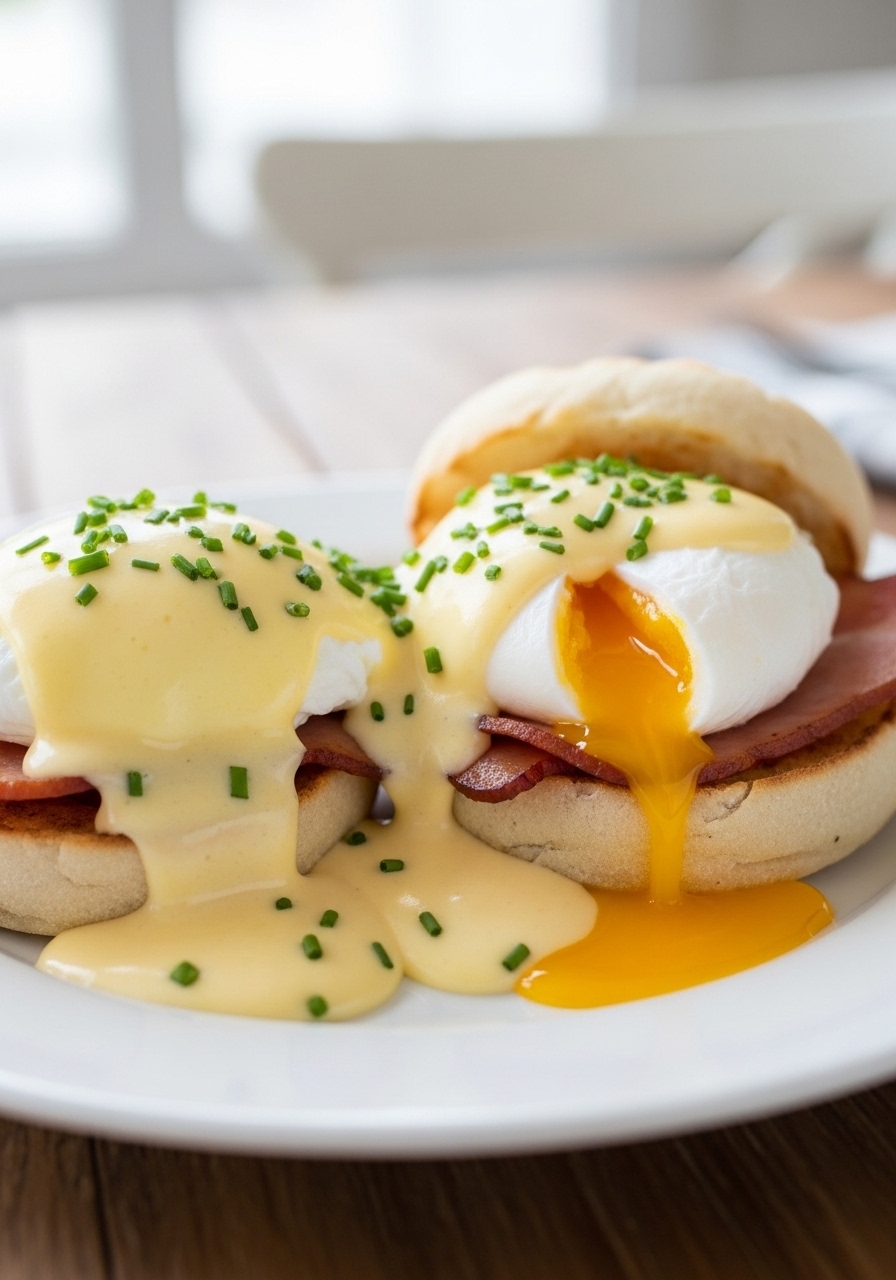
What makes Eggs Benedict so special is the balance of textures and flavors. The toasted muffin provides structure and crunch, the Canadian bacon adds salty savoriness, the poached egg creates creamy richness, and the hollandaise sauce ties everything together with buttery, lemony depth. When the yolk breaks and mixes with the sauce, you get one of the most satisfying bites in all of breakfast cooking.
“This is one of those recipes that feels incredibly fancy the first time you make it — and then suddenly becomes your signature brunch dish forever.”
10 minPrep Time
20 minCook Time
30 minTotal Time
4Servings
What Makes This Eggs Benedict Recipe So Good?
Plenty of Eggs Benedict recipes rely on shortcuts, packet sauces, or overly complicated restaurant techniques. This version focuses on methods that actually work well in a home kitchen while still delivering true brunch-quality flavor.
Here’s why this recipe stands out:
- Perfectly poached eggs: Fresh eggs and gentle simmering create tender whites with beautifully runny yolks.
- Foolproof hollandaise sauce: Warm melted butter slowly whisked into egg yolks creates a smooth, glossy sauce without breaking.
- Balanced richness: Fresh lemon juice cuts through the butter and keeps the dish from feeling too heavy.
- Proper layering: Toasted English muffins prevent sogginess while helping every bite stay structured and satisfying.
- Restaurant-style presentation: Folded smoked ham or Canadian bacon creates height and visual appeal instead of lying flat and lifeless.
Ingredients You’ll Need
Full Ingredients List
For the Eggs Benedict
- 2 English muffins, split
- 4 large fresh eggs
- 4 slices Canadian bacon or smoked ham
- 1 tbsp white vinegar
- Fresh chives or parsley, for garnish
- Fresh cracked black pepper
For the Hollandaise Sauce
- 3 large egg yolks
- 1 tbsp fresh lemon juice
- ½ cup (115g) unsalted butter, melted and warm
- Pinch of salt
- Pinch of cayenne pepper or paprika (optional)
Ingredient Notes
Fresh Eggs Matter More Than You Think
Fresh eggs hold their shape dramatically better during poaching. Older eggs spread into wispy strands because the whites become thinner over time. If possible, buy eggs specifically for this recipe within a few days of cooking.
English Muffins Are Traditional for a Reason
The nooks and crannies absorb the runny yolk and hollandaise beautifully while still maintaining structure. Brioche or sourdough can work, but English muffins deliver the classic texture.
Canadian Bacon vs. Ham
Canadian bacon is traditional because it’s lean, slightly smoky, and round enough to fit perfectly on the muffin. Thin deli ham works in a pinch, but thicker slices hold up much better.
Use Real Butter for Hollandaise
Hollandaise depends heavily on butter flavor, so this is not the place for margarine or substitutes. A good-quality unsalted butter makes the sauce noticeably richer and smoother.
Step-by-Step Instructions
Step 1: Prepare the Hollandaise Sauce First
Hollandaise sauce is best served warm and fresh, so start here. Fill a small saucepan with about an inch of water and bring it to a gentle simmer over medium-low heat. In a heatproof bowl, whisk together the egg yolks and lemon juice until slightly lighter in color.
Place the bowl over the simmering water without letting the bottom touch the water. Whisk constantly while very slowly drizzling in the warm melted butter. This gradual addition is critical — adding butter too quickly can cause the sauce to split instead of emulsify into a smooth texture.
Continue whisking for several minutes until the sauce becomes thick, glossy, and velvety. Season with salt and a pinch of cayenne or paprika if desired. Remove from heat and keep warm while preparing the remaining components.
If the sauce becomes too thick, whisk in a teaspoon of warm water to loosen it.
Step 2: Toast the English Muffins
Split the English muffins using a fork rather than a knife if possible — this creates more texture for catching the sauce and yolk. Toast until golden brown and crisp around the edges while still soft inside.
Set aside on serving plates. Toasting the muffins properly helps prevent sogginess once the eggs and hollandaise are added.
Step 3: Cook the Canadian Bacon
Heat a skillet over medium heat and cook the Canadian bacon for about 1–2 minutes per side until lightly browned and warmed through. You don’t want it crispy; the goal is gentle caramelization and warmth.
Place one slice onto each toasted muffin half.
Step 4: Prepare the Poaching Water
Fill a wide saucepan with about 3 inches of water and bring it to a gentle simmer. Add the vinegar — this helps the egg whites coagulate faster and hold together more neatly.
The water should never boil aggressively. Rapid boiling will break apart the eggs and create messy poaching results.
Crack each egg into a small ramekin or bowl first. This makes transferring them into the water much easier and safer.
Step 5: Poach the Eggs
Using a spoon, create a gentle swirl in the simmering water and carefully slide one egg into the center. The swirling motion helps wrap the egg white around itself.
Cook for about 3–4 minutes depending on how runny you want the yolk. The whites should be fully set while the yolk remains soft and liquid.
Remove carefully with a slotted spoon and place briefly onto a paper towel to absorb excess water. Repeat with the remaining eggs.
Step 6: Assemble the Eggs Benedict
Place each poached egg directly on top of the Canadian bacon. Spoon generous amounts of warm hollandaise sauce over each egg, allowing some to drip naturally over the sides.
Finish with chopped chives, black pepper, and a light dusting of paprika if desired.
Serve immediately while everything is warm and the yolks remain perfectly runny.
✦ ✦ ✦
Pro Tips for Perfect Eggs Benedict
Keep the Water at a Bare Simmer
Violently boiling water will destroy delicate poached eggs. Tiny bubbles and gentle movement are ideal.
Use Warm Plates
Eggs Benedict cools quickly. Warm plates help maintain temperature while serving.
Don’t Rush the Hollandaise
Slow butter incorporation is the key to smooth sauce. Patience matters here.
Dry the Eggs Briefly Before Plating
Too much water dilutes the hollandaise and creates puddling on the plate.
Make Hollandaise Last
You can hold hollandaise warm for about 20–30 minutes by placing the bowl over barely warm water and whisking occasionally.
Variations & Customizations
Smoked Salmon Benedict
Replace Canadian bacon with smoked salmon for a richer, more elegant brunch variation. Add capers and dill for extra flavor.
Avocado Eggs Benedict
Layer sliced avocado beneath the poached egg for creamy texture and freshness.
Florentine Benedict
Swap the meat for sautéed spinach. This vegetarian version is lighter but still incredibly satisfying.
Crab Cake Benedict
Use crispy crab cakes instead of English muffins for a seafood-inspired brunch centerpiece.
Southern Benedict
Replace English muffins with buttermilk biscuits and use sausage patties instead of Canadian bacon.
Common Eggs Benedict Mistakes
Overheating Hollandaise
Too much heat scrambles the yolks. Gentle heat is essential.
Using Old Eggs
Older eggs spread too much during poaching.
Boiling Instead of Simmering
Rapid boiling destroys poached egg structure.
Under-Toasting the Muffins
Soft muffins become soggy almost immediately.
Letting Components Sit Too Long
Eggs Benedict is all about timing. Serve as soon as assembled.
Storage and Make-Ahead Guide
Eggs Benedict is best enjoyed immediately, but certain components can be prepared ahead.
- Hollandaise sauce: Up to 1 hour warm
- Canadian bacon: Cook ahead and reheat gently
- English muffins: Toast just before serving
- Poached eggs: Can be poached ahead and reheated in warm water for 30 seconds
Estimated Nutrition Information
Per serving (1 Eggs Benedict half)
| Nutrient | Amount |
|---|---|
| Calories | 410 kcal |
| Protein | 18g |
| Carbohydrates | 22g |
| Fat | 28g |
| Saturated Fat | 15g |
| Sodium | 620mg |
Nutritional values are estimates and vary depending on ingredients used.
Frequently Asked Questions
Can I Make Hollandaise in a Blender?
Yes. A blender hollandaise works well and is faster, though whisked versions usually have slightly better texture.
Why Did My Hollandaise Split?
Usually because the butter was added too quickly or the sauce overheated. Whisking in a spoonful of warm water can sometimes rescue it.
Can I Poach Eggs Ahead of Time?
Absolutely. Store poached eggs in cold water in the refrigerator, then reheat briefly in warm water before serving.
What’s the Best Bread Substitute for English Muffins?
Brioche, sourdough, croissants, or biscuits all work beautifully.
How Do Restaurants Keep Hollandaise Warm?
Most restaurants hold hollandaise in warm water baths at low temperature while whisking occasionally.
✦ ✦ ✦
Why This Recipe Works Every Time
Eggs Benedict succeeds because every component is designed to complement the others. The hollandaise sauce provides richness, the lemon juice balances the butter, the poached egg adds creaminess, and the toasted muffin keeps everything grounded with texture and structure.
The recipe also relies on timing rather than complexity. Once you learn how to organize the steps — sauce first, then muffins, meat, eggs, and assembly — the process becomes smooth and surprisingly stress-free.
Most importantly, this recipe avoids the common mistakes that ruin homemade Eggs Benedict: overheated hollandaise, overcooked eggs, soggy muffins, and poorly balanced seasoning.
The result is a classic brunch dish that genuinely tastes restaurant-quality while still being approachable enough for a weekend breakfast at home.
“These are the kinds of breakfasts people remember. Once you serve homemade Eggs Benedict successfully, everyone assumes you suddenly became a professional chef overnight.”