Sourdough Pizza Dough: The Game-Changing Recipe That’ll Ruin Delivery Pizza Forever
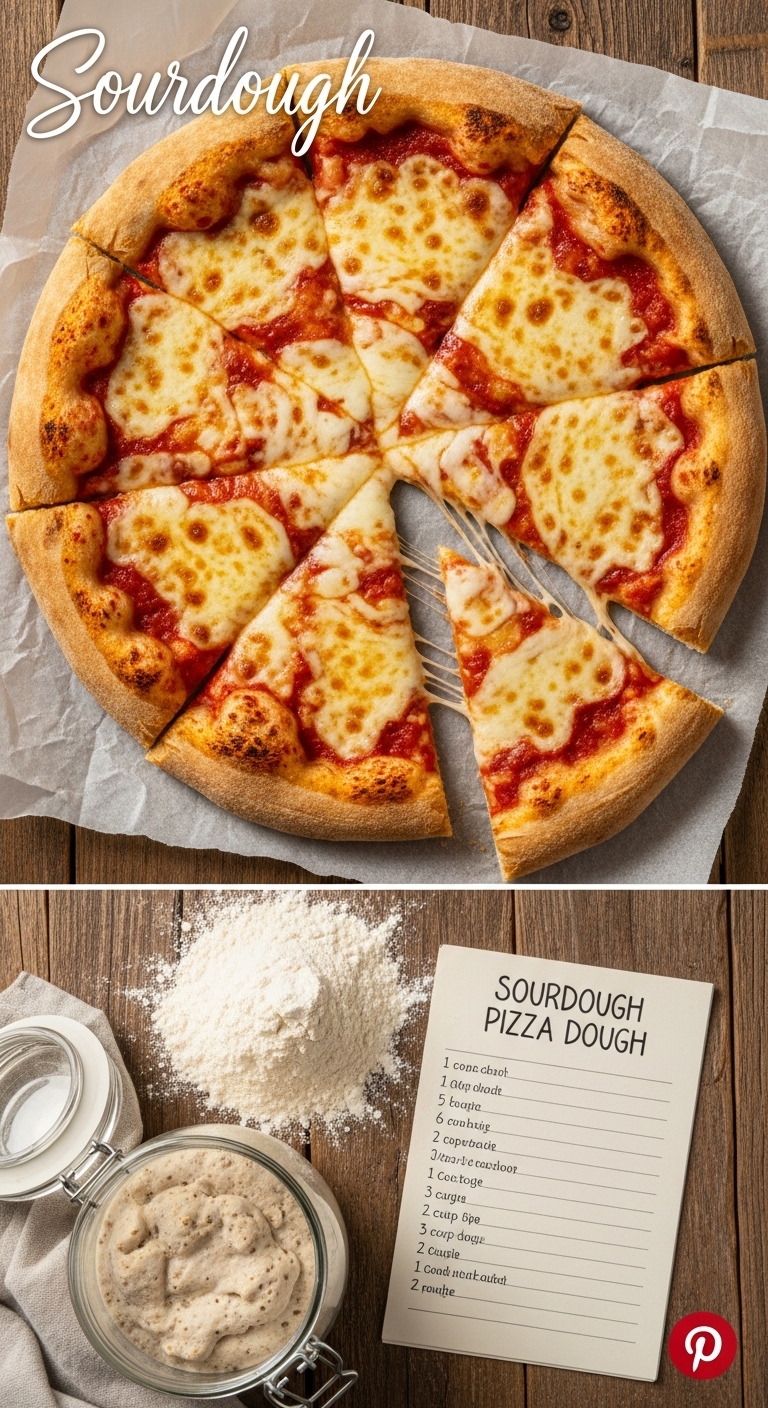
Let’s talk about a revelation: pizza dough made with sourdough starter. Not just any pizza dough—we’re talking about crust with complex tangy flavor, incredible chewiness, those gorgeous leopard-spotted char marks, and air bubbles that would make a Neapolitan pizza maker weep with joy. This is the kind of pizza dough that transforms Friday night dinner into an event, makes your house smell like an artisan bakery, and has friends texting “are you making pizza this weekend?”
If you’ve been feeding a sourdough starter and wondering what else you can do with it besides bread, this is your answer. If you’ve been eating mediocre delivery pizza and thinking “there has to be something better,” this is it. If you’ve been intimidated by homemade pizza dough, let me tell you: sourdough pizza dough is actually more forgiving, more flavorful, and more foolproof than you’d think.
Whether you’re a sourdough enthusiast looking for new ways to use your starter, a pizza lover seeking that authentic pizzeria taste at home, trying to avoid the expense and disappointment of delivery, wanting to master a signature dish that impresses everyone, or just craving pizza with actual depth of flavor, this recipe delivers. The best part? Most of the time is hands-off fermentation. You do maybe 15 minutes of actual work, and time does the rest.
Ingredients
For the Dough (Makes 3 medium pizzas or 2 large pizzas):
- 500g bread flour (about 4 cups) – high protein content creates better structure
- 350g water (1½ cups), lukewarm – about 70-75°F
- 150g active sourdough starter (½ cup + 2 tablespoons) – fed and bubbly
- 10g fine sea salt (2 teaspoons)
- 10g olive oil (2 teaspoons) – optional but adds flavor and extensibility
- 5g honey or sugar (1 teaspoon) – optional; helps with browning
Equipment You’ll Need:
- Large mixing bowl
- Kitchen scale (highly recommended for consistency)
- Bench scraper or dough cutter
- Pizza stone or steel (or use a baking sheet)
- Pizza peel (or use parchment paper)
- Plastic wrap or damp towel
- Containers for cold fermentation
For Topping (Classic Margherita per pizza):
- ½ cup pizza sauce or crushed San Marzano tomatoes
- 4-6 oz fresh mozzarella, torn or sliced
- Fresh basil leaves
- Extra virgin olive oil
- Salt and freshly cracked black pepper
- Grated Parmesan (optional)
Understanding Sourdough Pizza Dough Timing
Before we dive in, let’s talk timing. Sourdough pizza dough is flexible and forgiving, but you need to plan ahead:
Timeline Options:
Same-Day Pizza (8-10 hours total):
- Morning: Mix dough (9am)
- Afternoon: Bulk fermentation (9am-3pm)
- Evening: Shape, proof briefly, bake (6-7pm)
Overnight Pizza (24 hours – BEST FLAVOR):
- Day 1 morning: Mix dough
- Day 1 afternoon: Bulk fermentation (6-8 hours)
- Day 1 evening: Shape and cold ferment in fridge overnight
- Day 2 evening: Remove from fridge, warm up, bake
Long Cold Ferment (2-5 days – ULTIMATE FLAVOR):
- Day 1: Mix and bulk ferment
- Day 1 evening: Shape and refrigerate
- Days 2-5: Cold ferment (flavor develops!)
- Baking day: Remove from fridge 1-2 hours before, bake
My recommendation: The 24-72 hour cold ferment produces the best flavor and texture. Plan accordingly!
Step-by-Step Instructions
Step 1: Prepare Your Sourdough Starter (6-12 hours before mixing)
Your starter needs to be active, bubbly, and at peak rise for best results.
What does “active” mean?
- Fed within the last 4-12 hours
- Doubled or tripled in size
- Bubbly throughout
- Passes the “float test” (a spoonful floats in water)
- Smells pleasantly tangy, not overly sour or alcoholic
If your starter isn’t active:
- Feed it with equal parts flour and water (e.g., 50g starter + 50g flour + 50g water)
- Let it sit at room temperature (70-75°F) for 4-8 hours until bubbly and doubled
- Use it when it’s at peak (just before it starts to fall)
Pro tip: If you keep your starter in the fridge, take it out the night before, feed it in the morning, and it should be ready by afternoon or evening.
Don’t have a sourdough starter? You’ll need to create one first (takes about 5-7 days) or get some from a friend who bakes. There are many great guides online for starting a starter from scratch!
Step 2: Mix the Dough – The “Autolyse” Method (20 minutes)
This technique develops gluten without kneading and creates superior texture.
In a large mixing bowl, combine:
- 500g bread flour
- 350g lukewarm water (reserve 2 tablespoons for later)
Mix with your hand or a wooden spoon until all flour is hydrated and you have a shaggy, rough dough. It won’t look smooth yet—that’s perfect!
Cover with a damp towel and let rest for 30-60 minutes. This is called “autolyse” and it allows the flour to fully hydrate and gluten to start developing naturally. It’s like giving your dough a head start!
After the autolyse:
Add to the dough:
- 150g active sourdough starter
- 10g salt
- 10g olive oil (if using)
- 5g honey (if using)
- The reserved 2 tablespoons of water
Mix everything together using your hands. Squeeze the dough between your fingers, fold it over itself, and keep working it until everything is fully incorporated. The dough will feel sticky and wet—that’s normal!
Pro technique – “Rubaud Method”:
- Use one hand like a dough hook
- Scoop under the dough, lift, stretch, and slap it back down
- Rotate bowl and repeat for 3-5 minutes
- This develops gluten without traditional kneading
The dough should come together and feel slightly less sticky after a few minutes. It will still be quite soft and extensible.
Common mistake to avoid: Don’t add extra flour! This is a high-hydration dough (70% hydration). It’s supposed to be sticky and soft. Trust the process!
Step 3: Bulk Fermentation with Stretch and Folds (4-8 hours)
This is where the magic happens—flavor develops and gluten structure builds.
Transfer the dough to a lightly oiled bowl. Cover with a damp towel or plastic wrap.
Let it rest at room temperature (ideally 70-75°F). Warmer = faster fermentation, cooler = slower and more flavor development.
Perform “stretch and folds” every 30-45 minutes for the first 2-3 hours:
How to do a stretch and fold:
- Wet your hand to prevent sticking
- Grab one side of the dough
- Stretch it up and fold it over to the opposite side
- Rotate bowl 90 degrees
- Repeat 4 times (like folding a letter from all four sides)
- Cover and rest until next session
Do this 3-4 times total over the first 2-3 hours. Each time, you’ll notice the dough becoming smoother, more elastic, and holding its shape better.
After the stretch and folds, leave the dough untouched for the remaining 2-5 hours of bulk fermentation.
How do you know when bulk fermentation is done?
- Dough has increased in size by about 50-75% (not quite doubled)
- It looks puffy and airy with visible bubbles on the surface
- It jiggles when you shake the bowl
- A small portion of dough floats in water (the “float test”)
- It smells pleasantly tangy and yeasty
Temperature matters:
- At 70°F: 6-8 hours
- At 75°F: 4-6 hours
- At 80°F: 3-4 hours
Pro tip: Bulk fermentation is one of the most important steps. Under-fermented = dense, tough crust. Over-fermented = sticky, hard-to-shape dough. Watch the dough, not just the clock!
Step 4: Divide and Pre-Shape (10 minutes)
Time to turn that beautiful bulk-fermented dough into individual pizza portions!
Lightly flour your work surface. Use a bench scraper or dough cutter to avoid tearing.
Turn the dough out onto the floured surface. It should be soft, puffy, and full of air. Handle gently to preserve those bubbles!
Divide the dough:
- For 3 medium pizzas (10-12 inch): divide into 3 equal pieces (about 335g each)
- For 2 large pizzas (14-16 inch): divide into 2 pieces (about 500g each)
Use a kitchen scale for precision! Even portions = even baking.
Pre-shape each piece into a ball:
- Cup your hand around the dough
- Using the friction between dough and work surface, drag it in a circular motion
- The dough will tighten and form a smooth ball
- Don’t add too much flour—you want some stickiness for tension
Let the dough balls rest for 15-20 minutes, covered with a damp towel. This is called “bench rest” and it relaxes the gluten, making the final shaping easier.
Step 5: Final Shape and Cold Ferment (5 minutes active + 12-72 hours passive)
Prepare your storage containers:
- Lightly oil individual containers or a large baking sheet
- Or line with parchment paper
- Make sure they fit in your fridge!
Final shaping for tight, smooth balls:
- Take one dough ball
- Flip it upside down so the smooth side is on the bottom
- Fold the edges toward the center, pinching together
- Flip back over so the smooth side is up
- Cup your hand and drag in circles again for final tension
- Place seam-side down in oiled container
Repeat with remaining dough balls.
Cover tightly with plastic wrap or lids to prevent drying out.
Refrigerate for 12-72 hours. This cold fermentation:
- Develops complex, tangy sourdough flavor
- Makes the dough easier to handle and shape
- Improves digestibility
- Creates better texture and crust
The longer, the better (up to about 5 days)! The flavor becomes more complex and delicious.
Pro tip: Label your containers with the date. After 5 days, the dough becomes increasingly sour and can over-ferment.
Step 6: Prepare for Pizza Night (1-2 hours before baking)
Remove dough from the refrigerator 1-2 hours before baking. Cold dough is difficult to stretch and doesn’t bake as well.
Let it come to room temperature (about 65-70°F). Cover with a damp towel to prevent the surface from drying.
Meanwhile, prep your workspace:
- Clear a large surface for stretching
- Get your toppings ready and within reach
- Set out a pizza peel or baking sheets
- Have flour or semolina for dusting
- Preheat your oven (see next step)
The dough is ready when:
- It’s relaxed and jiggles when you shake the container
- A gentle poke leaves an indentation that slowly springs back
- It’s not too cold to the touch
Step 7: Preheat Your Oven (45-60 minutes before baking)
This is crucial for pizzeria-quality crust!
Preheat your oven to its highest temperature:
- Most home ovens: 500-550°F
- If you have convection: even better!
- Place a pizza stone or steel on the middle or lower-middle rack
Why so hot?
- High heat creates that characteristic charred, crispy crust
- It cooks the pizza quickly (2-5 minutes) before toppings get soggy
- Mimics a real pizza oven (which runs 800°F+)
Let the stone/steel preheat for at least 45 minutes, ideally 60 minutes. A properly heated stone makes all the difference!
Don’t have a pizza stone or steel?
- Flip a heavy baking sheet upside down and preheat it
- Or use parchment paper on a regular baking sheet (less ideal but works)
- Consider investing in a stone ($20-40) or steel ($60-100)—game changers!
Pro tip: If your oven has a broiler, you can turn it on for the last 1-2 minutes to get extra char on top. Watch carefully!
Step 8: Shape the Pizza (5 minutes per pizza)
This is a skill that improves with practice. Be patient with yourself!
Generously flour your work surface or use semolina (prevents sticking and adds texture).
Gently place one dough ball on the floured surface. Don’t punch it down—preserve those air bubbles!
Using your fingertips, gently press the dough from the center outward, leaving about a 1-inch border for the crust. You’re creating a flat disk with a raised edge.
Continue stretching:
- Pick up the dough and let gravity stretch it
- Drape it over your knuckles and rotate, letting it stretch
- Or use the “steering wheel” method: hold the edge and rotate, letting gravity do the work
- Work gently—tears happen, but they can usually be pinched back together
Aim for:
- About ⅛-inch thick in the center
- A raised, puffy cornicione (outer crust)
- Relatively even thickness throughout (no super thin spots that will tear)
Don’t worry about perfect circles! Rustic, irregular shapes are charming and authentic. Rustic = artisan = delicious!
Common mistakes to avoid:
- Don’t use a rolling pin (deflates all those beautiful air bubbles!)
- Don’t stretch too thin or you’ll get tears
- Don’t obsess over perfect circles—embrace the rustic look
Once shaped, transfer to a floured pizza peel or parchment paper immediately. Shaped dough can start sticking to the counter quickly!
Step 9: Top Your Pizza (2-3 minutes per pizza)
Less is more with pizza toppings! Overloading makes it soggy.
For a classic Margherita:
- Sauce: Spread ½ cup pizza sauce or crushed tomatoes in a thin, even layer, leaving ½-1 inch border for crust. Use the back of a spoon in a spiral motion.
- Cheese: Tear or slice 4-6 oz fresh mozzarella and distribute evenly. Don’t overdo it—you want some bare spots!
- Seasoning: Drizzle with a little olive oil, sprinkle with salt and pepper.
- After baking: Add fresh basil leaves and grated Parmesan.
Pro tips for topping:
- Room temperature toppings cook more evenly
- Drain wet ingredients (mozzarella, tomatoes) well
- Less is truly more—over-topped pizza = soggy pizza
- Save delicate items (arugula, basil, prosciutto) to add after baking
Popular topping combinations:
- Pepperoni: Sauce, mozzarella, pepperoni (classic!)
- White Pizza: Ricotta, mozzarella, garlic, olive oil (no sauce)
- Mushroom: Sauce, mozzarella, sautéed mushrooms, thyme
- BBQ Chicken: BBQ sauce, mozzarella, cooked chicken, red onion, cilantro
- Prosciutto Arugula: Sauce, mozzarella, then add prosciutto and arugula after baking
Step 10: Bake to Perfection (8-12 minutes)
The moment of truth!
Give your pizza peel a little shake to make sure the pizza slides freely. If it sticks, lift the edge and add more flour underneath.
Slide the pizza onto the preheated stone/steel with a quick, confident motion:
- Position the peel at the back of the stone
- Give it a quick jerk backward
- The pizza should slide right off
- Practice this motion without the pizza first if you’re nervous!
Or, if using parchment paper: Just place the whole parchment sheet on the stone.
Bake for 8-12 minutes depending on your oven, watching closely:
- 8-10 minutes: Neapolitan style (softer, chewy)
- 10-12 minutes: Crispier, more charred
You’ll know it’s done when:
- The crust is golden brown with charred spots (leoparding)
- The cheese is melted and bubbling
- The edges are puffed and blistered
- The bottom is crispy (use a peel or spatula to peek)
Optional: Turn on the broiler for the last 1-2 minutes for extra char on top. WATCH CAREFULLY—it can burn in seconds!
Remove from the oven using the pizza peel or a large spatula.
Let it rest for 1-2 minutes before slicing. This lets the cheese set slightly and prevents burns!
Step 11: Slice and Serve (The Best Part!)
Transfer to a cutting board. Use a pizza cutter or large chef’s knife to slice.
Add finishing touches:
- Fresh basil leaves
- Drizzle of excellent olive oil
- Grated Parmesan
- Red pepper flakes
- Fresh cracked black pepper
- Sea salt flakes
Slice and serve immediately while hot and at peak crispiness!
Repeat with remaining dough balls while your guests devour the first pizza!
Helpful Tips to Avoid Common Mistakes
Mistake #1: Using starter that isn’t active → Results in dense, flat dough that doesn’t rise. Always use bubbly, recently fed starter at its peak!
Mistake #2: Not weighing ingredients → Sourdough is finicky—use a scale for consistency! Cup measurements can vary by 20-30%.
Mistake #3: Under-fermenting the dough → Dense, tough crust with no flavor. Watch for the signs: puffy, bubbly, increased volume.
Mistake #4: Over-topping the pizza → Soggy, undercooked center. Use restraint! Less is more.
Mistake #5: Not preheating the oven long enough → Pale, undercooked crust. Preheat for a full 45-60 minutes!
Mistake #6: Rolling the dough with a rolling pin → Deflates all those beautiful air bubbles. Always stretch by hand!
Mistake #7: Skipping the cold fermentation → You miss out on the complex flavor that makes sourdough pizza special. Plan ahead!
Mistake #8: Using wet toppings without draining → Watery, soggy pizza. Pat mozzarella dry, drain canned ingredients well.
Mistake #9: Working with cold dough → It tears and doesn’t stretch properly. Always let it warm up to room temp first!
Storage and Make-Ahead Advice
Shaped Dough Balls in the Fridge:
- Keep for 12-72 hours (sweet spot is 24-48 hours)
- After 3-4 days, flavor becomes very sour
- After 5 days, risk of over-fermentation
Freezing Dough:
- After bulk fermentation, shape into balls
- Wrap tightly in plastic wrap, then place in freezer bags
- Freeze for up to 3 months
- Thaw in fridge overnight, then bring to room temp before using
Baked Pizza:
- Refrigerate leftover pizza for up to 3 days
- Reheat in a hot oven (450°F) or skillet for crispy crust
- Microwave works but makes crust soft
Pro tip: Make a double or triple batch of dough. Freeze extra portions for easy pizza nights anytime!
Creative Variations
Whole Wheat Sourdough Pizza:
- Replace 25-50% of bread flour with whole wheat flour
- Add 10-20g extra water (whole wheat absorbs more)
- Nuttier, heartier flavor
Focaccia-Style Pizza:
- Use a baking sheet instead of shaping rounds
- Stretch dough to fit pan
- Dimple with fingertips
- Top generously and bake
- Thick, fluffy, airy crust
Neapolitan Style:
- Higher hydration (75-80%)
- Bake at highest possible temp for 6-8 minutes
- Soft, chewy, slightly charred
Thin and Crispy:
- Roll thinner (⅛ inch or less)
- Bake at 500°F for 10-12 minutes
- Cracker-thin crust
Sourdough Calzone:
- Shape into circles, top half only
- Fold over and seal edges
- Bake for 15-20 minutes
Grilled Pizza:
- Shape dough, grill one side
- Flip, add toppings quickly, close lid
- Smoky, charred perfection
Frequently Asked Questions
Q: Can I use all-purpose flour instead of bread flour? A: Yes, but bread flour’s higher protein creates better structure and chew. If using AP flour, expect a softer, less chewy crust.
Q: My dough is too sticky to handle. What do I do? A: Use flour liberally on your hands and work surface. Don’t add flour to the dough itself—high hydration is what creates those beautiful air pockets!
Q: Can I make this without a sourdough starter? A: Not really—the starter is what makes it sourdough pizza! You could substitute instant yeast (1 teaspoon) but it wouldn’t have the same flavor or texture.
Q: How do I know if my starter is ready to use? A: It should be bubbly, doubled in size, smell pleasantly tangy (not alcoholic), and pass the float test (a spoonful floats in water).
Q: My pizza stuck to the peel. Help! A: Use plenty of flour or semolina on the peel. Work quickly once topped. Give it a shake before sliding—if it sticks, lift and add more flour underneath.
Q: Can I make the dough start to finish in one day? A: Yes! Mix in the morning, bulk ferment 6-8 hours, shape, proof 1-2 hours at room temp, and bake. But overnight cold ferment tastes better!
Q: Why is my crust dense and not airy? A: Likely under-fermented or you used inactive starter. Make sure bulk fermentation is complete and starter is bubbly!
Q: What’s the difference between sourdough and regular pizza dough? A: Sourdough uses wild yeast from starter (not commercial yeast), has complex tangy flavor, better digestibility, and more interesting texture.
Q: My dough tore while stretching. Now what? A: Pinch the tear closed and continue. Small tears are fine—they’ll seal during baking. If it’s really torn, let it rest 10 minutes and try again.
Q: Can I use a different hydration level? A: Yes! 65% = easier to handle, crispier. 75%+ = airier, chewier, harder to work with. Start at 70% and adjust next time.
Q: How long does sourdough pizza dough last? A: In the fridge: 3-5 days (best at 1-3 days). In the freezer: up to 3 months.
The Bottom Line
Sourdough pizza dough is one of those recipes that seems intimidating until you make it once, and then you realize it’s actually simpler and more forgiving than you thought. Yes, it requires planning ahead. Yes, there are several steps. But most of the time is hands-off fermentation while you go about your life. The actual active work? Maybe 30 minutes total spread across two days.
The payoff is pizza that rivals the best pizzerias—complex flavor, incredible texture, gorgeous char, and that satisfying chew that keeps you reaching for another slice. It’s the kind of pizza that makes you realize what you’ve been missing with delivery and frozen options.
Once you master this technique, you’ll have a skill for life. You’ll be the person friends text on Friday asking if you’re making pizza this weekend. You’ll never look at a $20 delivery pizza the same way. And you’ll finally have a delicious use for that sourdough starter beyond the same loaf of bread.
This isn’t just pizza—it’s the pizza that changes everything.
So feed that starter, clear some counter space, and get ready to make the best pizza of your life. Your kitchen is about to smell like an artisan pizzeria, and you’re about to become a sourdough pizza legend! 🍕✨🔥