Introduction
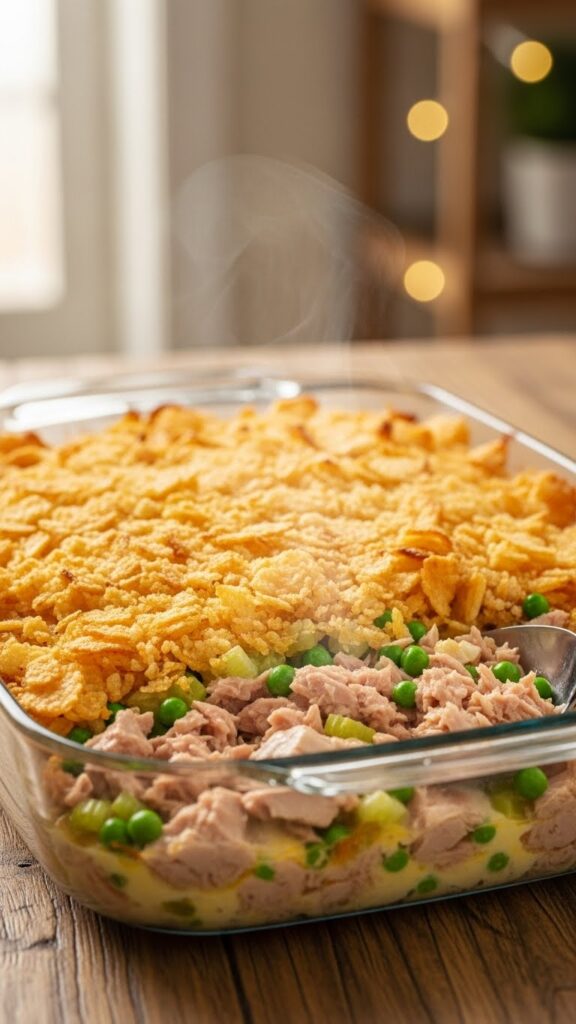
Tuna Casserole is one of those dishes that quietly sits in the background of American food culture, rarely demanding attention yet always ready to deliver warmth, nourishment, and satisfaction. As the holiday season approaches and temperatures drop, families naturally turn to meals that are simple, cozy, affordable, and capable of feeding everyone at the table. Tuna Casserole stands firmly among the winter comfort classics, offering a taste of nostalgia and a reminder of home.

While many festive dishes revolve around roasts, glazes, and elaborate presentations, Tuna Casserole thrives on straightforward ingredients and practical cooking. It is a dish built from pantry staples—canned tuna, pasta, creamy sauce, vegetables, and a crunchy topping—yet it never fails to create a comforting, filling, and crowd-pleasing meal. Whether prepared for a weeknight dinner during the busy lead-up to Christmas, served to overnight guests during the holidays, or included on a winter buffet table, Tuna Casserole is a dependable and warming seasonal favorite.
This article explores the history of Tuna Casserole, the culinary principles behind it, its transformation into a beloved American staple, and the many ways it fits seamlessly into winter and holiday celebrations. It also includes serving tips, holiday variations, make-ahead strategies, and ideas for elevating this humble classic into a memorable seasonal dish.
A Brief History of Tuna Casserole: From Pantry Innovation to American Tradition
Tuna Casserole may not carry the long, ancient lineage of dishes like lasagna or spaghetti, but its history is an important reflection of 20th-century American cooking. The dish began gaining popularity in the 1930s and 1940s, when economic challenges pushed families toward affordable and shelf-stable ingredients.
The Rise of Canned Tuna
Canned tuna became widely available in the early 1900s, providing an inexpensive and versatile protein source. By the time of World War II, it had become a pantry staple in homes across the country. Housewives sought creative ways to incorporate tuna into meals in ways that stretched budgets and satisfied entire families.
The Birth of the “Creamy Casserole” Era
In the mid-20th century, casseroles became extremely popular in American kitchens. The introduction of condensed soups, particularly cream of mushroom soup, transformed home cooking. These soups allowed families to create creamy dishes with minimal effort and cost.
The combination of:
- canned tuna
- egg noodles or pasta
- condensed cream soup
- frozen or canned vegetables
- a crunchy topping (like crackers, breadcrumbs, or fried onions)
formed the early blueprint for the Tuna Casserole we know today.
Post-War Cooking and Community Gatherings
After World War II, casseroles gained even more popularity. They were:
- economical
- easy to prepare in large quantities
- practical for potlucks and church gatherings
- ideal for busy households during the holiday rush
By the 1950s, Tuna Casserole had cemented itself as a classic, appearing in community cookbooks, family recipe boxes, and winter dinner rotations across America.
Today, it remains a beloved symbol of simplicity, practicality, and comfort—a nostalgic reminder of family dinners during cold seasons.
Why Tuna Casserole Belongs on the Winter and Holiday Table
During the holiday season, kitchen schedules fill up quickly. Families need dishes that offer comfort without requiring extensive prep time. Tuna Casserole solves multiple seasonal challenges at once.
1. It’s Affordable During an Expensive Season
With the financial pressure of gifts, decorations, travel, and holiday events, families often look for budget-friendly meals. Tuna Casserole uses ingredients that are:
- inexpensive
- shelf-stable
- easy to find year-round
This makes it ideal for December meal planning.
2. It Provides Reliable Winter Comfort
Creamy sauces, warm pasta, and a golden crunchy topping create the kind of meal that warms you from the inside on a cold December night. After holiday shopping, decorating the house, or traveling in chilly weather, a comforting casserole feels like a reward.
3. It’s Quick and Low-Stress to Make
Holiday cooking can become overwhelming. Tuna Casserole keeps things simple:
- one pot to cook the pasta
- one bowl to mix the ingredients
- one dish to bake
The ease of preparation frees up time for other holiday tasks.
4. It Feeds Families, Guests, and Holiday Visitors
Because it’s easy to scale up, Tuna Casserole is perfect for:
- sudden guests
- overnight visitors
- family gatherings
- holiday potlucks
- church events
It reheats beautifully and often tastes even better the next day.
5. It’s a Perfect Make-Ahead Dish
The holidays involve constant movement between activities. Tuna Casserole can be assembled the day before and baked when needed, saving valuable time.
The Core Elements of a Great Tuna Casserole
Although the dish is simple, there is a method behind its comforting magic. A truly memorable Tuna Casserole balances texture, creaminess, seasoning, and structure.
1. The Pasta Base
Egg noodles are the classic choice, but other options work well:
- fusilli
- rotini
- penne
- medium shells
The pasta must be cooked just until al dente so it maintains structure after baking.
2. The Tuna
Canned tuna comes in several varieties:
- chunk light tuna (most commonly used)
- solid white albacore (firmer and milder flavor)
- tuna packed in water or oil
For casseroles, tuna packed in water works well, keeping the dish light while still flavorful.
3. The Creamy Sauce
The sauce is the heart of the casserole. Traditional versions use condensed cream of mushroom soup. More elevated versions use a homemade sauce made from:
- butter
- flour
- milk or broth
- sautéed onions
- garlic
- mushrooms
A rich, creamy base binds the pasta, tuna, and vegetables together.
4. The Vegetables
Tuna Casserole often includes:
- peas
- carrots
- celery
- mushrooms
- green beans
- corn
Frozen vegetables work perfectly, maintaining convenience without sacrificing nutrition.
5. The Crunchy Topping
Texture is essential. A good topping adds contrast to the creamy interior.
Common toppings include:
- crushed crackers
- toasted breadcrumbs
- potato chips
- fried onions (popular during the holiday season)
- panko mixed with butter
The topping becomes golden and crisp, giving the casserole its signature finish.
The Science of Comfort: Why Tuna Casserole Works
Comfort food is more than a recipe—it’s a sensory experience. Tuna Casserole satisfies all the elements of a comforting winter meal.
1. Creaminess Equals Warmth
The brain associates creamy textures with warmth and fullness. The sauce coats the pasta and tuna, creating a harmonious experience in every bite.
2. Umami Makes It Savory and Addictive
Tuna, mushrooms, and sautéed onions bring depth and savory richness. Umami flavors thrive in cold weather meals.
3. Contrast in Texture Keeps It Interesting
The crunchy topping prevents the dish from feeling too heavy. Texture contrast is essential in cold-weather comfort food.
4. Familiarity Boosts Emotional Comfort
People often associate casseroles with childhood memories, winter evenings, and family gatherings.
Holiday Variations of Tuna Casserole
To bring Tuna Casserole into the heart of the holiday table, consider these festive twists.
1. Christmas Herb and Garlic Tuna Casserole
Infuse the sauce with:
- fresh rosemary
- thyme
- sage
- roasted garlic
These herbs create a holiday-inspired aroma and elevate the flavor profile.
2. Creamy Mushroom and Truffle Tuna Casserole
Perfect for more upscale dinners:
- sautéed wild mushrooms
- homemade cream sauce
- a touch of truffle oil before serving
It transforms the humble casserole into a luxurious winter dish.
3. Buttery Ritz Cracker Holiday Topping
Crushed buttery crackers mixed with melted butter and parsley give the casserole a festive golden crust.
4. Vegetable-Loaded Winter Casserole
Include winter vegetables such as:
- kale
- spinach
- roasted squash
- caramelized onions
This version feels hearty yet wholesome.
5. New Year’s Eve Elegant Tuna Casserole
Made with:
- albacore tuna
- béchamel sauce
- parmesan
- panko topping
This version is creamy, refined, and perfect for a New Year gathering.
Serving Ideas for Holiday and Winter Nights
1. Suggested Side Dishes
Serve with:
- mixed green salad with citrus vinaigrette
- roasted brussels sprouts
- garlic bread or dinner rolls
- cranberry-walnut salad
- sautéed green beans
These sides balance the richness of the dish.
2. Holiday Presentation Tips
- Serve in a deep ceramic baking dish for warmth and visual appeal.
- Sprinkle fresh herbs on top after baking for a seasonal touch.
- Add a light dusting of fresh parmesan just before serving.
Make-Ahead and Freezer Strategy
Tuna Casserole is one of the most convenient holiday meals for planning ahead.
Make Ahead (1–2 days):
- Assemble casserole
- Cover tightly
- Refrigerate
- Bake when needed
Freezer Strategy:
- Assemble casserole without topping
- Wrap tightly
- Freeze for up to 3 months
- Add topping before baking
This strategy is especially helpful for busy December schedules.
Leftovers: Even Better the Next Day
One of the best features of Tuna Casserole is that leftovers often taste better. As it rests:
- flavors meld
- sauce thickens slightly
- textures improve
It reheats easily in the oven or microwave, making it ideal for busy mornings after holiday gatherings.
Conclusion
Tuna Casserole may not carry the prestige of some holiday dishes, but it remains one of the most comforting and practical meals for winter. Its creamy texture, satisfying warmth, and nostalgic flavor anchor it firmly as a seasonal favorite. During the hectic months of November, December, and early January, when kitchens overflow with preparation and homes fill with guests, Tuna Casserole provides relief: easy to assemble, reliably delicious, budget-friendly, and endlessly adaptable.
Whether served on a quiet winter evening, brought to a holiday potluck, or prepared for family visiting during festive celebrations, Tuna Casserole continues to represent the heart of American comfort cooking. It is a dish built on practicality, shaped by history, and cherished for its simplicity. And in the middle of a busy holiday season, its presence on the table feels like a warm, familiar embrace.