
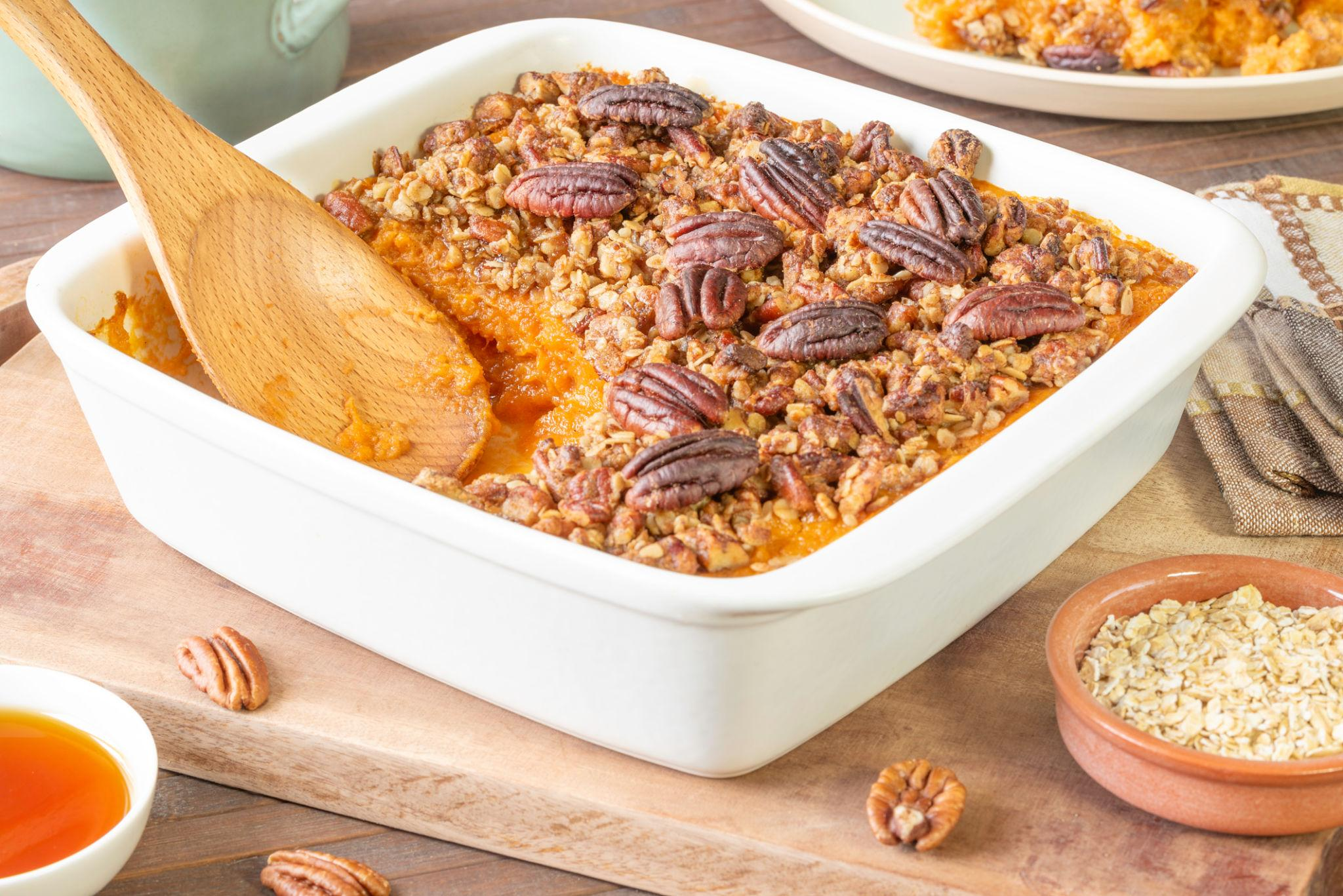
Sweet potato casserole brings together two textures that make a comforting side dish hard to resist: a soft, creamy sweet potato filling and a crisp, buttery topping. The potatoes have a naturally sweet, earthy flavor, while brown sugar, cinnamon, vanilla, and toasted pecans add warmth and a little crunch to every serving.
This sweet potato casserole recipe is an excellent choice for Thanksgiving, Christmas, Sunday dinner, or any meal when you want a side dish that feels a little more special than ordinary mashed vegetables. It uses fresh sweet potatoes and a simple brown sugar pecan topping, with enough flexibility to suit different tastes. If you prefer the traditional marshmallow version, you can easily adapt the recipe.
The secret to a good casserole is balance. Sweet potatoes already contain natural sugars, so you don’t need to overwhelm them with extra sweetness. A little butter adds richness, milk helps create a smooth texture, and a pinch of salt keeps the flavors from becoming flat. On top, a crumbly pecan mixture creates a pleasant contrast with the tender filling. This combination of creamy potatoes and crunchy topping is a familiar feature of classic sweet potato casseroles.
Whether you’re preparing a holiday menu or looking for a comforting vegetable side, this recipe gives you a dependable starting point, along with practical tips for preparing it ahead, adjusting the sweetness, and getting the topping just right.
Sweet Potato Casserole Recipe at a Glance
| Prep time 20 minutes |
Cook time 45–50 minutes |
| Total time About 1 hr 10 min |
Servings 8 |
♧ Difficulty: Easy
Best for holiday dinners, family meals, and make-ahead sides.
Ingredients for Sweet Potato Casserole
This recipe uses everyday ingredients that work together to create a smooth filling and a crisp, nutty topping. Measure the ingredients before you begin so you can prepare the casserole without rushing.
For the sweet potato filling
-
3 pounds fresh sweet potatoes: About five medium potatoes, peeled and cut into evenly sized chunks.
-
4 tablespoons unsalted butter: Adds richness and helps the filling feel smooth.
-
½ cup whole milk: Loosens the mashed potatoes and creates a softer texture.
-
⅓ cup packed brown sugar: Sweetens the filling without overpowering the natural flavor of the potatoes.
-
2 large eggs: Help the filling set as it bakes, giving it a cohesive, casserole-like texture.
-
1 teaspoon vanilla extract: Adds a gentle, warm aroma.
-
½ teaspoon ground cinnamon: Provides a subtle spice that complements the sweet potatoes.
-
½ teaspoon salt: Balances the sweetness and brings out the other flavors.
For the brown sugar pecan topping
-
½ cup all-purpose flour: Helps form the crumbly topping.
-
½ cup packed brown sugar: Creates a sweet, caramel-like flavor as the topping bakes.
-
4 tablespoons unsalted butter, melted: Binds the topping ingredients and encourages browning.
-
¾ cup chopped pecans: Add a nutty flavor and crunchy texture.
-
¼ teaspoon salt: Keeps the topping from tasting overly sweet.
The brown sugar and pecans create a crisp topping that contrasts with the soft potato filling. Similar combinations are commonly used in pecan-topped sweet potato casserole recipes.
How to Make Sweet Potato Casserole Step by Step

Step 1: Prepare the sweet potatoes
Wash and peel the sweet potatoes, then cut them into evenly sized chunks. Keeping the pieces similar in size helps them cook at approximately the same rate.
Place the potatoes in a large saucepan and cover them with water. Bring the water to a boil, then reduce the heat and simmer until the potatoes are very tender, usually around 15–20 minutes, depending on the size of the pieces.
Check them with a fork. It should slide easily into the thickest pieces without resistance. If the centers are still firm, continue cooking for a few minutes.
Drain the potatoes thoroughly. Excess water can make the filling loose and watery, so allow the drained potatoes to sit briefly in the colander before mashing.
Step 2: Mash the potatoes until smooth

Transfer the drained sweet potatoes to a large mixing bowl. Mash them with a potato masher until most of the lumps have disappeared.
For a rustic casserole, a few small lumps are perfectly acceptable. If you prefer a smoother, more uniform filling, use a hand mixer on low speed after the potatoes have softened completely.
Avoid adding all the milk at once if your sweet potatoes seem particularly moist. Start with most of the measured milk, then add the remainder as needed to reach a thick, creamy consistency.
Step 3: Mix the filling
Add the butter, milk, brown sugar, cinnamon, vanilla extract, and salt to the mashed sweet potatoes. Stir until the mixture is evenly combined.
Let the potatoes cool slightly before adding the eggs. This helps prevent the eggs from cooking prematurely when they touch the warm mixture.
Beat in the eggs until no streaks remain. The filling should look creamy and hold its shape when spread with a spoon, rather than running like a thin purée.
Taste a small spoonful before transferring the mixture to the baking dish. If you prefer a less-sweet casserole, keep the sugar as measured or reduce it slightly next time. If you enjoy a dessert-like filling, a little additional brown sugar is an option, but remember that the topping will add sweetness too.
Step 4: Prepare the pecan topping

In a separate bowl, combine the flour, brown sugar, melted butter, and salt. Stir until the mixture resembles damp crumbs. Fold in the chopped pecans so they are distributed throughout.
The mixture should form small clumps when pressed between your fingers. If it looks powdery, mix it a little longer so the butter coats the dry ingredients. If it seems too wet, add a small sprinkle of flour.
Don’t stir the topping into the potato mixture. Keeping the layers separate is what creates the contrast between the soft filling and the crunchy surface.
Step 5: Assemble the casserole
Preheat your oven to 350°F (175°C). Lightly butter a 9-by-13-inch baking dish or use a similarly sized casserole dish with enough room for the filling and topping.
Spread the sweet potato mixture evenly into the dish. Smooth the surface with the back of a spoon or a spatula, paying attention to the corners so the filling is level.
Scatter the pecan topping over the entire surface. Aim for an even layer rather than a thick pile in the center. This helps the topping brown more consistently and gives each serving some of the crunchy mixture.
Step 6: Bake until set and golden

Place the casserole in the preheated oven and bake for approximately 25–35 minutes, or until the center is hot and the topping is golden brown. The exact time will depend on the depth of the dish and the temperature of the filling before baking.
Look for a topping that feels dry and crisp on the surface, with lightly browned pecans. The filling should look set rather than liquid in the center.
If the pecans begin browning too quickly, loosely cover the dish with foil for the remainder of the baking time. Let the casserole rest for about 5–10 minutes before serving. This brief rest helps the filling settle and makes it easier to scoop neat portions.
Tips for the Best Sweet Potato Casserole
A few small choices can make a noticeable difference in the final dish.
-
Choose firm, fresh sweet potatoes. Avoid potatoes with soft, wet, or visibly spoiled areas. Similar-sized potatoes also make preparation easier.
-
Drain thoroughly. Water left on the potatoes can dilute the flavor and prevent the filling from setting as expected.
-
Adjust the sweetness thoughtfully. Sweet potatoes vary naturally in sweetness, so taste the filling before adding more sugar.
-
Keep the topping separate. Add it just before baking for the best chance of achieving a crumbly surface.
-
Don’t overmix. Mash until the texture suits your preference, but avoid turning the potatoes into a gluey paste.
-
Watch the pecans near the end. Nuts can darken quickly, particularly if the oven runs hot.
-
Allow a short resting period. Serving immediately from the oven can make the filling seem looser than it will after a few minutes.
Sweet Potato Casserole Variations
One of the best things about sweet potato casserole is how easily you can change the topping and flavor profile without rebuilding the entire recipe.

1. Sweet potato casserole with marshmallows
If you prefer a traditional marshmallow topping, leave off the pecan mixture or use a smaller amount. Add miniature marshmallows during the final 10–15 minutes of baking, watching closely until they puff and turn golden. Marshmallows brown quickly, so don’t leave the dish unattended.

2. Cinnamon pecan casserole
Increase the cinnamon slightly in the filling or add a small pinch of nutmeg. This version emphasizes warm spice without requiring a sweeter filling.

3. Oat and walnut topping
Replace some of the pecans with chopped walnuts and add a few tablespoons of rolled oats to the topping. The oats create a more substantial crumble. For a gluten-free version, use certified gluten-free oats and a suitable flour alternative.

4. Orange and sweet potato casserole
Add a little finely grated orange zest to the filling for a fresh citrus note. Start with about ½ teaspoon and adjust to taste. Avoid adding too much juice, which could make the mixture watery.
If you’re serving guests with allergies, remember that pecans and walnuts are tree nuts. Choose a topping that suits your guests’ dietary needs and check packaged ingredients when necessary.
What to Serve with Sweet Potato Casserole
Sweet potato casserole has a rich, sweet flavor, so it pairs especially well with savory main dishes and vegetables that bring freshness or a little contrast to the plate.
-
Roast chicken: A savory, golden roast chicken complements the creamy potatoes without competing with their sweetness.
-
Roast turkey: A classic holiday pairing, particularly when served with gravy and stuffing.
-
Baked ham: The salty, savory flavor of ham works well with the brown sugar pecan topping.
-
Green beans: Steamed or roasted green beans add color and a fresh vegetable element.
-
Mac and cheese: A comforting choice for family dinners, potlucks, and holiday spreads.
-
Roasted vegetables: Brussels sprouts, carrots, or broccoli offer different textures and flavors alongside the casserole.
For a balanced holiday menu, serve a moderate portion of casserole alongside a savory protein and at least one vegetable that isn’t sweetened. That way, the meal feels varied rather than dominated by rich side dishes.
Can You Make Sweet Potato Casserole Ahead of Time?
Yes. Sweet potato casserole is a useful make-ahead dish, especially when you have several recipes to prepare for a gathering. Preparing the filling in advance saves time on the day you plan to serve it.
To prepare ahead, cook and mash the sweet potatoes, mix the filling, and spread it into the baking dish. Allow the mixture to cool promptly, cover it, and refrigerate it. Store the pecan topping separately in a covered container.
You can assemble the casserole up to one day ahead for this recipe. When you’re ready to bake, add the topping and place the dish in the oven. A chilled casserole may need additional baking time, so check that the center is thoroughly hot before serving. This approach is consistent with make-ahead guidance from established recipe sources.
For the best texture, avoid adding the pecan topping too early. Keeping it separate helps prevent moisture from the filling from softening the crumbs before baking.
How to Store and Reheat Leftovers
Allow leftover casserole to cool slightly, then transfer it to shallow, covered containers and refrigerate within two hours of cooking. Keep the refrigerator at 40°F (4°C) or below.
-
Refrigerator: Store leftovers for 3–4 days.
-
Freezer: Freeze in a suitable airtight container for about 2–3 months for best quality. The filling may become slightly softer after thawing, and the pecan topping may lose some crispness.
-
Oven reheating: Place a portion in an oven-safe dish, cover loosely with foil, and heat at 325–350°F (165–175°C) until the center reaches 165°F (74°C).
-
Microwave reheating: Heat individual portions in short intervals, stirring or checking the center as needed, until thoroughly hot.
For food safety, refrigerate promptly rather than leaving the casserole at room temperature for extended periods. Reheated leftovers should reach 165°F (74°C). If you freeze the casserole, thaw it in the refrigerator rather than on the counter.
Frequently Asked Questions
1. Is sweet potato casserole a side dish or a dessert?
It can be either, depending on how it is prepared and served. A moderately sweet casserole with a pecan topping is commonly served as a side dish. A sweeter version with marshmallows can taste more like a dessert, especially when served in generous portions.
2. Should I boil or bake the sweet potatoes first?
Both methods work. Boiling peeled, cubed potatoes is convenient and relatively quick. Baking whole sweet potatoes can produce a concentrated flavor because the potatoes aren’t simmering in water. If you bake them, let them cool enough to handle before removing the skins and mashing the flesh.
3. Why is my sweet potato casserole watery?
The most common reasons include potatoes that weren’t drained thoroughly, too much milk, or a filling that hasn’t finished baking. Drain the cooked potatoes well and add milk gradually. If the casserole is already in the oven, allow it more time to cook while monitoring the topping.
4. Can I make sweet potato casserole without eggs?
Yes. Eggs help the filling set, but you can omit them if necessary. The result will generally be softer and less structured. You may need to adjust the milk and baking time to suit the consistency of the mixture. If you’re cooking for someone with an egg allergy, check all other ingredients for potential allergens as well.
5. Can I use canned sweet potatoes?
Yes, although the texture and sweetness may differ from fresh potatoes. Drain them thoroughly and check whether they contain added syrup or sugar before preparing the filling. If they’re already sweetened, reduce the brown sugar accordingly. Fresh sweet potatoes are a useful choice when you want greater control over the final flavor.
6. How do I keep the pecan topping crunchy?
Mix the topping until it forms crumbs, distribute it evenly over the filling, and bake until golden. Avoid covering the casserole tightly while it is still hot, because trapped steam can soften the topping. If preparing the casserole ahead, keep the topping separate until you’re ready to bake.
7. Can I make sweet potato casserole without nuts?
Yes. Replace the pecans with a crumb topping made from flour, brown sugar, and butter, or use rolled oats if appropriate for your dietary requirements. For a nut allergy, check the ingredient labels and prevent cross-contact with nuts during preparation.
8. How can I tell when sweet potato casserole is done?
The topping should be golden and the filling should be hot and set rather than liquid in the center. If you used eggs, the center should no longer look raw or runny. For reliable results, check the center with a food thermometer when appropriate, especially if the casserole has been refrigerated before baking.
Final Thoughts
Sweet potato casserole is a practical way to turn a familiar vegetable into a warm, satisfying side dish. The combination of creamy mashed sweet potatoes, brown sugar, cinnamon, and a crunchy pecan topping offers a pleasing balance of texture and flavor without requiring complicated techniques.
For the best results, drain the potatoes well, keep the filling thick enough to hold its shape, and watch the topping as it browns. You can prepare the filling ahead, switch to marshmallows if that’s what your family prefers, or experiment with citrus and warm spices.
Serve it with roast chicken, turkey, ham, or your favorite savory main dish for a meal that feels complete. Once you have the basic method down, it’s easy to adapt the casserole to different occasions and personal tastes.
Leave a Reply