
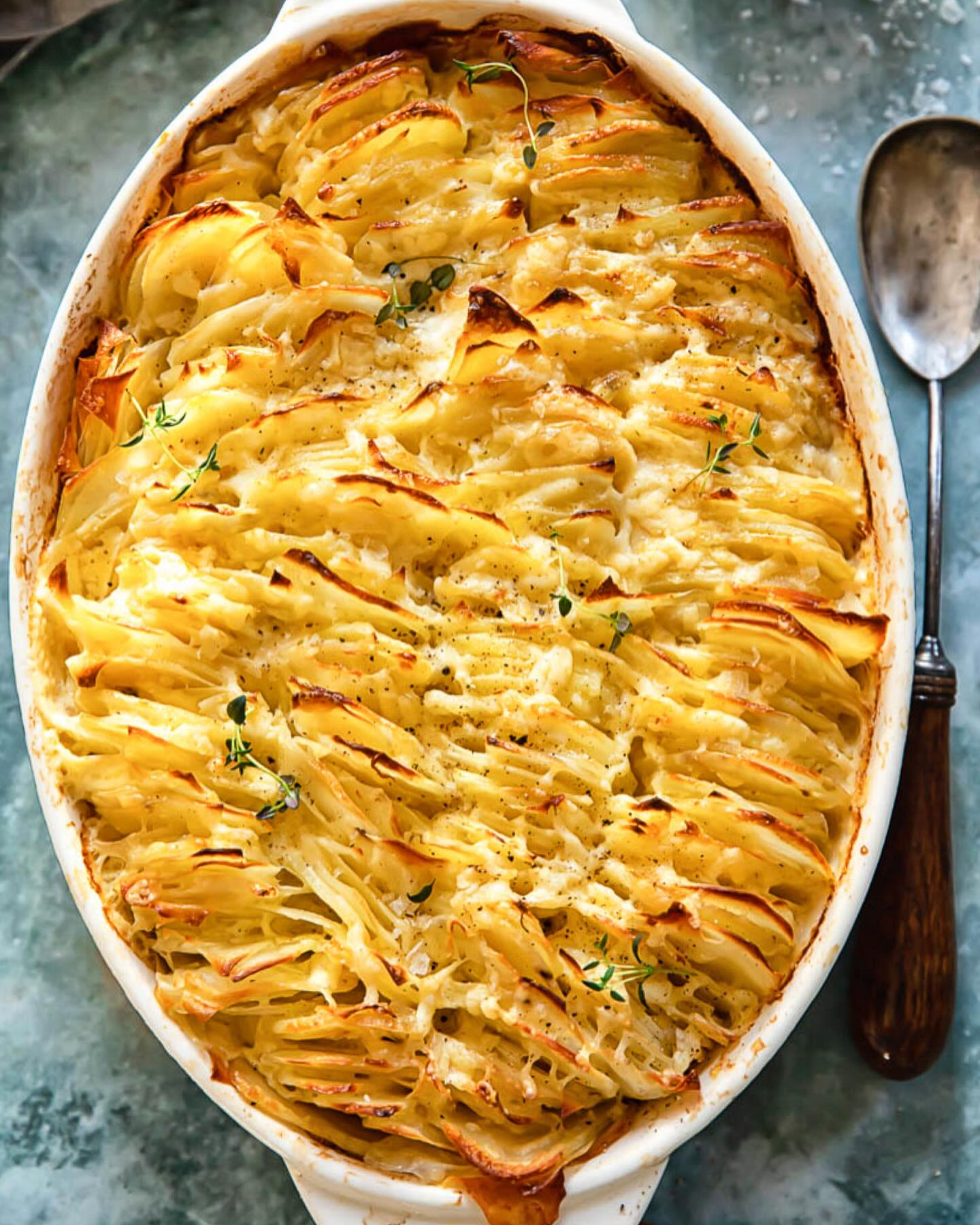
Cheesy scalloped potatoes are a comforting side dish made for holiday dinners, Sunday meals and gatherings when you want something warm and satisfying on the table. Thin slices of potato are layered in a baking dish, covered with a seasoned cream sauce and baked until tender. A generous layer of cheddar and Parmesan melts into the top, creating a golden finish with creamy layers underneath.
The secret to a dependable casserole is slicing the potatoes evenly, gently thickening the sauce before baking and giving the dish enough covered time for the potatoes to become tender. Uncovering it near the end allows the cheese to brown without drying out the layers.
Scalloped Potatoes vs. Potatoes au Gratin
Traditional scalloped potatoes are usually baked in a cream or milk sauce and may not contain cheese, while potatoes au gratin commonly feature cheese and a browned topping. This recipe combines the creamy layered style of scalloped potatoes with cheddar and Parmesan for a richer, cheesy casserole. It is a practical, crowd-pleasing version rather than a strict traditional preparation.
Ingredients You’ll Need
- 3 pounds Yukon Gold potatoes, peeled if desired
- 3 tablespoons unsalted butter
- 3 tablespoons all-purpose flour
- 2 cups whole milk
- 1 cup heavy cream
- 2 garlic cloves, minced
- ½ small yellow onion, very finely diced or grated
- 1 teaspoon kosher salt, or to taste
- ½ teaspoon black pepper
- ½ teaspoon dried thyme
- ¼ teaspoon paprika, optional
- 1½ cups shredded sharp cheddar cheese, divided
- ½ cup finely grated Parmesan cheese, divided
- 1 tablespoon chopped fresh parsley or chives, for serving
Ingredient Notes and Substitutions
Potatoes: Yukon Gold potatoes are a good choice because they hold their shape while becoming creamy. Russet potatoes also work and create a softer, starchier casserole. If using russets, avoid slicing them too thinly or stirring the layers once assembled.
Milk and cream: Whole milk and heavy cream create a rich sauce. For a lighter version, use 3 cups whole milk instead of the cream-and-milk combination. The sauce will be less rich but still satisfying.
Cheddar: Sharp cheddar gives the casserole a recognizable cheesy flavor. Mild cheddar works too, but the finished dish will taste less pronounced. Grate cheese from a block when possible because it generally melts more smoothly than pre-shredded cheese.
Parmesan: Parmesan adds a salty, savory note and helps the top brown. Pecorino Romano can be used in a smaller amount because it is saltier.
Thyme: Dried thyme adds a gentle savory note. Fresh thyme can be used; use about 1 teaspoon of leaves instead of ½ teaspoon dried.
Equipment
- 9-by-13-inch baking dish
- Sharp knife or mandoline
- Cutting board
- Medium saucepan
- Whisk
- Aluminum foil
How to Make Cheesy Scalloped Potatoes
- Prepare the oven and dish. Heat the oven to 375°F (190°C). Butter a 9-by-13-inch baking dish. If you are using a glass dish, avoid sudden temperature changes and make sure it is rated for oven use.
- Slice the potatoes evenly. Wash and peel the potatoes if desired. Slice them about ⅛ inch thick. A mandoline makes even slices, but a sharp knife works if you take your time. Keep the slices similar in thickness so they cook evenly. If you prepare them ahead, place them in cold water briefly to prevent browning, then drain and dry very thoroughly before layering.
- Make the cream sauce. Melt the butter in a saucepan over medium heat. Add the onion and cook for 2–3 minutes until softened. Stir in the garlic and cook for about 30 seconds. Sprinkle in the flour and whisk continuously for 1 minute to cook away the raw flour taste.
- Add the milk and cream. Slowly pour in the milk while whisking to prevent lumps, then add the heavy cream. Stir in the salt, pepper, thyme and paprika. Cook over medium-low heat for 3–5 minutes, whisking often, until the sauce lightly thickens and coats the back of a spoon. Do not let it boil vigorously.
- Stir in some cheese. Remove the saucepan from the heat. Stir in ½ cup cheddar and ¼ cup Parmesan until melted. The sauce should be pourable, not as thick as a cheese dip; it will continue to thicken in the oven.
- Layer the potatoes. Arrange about one-third of the potato slices in the prepared baking dish, slightly overlapping them. Spoon over some of the sauce. Repeat with the remaining potatoes and sauce, finishing with sauce over the top. Gently press the layers so the sauce reaches the spaces between slices.
- Cover and bake. Cover the dish tightly with foil and bake for about 50–60 minutes. The covered stage allows the potatoes to soften in the sauce without the top becoming too dark. Baking time varies with potato variety, slice thickness and dish material.
- Add the cheese topping. Carefully remove the foil. Sprinkle the remaining cheddar and Parmesan evenly over the potatoes. Return the dish to the oven uncovered for 20–25 minutes, until the top is golden and bubbling.
- Check for tenderness. Insert a thin knife into the center of the casserole. It should slide through the potato layers with little resistance. If the center is still firm, cover loosely and continue baking in 10-minute increments. If the top is already browned, keep it covered while the potatoes finish.
- Rest before serving. Let the casserole stand for 15–20 minutes. This gives the sauce time to settle and makes it easier to serve neat portions. Finish with parsley or chives.
Tips for Creamy, Evenly Cooked Potatoes
- Slice evenly. Thick and thin pieces cook at different speeds, leaving some layers firm while others become soft.
- Do not rinse away all the starch after slicing. A little potato starch helps the sauce cling and thicken. If you soaked the slices to prevent browning, drain and dry them well.
- Thicken the sauce lightly. A flour-and-butter base helps prevent a watery casserole, but the sauce should still pour easily.
- Cover for the first stage. Foil traps steam and helps the potato centers cook through.
- Use a knife to test the center. A browned top does not guarantee the middle is tender.
- Rest before cutting. Serving immediately can make the sauce run across the plate.
Common Problems and How to Fix Them
Potatoes are still firm: The slices may be too thick, the dish may be too deep or the oven may run cool. Cover the dish again and continue baking until a knife passes easily through the center.
The sauce is watery: Potatoes can release moisture as they bake. Make sure the sauce is lightly thickened before layering, avoid adding wet potato slices and allow the casserole to rest after baking.
The top is browning too quickly: Cover loosely with foil and continue baking until the center is tender. Add the cheese topping later if you know your oven browns aggressively.
The sauce looks grainy: High heat can cause some cheeses to separate. Keep the sauce at a gentle simmer, remove it from the heat before adding cheese and use freshly grated cheese where possible.
Make-Ahead Instructions
You can prepare the sauce a day ahead and refrigerate it in a covered container. Rewarm it gently until pourable before assembling. For the best texture, slice and layer the potatoes shortly before baking because cut potatoes can discolor and release starch into the holding water.
You can also bake the casserole until the potatoes are nearly tender, cool it promptly, cover and refrigerate, then finish with the cheese topping and final bake shortly before serving. When reheating a chilled casserole, allow extra time and check that the center is hot. Do not put a cold glass dish directly into a hot oven unless the manufacturer says it is safe.
Storage and Reheating
Refrigerate leftovers in a covered container within 2 hours and use within 3–4 days. Reheat individual portions in the microwave until hot, or warm a larger amount covered in a 325°F (163°C) oven. Remove the cover for the final few minutes if you want to refresh the top. Add a small splash of milk if the sauce has thickened considerably during storage.
Freezing is possible, but cream-based sauces can separate and potatoes may become softer after thawing. If you do freeze it, cool completely, portion into freezer-safe containers and use within about 1–2 months for best quality. Thaw overnight in the refrigerator and reheat gently until hot throughout.
What to Serve with Cheesy Scalloped Potatoes
This casserole pairs especially well with roast chicken, glazed ham, roast beef, pork tenderloin and baked salmon. For a holiday menu, serve it with green beans, roasted carrots, Brussels sprouts or a crisp salad to balance the richness. It is also hearty enough to accompany a simple roast vegetable platter for a meatless meal.
Variations
- Gruyère scalloped potatoes: Replace half the cheddar with Gruyère for a nutty, savory flavor.
- Garlic herb: Add a little fresh rosemary or extra thyme to the cream sauce.
- Caramelized onion: Cook the onion slowly until golden before adding garlic and flour.
- Smoky: Add a small amount of smoked paprika or cooked, crumbled bacon between the layers.
- Gluten-free: Use a suitable gluten-free flour blend or cornstarch slurry to thicken the sauce, checking that the other ingredients are gluten-free.
Frequently Asked Questions
Do I need to boil the potatoes before baking?
No. Thinly sliced raw potatoes cook in the cream sauce as the casserole bakes. The covered baking stage gives them time to soften before the cheese topping browns.
Which potatoes are best?
Yukon Gold potatoes are a dependable choice because they become creamy while holding their shape. Russets work if you prefer a softer, starchier result.
Can I make scalloped potatoes without flour?
Yes. You can thicken the sauce with a small cornstarch slurry instead. Mix cornstarch with cold milk until smooth, then whisk it into the warm sauce and cook gently until lightly thickened. Do not add dry cornstarch directly to hot liquid.
Why are my potatoes taking so long to cook?
Thick slices, a crowded deep dish, cold ingredients or an oven that runs low can extend the baking time. Slice evenly and test the center with a knife rather than relying only on the clock.
Can I use pre-shredded cheese?
Yes, but block cheese grated at home usually melts more smoothly. Some pre-shredded cheeses contain anti-caking agents that can make a sauce slightly less silky.
Recipe at a Glance
Prep time: 25 minutes
Cook time: 70–85 minutes
Rest time: 15–20 minutes
Total time: About 2 hours
Yield: 8 servings
Oven temperature: 375°F (190°C)
Dish: 9-by-13-inch baking dish
Quick Method Summary
Slice potatoes evenly. Make a lightly thickened garlic cream sauce with butter, flour, milk and cream, then stir in part of the cheese. Layer potatoes and sauce in a buttered baking dish, cover and bake until nearly tender. Add the remaining cheese and bake uncovered until golden. Rest before serving.
A Comforting Side Dish for the Holiday Table
Cheesy scalloped potatoes are worth the time because the oven transforms simple ingredients into a rich, layered side dish. Even slices, a gently thickened sauce and a covered first bake are the details that make the result reliable. Let the casserole rest before serving, and pair it with roast meat or vegetables for a satisfying holiday meal.
Leave a Reply