
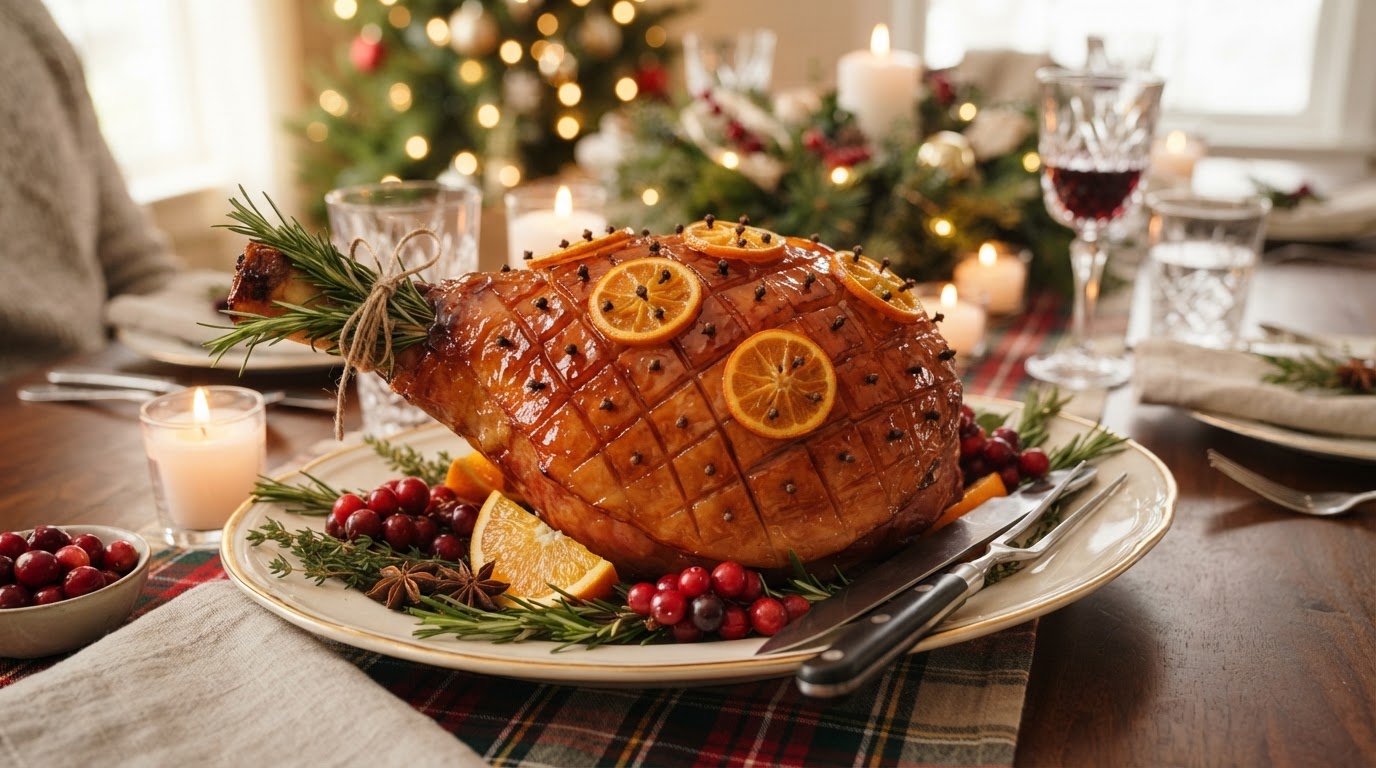
A honey glazed Christmas ham makes a beautiful centerpiece for a holiday meal, and it is easier to prepare than its impressive appearance suggests. Most supermarket holiday hams are already cured and fully cooked, so the goal is not to cook the meat from raw but to warm it gently without drying it out, then build a glossy, flavorful glaze over the outside.
This recipe uses honey, brown sugar, Dijon mustard, orange juice and a little butter. The honey and sugar caramelize into a shiny coating, mustard keeps the sweetness in balance, and orange adds a bright holiday flavor. Applying the glaze in several layers near the end of heating gives the ham a rich finish without burning the sugars.
Choosing the Right Ham
For this recipe, choose a fully cooked, bone-in ham weighing about 8–10 pounds. A shank or butt portion both work. A spiral-sliced ham is convenient because it is already cut, but its exposed slices can dry out more easily. If you choose spiral-cut, keep it tightly covered while warming and brush glaze carefully between some of the slices.
Check the package label. This recipe is written for a fully cooked ham, not a fresh uncooked ham. If the label says cook-before-eating, follow the package’s cooking instructions and safe internal temperature guidance instead.
Ingredients You’ll Need
- 1 fully cooked bone-in ham, about 8–10 pounds
- ½ cup honey
- ½ cup packed light brown sugar
- 2 tablespoons Dijon mustard
- 2 tablespoons unsalted butter
- ¼ cup fresh orange juice
- 1 teaspoon finely grated orange zest
- 1 tablespoon apple cider vinegar
- ¼ teaspoon ground cinnamon
- ⅛ teaspoon ground cloves or a small pinch of ground allspice
- Whole cloves, optional, for decoration
- Orange slices and rosemary sprigs, optional for serving
Ingredient Notes and Substitutions
Ham: A fully cooked bone-in ham offers good flavor and presentation. The exact heating time depends on weight, shape, whether it is spiral sliced and the package instructions. Use an instant-read thermometer rather than relying on time alone.
Honey: Regular mild honey works well. Strongly flavored varieties can change the glaze, so choose one you enjoy. Maple syrup can replace some of the honey, but the flavor will be different.
Brown sugar: Light brown sugar creates a smooth caramel-like glaze. Dark brown sugar adds a deeper molasses flavor. Either is suitable.
Dijon mustard: Mustard adds acidity and savory depth. It will not make the ham taste strongly of mustard. Yellow mustard can be substituted in a pinch, although the flavor is milder.
Orange: Fresh orange juice and zest add brightness. If you do not have fresh oranges, use unsweetened orange juice and omit the zest.
Equipment
- Large roasting pan
- Roasting rack, optional
- Heavy-duty aluminum foil
- Small saucepan
- Pastry brush or heat-safe spoon
- Instant-read meat thermometer
How to Make Honey Glazed Christmas Ham
- Check the ham label and prepare it. Read the package directions to confirm that the ham is fully cooked and note any specific reheating guidance. Remove the packaging and any plastic or netting. If there is a thick rind, follow the package guidance for removing it. Let the ham sit at room temperature for about 30 minutes while the oven heats; do not leave it out for an extended period.
- Preheat the oven. Heat to 325°F (163°C). Place the ham cut-side down on a rack in a roasting pan. If you do not have a rack, set it on a bed of thick onion slices. Add about ½ cup water to the bottom of the pan to reduce scorching and help create a little moisture. The water should not cover the ham.
- Cover and warm gently. Cover the ham loosely but securely with foil. Heat according to the package directions and the ham’s weight. As a general planning estimate, a fully cooked bone-in ham may need around 10–15 minutes per pound at 325°F, but the thermometer and package directions take priority. Keep the foil on during most of this stage to limit moisture loss.
- Make the glaze. About 25–30 minutes before the ham is expected to be ready, combine the honey, brown sugar, Dijon mustard, butter, orange juice, orange zest, cider vinegar, cinnamon and cloves in a small saucepan. Warm over low to medium-low heat, stirring until the butter melts and the sugar dissolves. Simmer gently for 2–3 minutes, then remove from the heat. The glaze should be pourable and lightly thickened, not a hard candy syrup.
- Check the temperature. Insert an instant-read thermometer into the thickest part of the ham without touching the bone. For a fully cooked ham being reheated for serving, heat to 140°F (60°C) if it was packaged in a USDA-inspected plant, or follow the package directions. If the ham was repackaged or is not labeled as inspected, follow USDA guidance for reheating to 165°F (74°C). The label and source of the ham matter, so do not assume every product uses the same target.
- Apply the first layer of glaze. Once the ham is close to its target temperature, remove the foil. Brush a generous layer of glaze over the outside. If the ham is spiral-sliced, spoon a little glaze between a few slices without pulling the ham apart.
- Finish uncovered. Return the ham to the oven uncovered for about 10 minutes. Brush with another layer of glaze and continue heating for another 5–10 minutes, watching closely. The glaze should look glossy and lightly caramelized. If it begins to darken too quickly, loosely tent the ham with foil.
- Rest before carving. Transfer the ham to a carving board and rest for 15–20 minutes. This makes it easier to carve and gives the juices time to settle. Spoon a little warm glaze from the pan over the slices if desired.
How to Avoid Dry Ham
- Start with a fully cooked ham. Confirm the label so you use the right heating instructions.
- Keep it covered at first. Foil limits moisture loss while the center warms.
- Use a thermometer. Heating beyond the recommended target can dry the meat.
- Glaze near the end. Honey and sugar can darken or burn if exposed to heat for too long.
- Rest before carving. A short rest makes carving neater and helps retain moisture.
- Slice only what you need. Keeping the remaining ham intact helps it stay moist on the serving table.
Make-Ahead Tips
The glaze can be prepared up to 3 days ahead. Cool it, refrigerate it in a covered container and warm gently in a saucepan before brushing it onto the ham. If it has thickened in the refrigerator, add a tablespoon of orange juice or water to loosen it.
You can also prepare your roasting pan, serving platter and garnishes earlier in the day. For the best texture, warm and glaze the ham on the day you plan to serve it rather than fully cooking and reheating it multiple times.
Storage and Leftovers
Refrigerate leftover ham within 2 hours of serving. Remove the meat from the bone if that makes it easier to store, and place it in shallow airtight containers. Use refrigerated cooked ham within 3–4 days. Keep the bone separately if you plan to use it for soup or beans.
Freeze portions in airtight freezer-safe packaging for 1–2 months for best quality. Thaw in the refrigerator. Reheat slices gently, covered, with a spoonful of broth, water or leftover glaze to help prevent drying. Avoid repeatedly warming the entire ham; heat only the portion you plan to serve.
What to Serve with Christmas Ham
Honey glazed ham pairs well with cheesy scalloped potatoes, mashed potatoes, roasted carrots, green beans, Brussels sprouts, glazed sweet potatoes and dinner rolls. A crisp salad or tangy slaw provides a refreshing contrast to the sweet glaze. Cranberry sauce or a mustard sauce can also be served on the side for guests who prefer a sharper flavor.
Glaze Variations
- Maple-orange: Replace half the honey with pure maple syrup and keep the orange juice.
- Pineapple: Replace the orange juice with pineapple juice for a sweeter tropical note.
- Brown sugar mustard: Increase the Dijon slightly and reduce the honey for a more savory finish.
- Spiced holiday glaze: Add a pinch of ginger or allspice. Use cloves sparingly so they do not overpower the ham.
- Less sweet: Reduce the brown sugar to ¼ cup and add another teaspoon of cider vinegar.
Frequently Asked Questions
Is Christmas ham already cooked?
Many hams sold for the holidays are cured and fully cooked, but not all products are. Read the label carefully. This recipe is designed for a fully cooked ham that only needs reheating and glazing.
Should I cover the ham while baking?
Yes, cover it for most of the warming period to help prevent the surface from drying. Remove the foil near the end so the glaze can become glossy and lightly caramelized.
When should I put the glaze on?
Apply it during the final 15–25 minutes of heating, in two or three thin layers. This gives the glaze time to set without exposing the honey and sugar to the oven for the entire cooking period.
Can I use a spiral-cut ham?
Yes. Spiral ham is convenient to carve, but its slices can dry more easily. Keep it covered while warming, avoid overheating and brush glaze between some of the slices near the end.
How much ham should I plan per person?
For a bone-in ham, plan roughly ½ pound per person when serving several sides, or more if you want generous leftovers. A boneless ham generally yields more edible meat per pound.
Recipe at a Glance
Prep time: 15 minutes
Heating time: Varies by ham weight; plan approximately 10–15 minutes per pound as a starting estimate
Glazing time: 15–20 minutes
Ham size: 8–10 pounds, fully cooked and bone-in
Oven temperature: 325°F (163°C)
Quick Method Summary
Place a fully cooked ham cut-side down in a roasting pan, cover with foil and warm at 325°F according to its label and weight. Simmer honey, brown sugar, Dijon, butter and orange into a glaze. Brush it over the ham during the final 15–25 minutes, heat to the appropriate safe serving temperature, then rest before carving.
A Holiday Centerpiece Made Simple
A beautiful Christmas ham does not need a complicated preparation. Gentle reheating protects the meat, while a honey-orange glaze adds shine and a balance of sweet, tangy and savory flavor. Check the label, use a thermometer, glaze near the end and let the ham rest before carving. With those details in place, the centerpiece is ready for a relaxed holiday meal.
Leave a Reply