
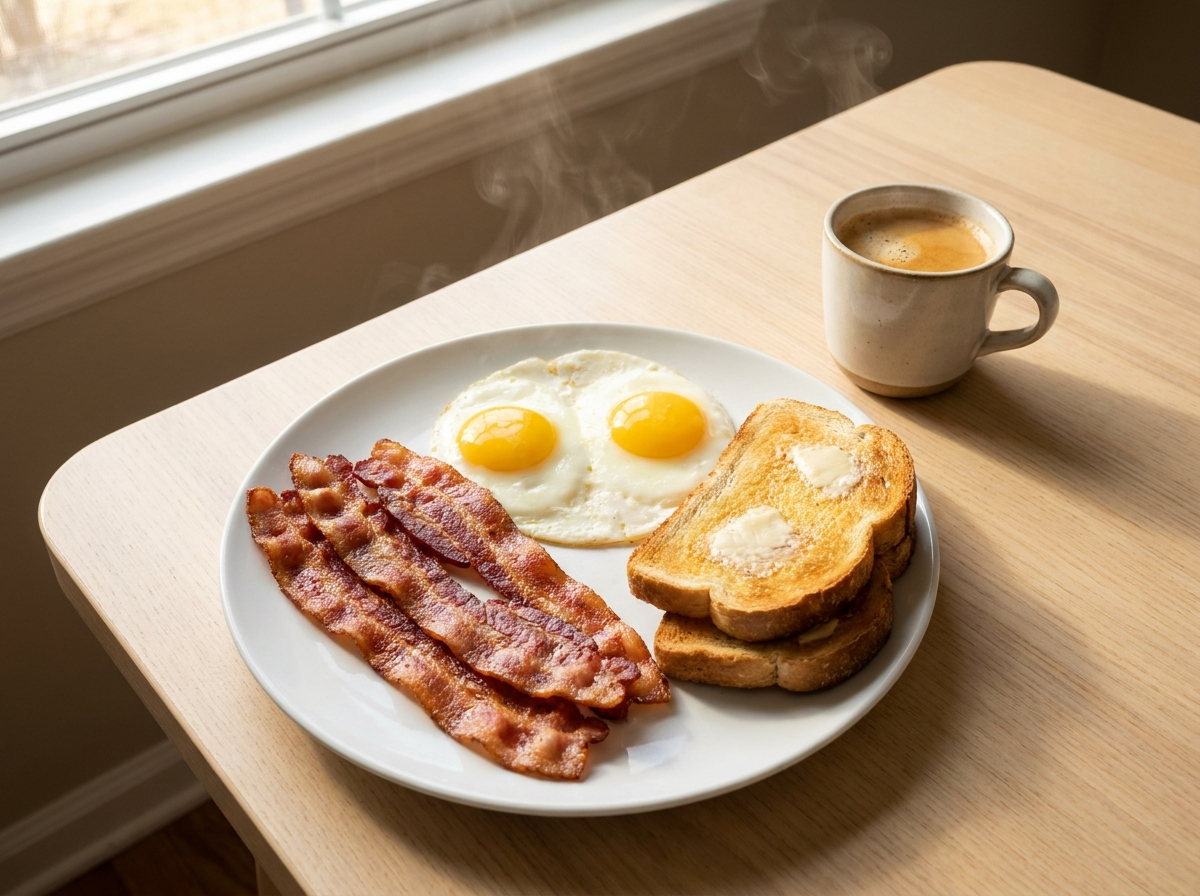
Bacon and eggs is a simple breakfast that works because two familiar ingredients bring contrasting textures and flavors: crisp, savory bacon and tender eggs. The trick is coordinating the cooking so both reach the table hot without rushing. This guide explains a dependable stovetop method, how to cook eggs several ways, and how to adjust the timing for a small or larger breakfast.
Why This Breakfast Works
Bacon renders its fat as it cooks, creating a flavorful cooking surface for eggs. Cooking bacon over medium or medium-low heat gives the fat time to render and helps the strips brown more evenly. Eggs cook quickly, so preparing them after the bacon lets you use the same skillet and serve everything together.
Ingredients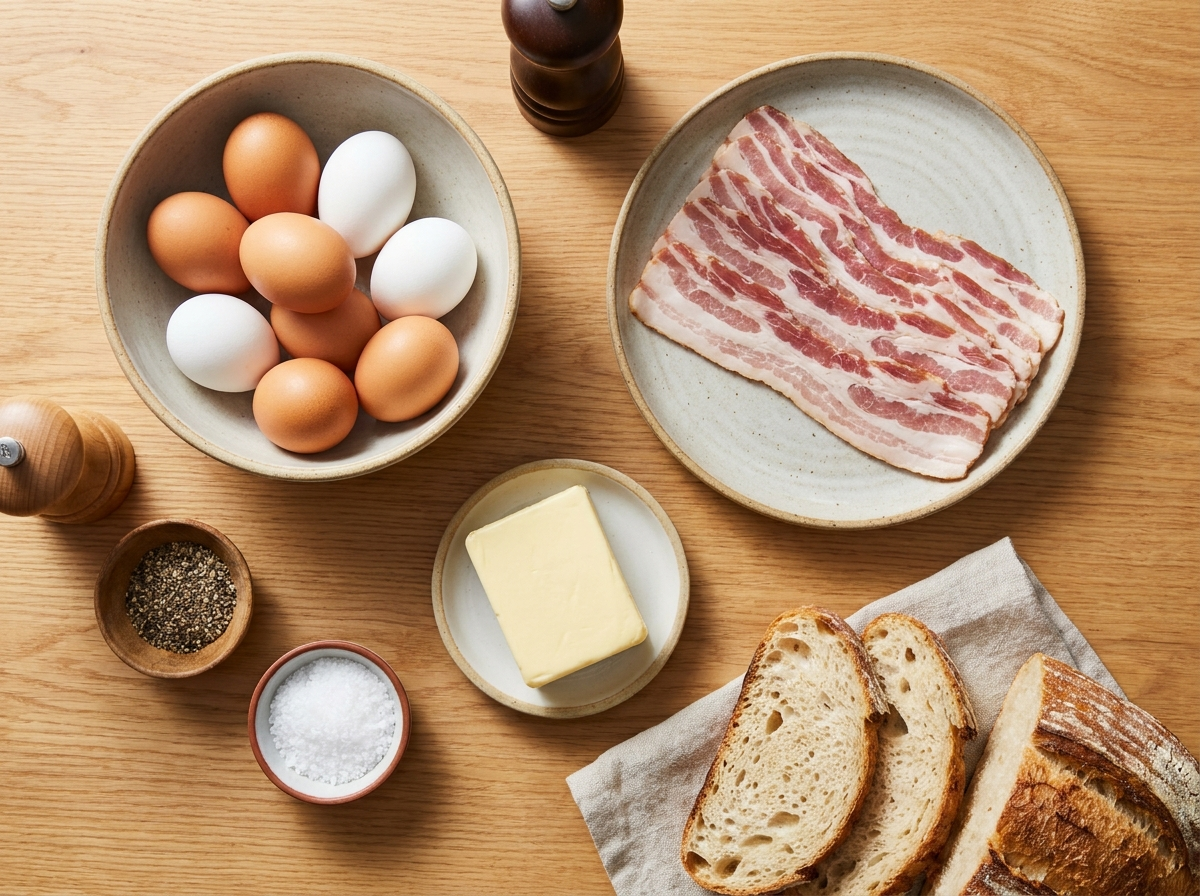
- 8 slices bacon
- 4 large eggs
- 1 teaspoon butter, optional
- Freshly ground black pepper, to taste
- Salt, as needed
- Toast, sliced tomatoes, avocado, or fruit, for serving
Choosing Your Ingredients
Regular-cut bacon cooks more quickly and evenly than very thick slices. Thick-cut bacon is meatier and may need a little more time. Choose a bacon style you enjoy, whether smoked, unsmoked, or maple-flavored. The bacon’s saltiness varies, so taste before adding extra salt to the eggs.
Fresh eggs are useful for fried eggs because the whites tend to hold their shape better. Butter adds a mellow flavor to scrambled or fried eggs, but you can use a little bacon fat instead. If using bacon fat, measure modestly; too much can make the eggs greasy.
How to Make Bacon and Eggs
- Prepare the skillet. Place bacon strips in a cold skillet in a single layer. Starting in a cold pan helps the fat render gradually. If your skillet is small, cook in batches rather than overlapping the strips.
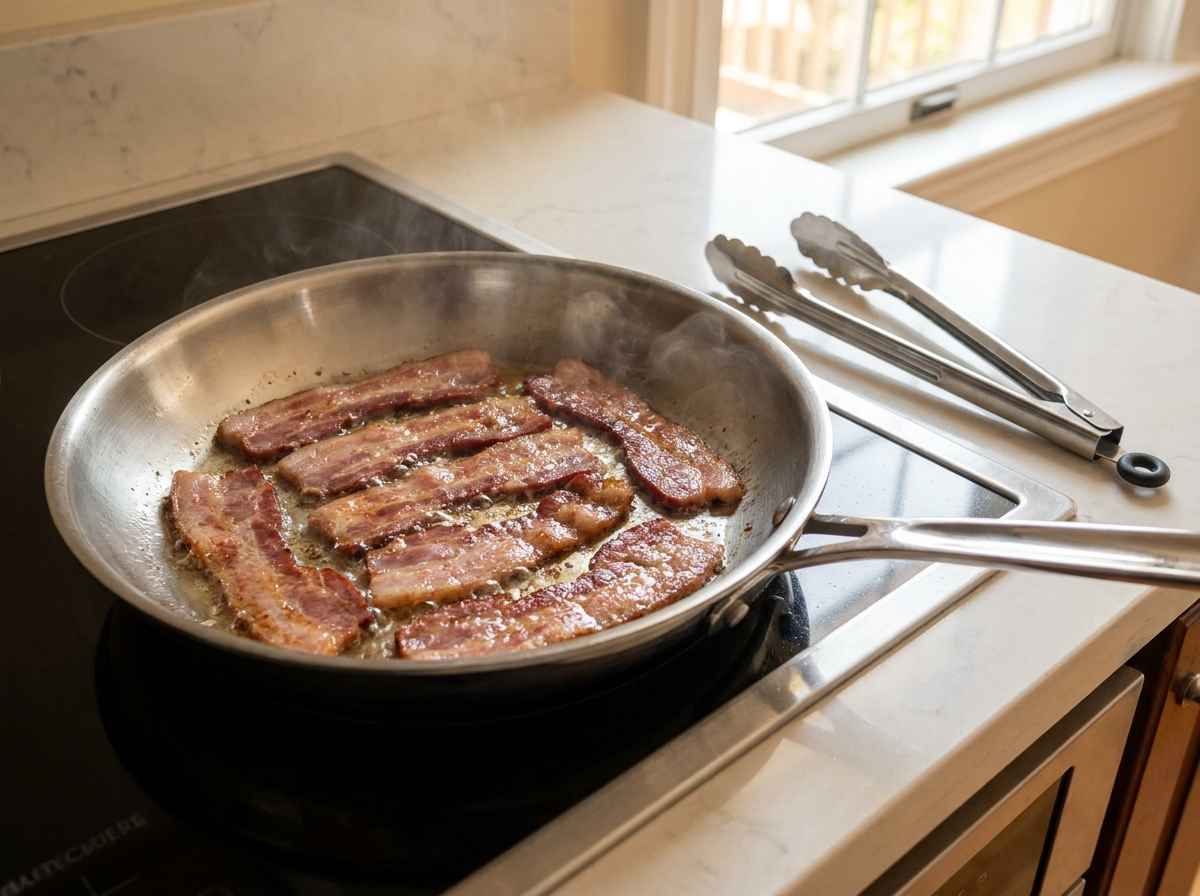
- Cook the bacon slowly. Set the skillet over medium-low to medium heat. Cook, turning occasionally with tongs, until the bacon reaches your preferred crispness. This often takes 8–12 minutes for regular-cut bacon and longer for thick-cut slices. Adjust heat if the edges darken too quickly.
- Drain the bacon. Transfer cooked bacon to a paper-towel-lined plate. Pour off excess fat carefully, leaving about 1 teaspoon in the pan if you want to cook the eggs in bacon drippings. Keep the remaining fat for another use only after it has cooled and been handled safely.
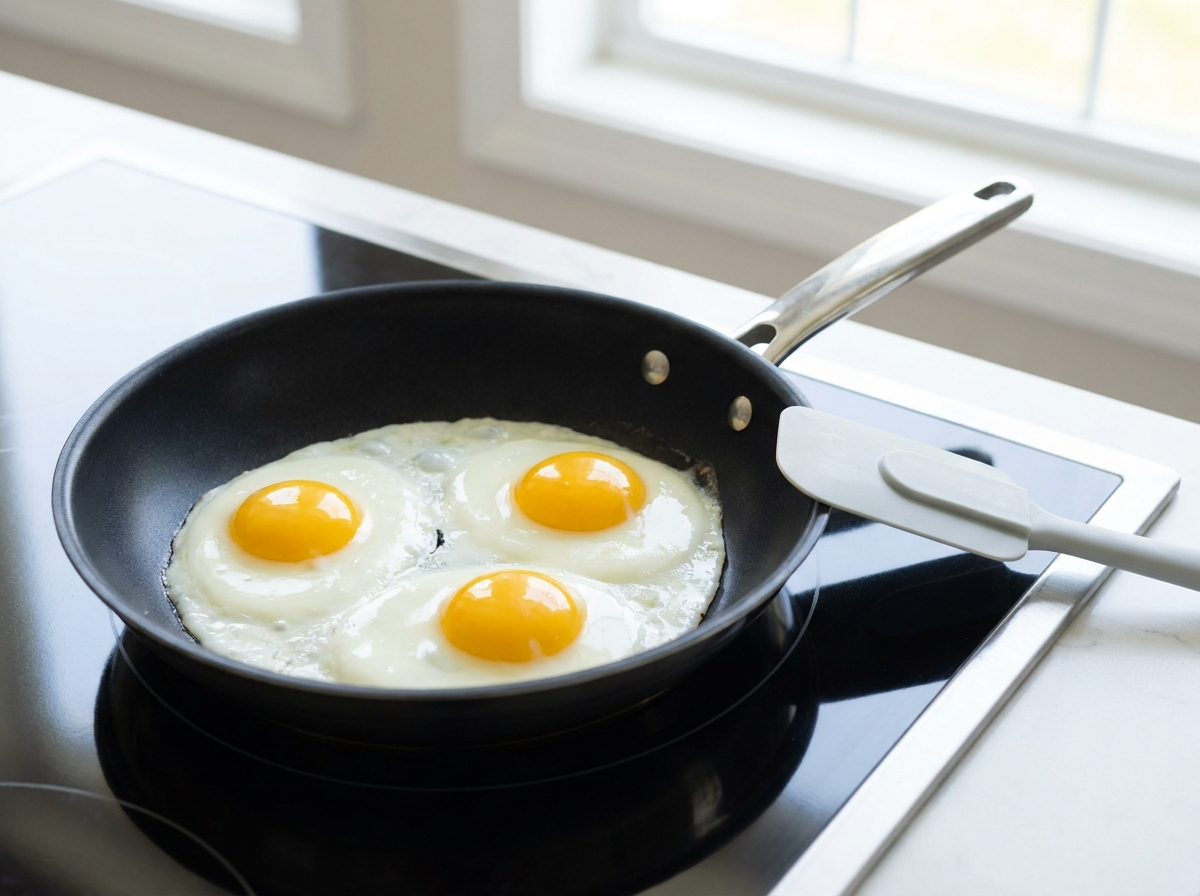
- Choose your egg style. For sunny-side-up eggs, reduce heat to medium-low, crack eggs into the skillet, and cook until the whites are set. Cover briefly if you want the tops to set without flipping. For over-easy eggs, cook until the whites are mostly set, flip carefully, and cook briefly on the second side. For scrambled eggs, beat the eggs in a bowl with a small pinch of salt, then cook over low heat while gently stirring with a spatula.
- Season. Add black pepper and salt if needed. Bacon is already salty, so season the eggs lightly.
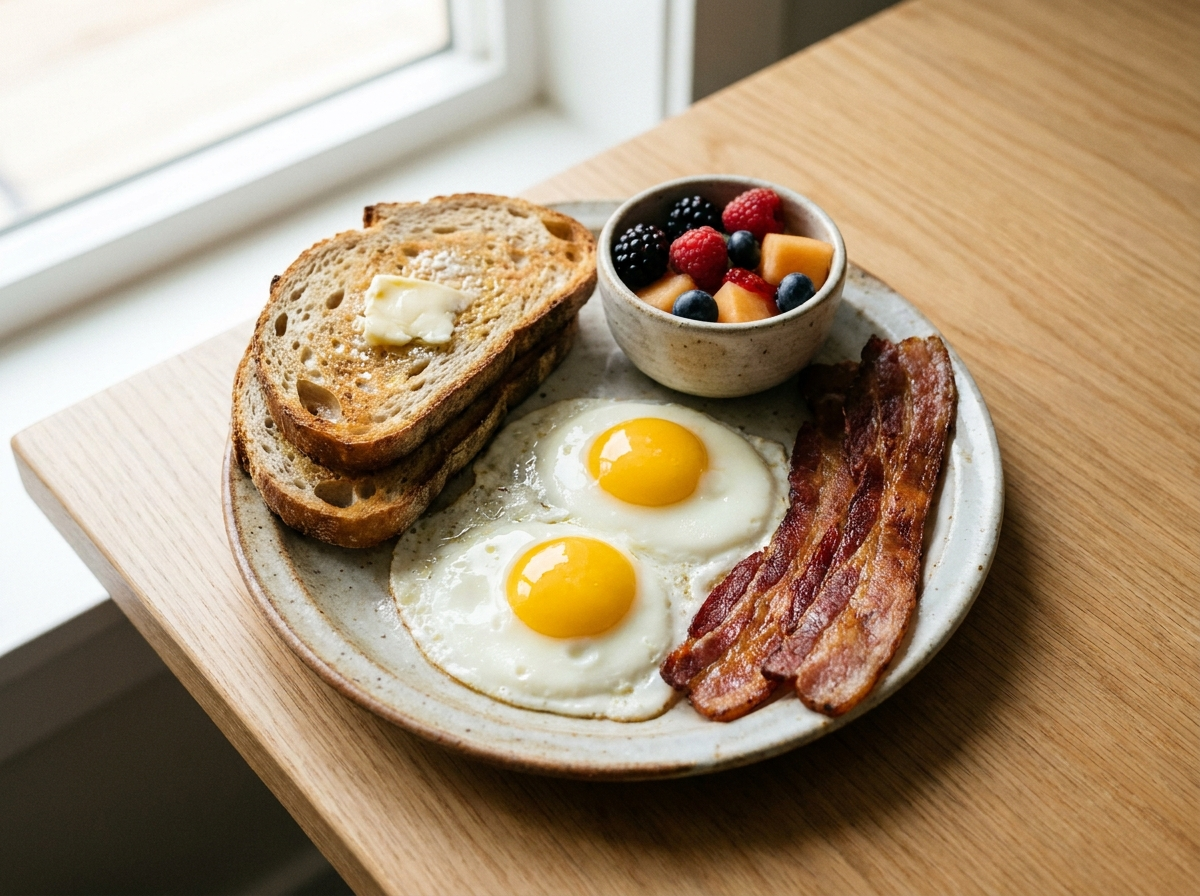
- Serve promptly. Plate the eggs with the bacon and add toast, fruit, or vegetables. Serve while hot.
How to Cook Eggs for Your Preference
Sunny-side up: Cook the eggs without flipping until the whites are opaque and set. A lid can help cook the top gently. Over-easy: Flip once the whites have mostly set and cook briefly for a runny yolk. Over-medium: Cook a little longer after flipping for a thicker, partly set yolk. Over-hard: Cook until both white and yolk are firm. Scrambled: Beat eggs lightly and stir slowly over low heat, removing the pan while the curds are still soft because residual heat continues cooking them.
For people at higher risk from foodborne illness, including young children, older adults, pregnant people, and those with weakened immune systems, choose eggs cooked until both yolks and whites are firm or use pasteurized egg products in preparations that remain undercooked. Keep raw eggs refrigerated and wash hands and utensils after handling them.
Tips for Better Bacon and Eggs
- Start bacon in a cold pan to encourage gradual fat rendering.
- Use medium-low heat if the bacon is browning before the fat has rendered.
- Do not crowd the pan; overlapping strips cook unevenly.
- Lower the heat before adding eggs because the skillet and bacon fat are already hot.
- Use only a small amount of bacon fat for eggs to avoid a greasy result.
- Cook eggs just before serving for the best texture.
Easy Variations
Cheesy eggs: Sprinkle a little shredded cheddar over eggs during the final minute of cooking. Breakfast sandwich: Layer bacon and a fried egg on a toasted English muffin with cheese. Vegetable plate: Serve with sautéed spinach, mushrooms, or tomatoes. Avocado toast: Add sliced avocado and a squeeze of lemon alongside the eggs. Spicy version: Finish with hot sauce or a pinch of red pepper flakes.
What to Serve with Bacon and Eggs
Toast, hash browns, breakfast potatoes, fresh fruit, sliced tomatoes, sautéed greens, or pancakes all make good additions. For a lighter plate, pair the bacon and eggs with fruit and whole-grain toast. For a hearty weekend breakfast, add potatoes and a small stack of pancakes.
Cooking for a Crowd
For several servings, cook bacon in batches and keep it warm on a rack set over a baking sheet in a low oven. Avoid stacking the strips, which traps steam and softens them. Cook eggs in batches close to serving time, or use a large nonstick skillet so they have room. Scrambled eggs are often easier to prepare for a group than individual fried eggs. Keep hot foods hot and do not leave eggs or bacon at room temperature for extended periods.
Storage and Reheating
Refrigerate leftover bacon and eggs promptly in separate covered containers and use within 3–4 days. Reheat bacon in a skillet, oven, or air fryer until hot. Reheat eggs gently in a covered skillet over low heat; scrambled eggs generally reheat better than fried eggs with runny yolks. For the best texture, cook only the amount of eggs you plan to serve.
Frequently Asked Questions
Should I cook bacon or eggs first?
Cook the bacon first. It takes longer, and the rendered fat can be used to cook the eggs. Drain excess fat and lower the heat before adding eggs.
How do I make bacon crispy?
Cook it in a single layer over moderate heat, turning occasionally. Allow enough time for the fat to render and drain the cooked strips on a rack or paper towel.
Can I bake bacon instead?
Yes. Arrange strips on a rimmed baking sheet and bake at 400°F until browned to your liking, often about 15–20 minutes depending on thickness and oven. Transfer to a rack or paper towels to drain.
Why do my scrambled eggs become rubbery?
They may be cooked over too much heat or left in the pan too long. Use low heat, stir gently, and remove them while they are just set.
Bacon and Eggs Recipe at a Glance
Prep: 5 minutes | Cook: 10–15 minutes | Total: About 15–20 minutes | Yield: 2 servings
Quick Instructions
- Place bacon in a cold skillet and cook over medium-low to medium heat, turning until crisp.
- Drain bacon and leave about 1 teaspoon fat in the pan if desired.
- Lower heat and cook eggs sunny-side up, over-easy, or scrambled.
- Season lightly, remembering that bacon is salty.
- Serve immediately with toast, fruit, or breakfast potatoes.
For a dependable bacon and eggs breakfast, cook the bacon patiently, use gentle heat for the eggs, and serve everything as soon as it is ready. A few simple sides turn this everyday combination into a complete breakfast.
Leave a Reply