
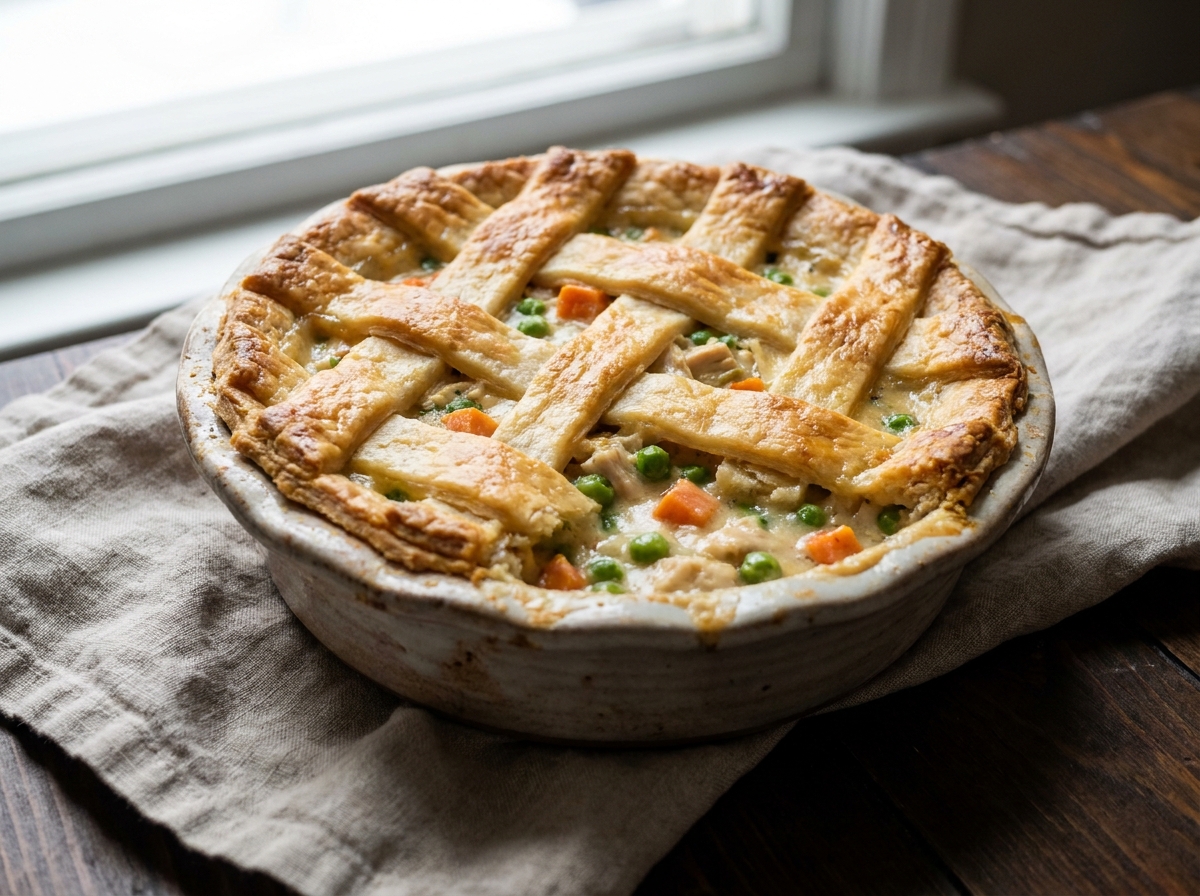
Chicken pot pie brings together tender chicken, vegetables, and a creamy savory filling beneath a golden pastry crust. The filling should be thick enough to hold together when sliced, but still creamy and moist. Carrots, peas, onion, and celery give the pie a familiar flavor, while thyme and black pepper add gentle seasoning.
This recipe uses cooked chicken, so it is a practical way to use leftover roast chicken or a store-bought rotisserie chicken. The sauce is made on the stovetop before baking, which gives you control over its thickness and seasoning. A refrigerated pie crust makes the process easier, but homemade pastry works just as well.
Why This Chicken Pot Pie Works
- Comforting filling: A simple butter-and-flour roux creates a creamy sauce that coats the chicken and vegetables.
- Flexible preparation: Use leftover cooked chicken or cook chicken specifically for the pie.
- Golden crust: An egg wash helps the pastry bake to an attractive golden finish.
- Make-ahead friendly: Prepare the filling in advance and assemble when ready to bake.
Ingredients You’ll Need
- 2½ cups cooked chicken: Shredded or cut into bite-size pieces.
- 1 refrigerated double pie crust: Or enough homemade pastry for a bottom and top crust.
- 4 tablespoons unsalted butter: For the sauce and vegetables.
- 1 small onion: Finely diced.
- 2 carrots: Peeled and diced small.
- 1 celery stalk: Diced.
- ⅓ cup all-purpose flour: Thickens the filling.
- 2 cups chicken broth: Preferably lower sodium.
- ¾ cup whole milk or half-and-half: Adds creaminess.
- 1 cup frozen peas: No need to thaw first.
- ½ teaspoon dried thyme: Or 1 teaspoon fresh thyme leaves.
- ½ teaspoon black pepper and salt: To taste.
- 1 large egg plus 1 teaspoon water: For the egg wash.
Ingredient Notes and Substitutions
Rotisserie chicken is convenient, but remove the skin and bones before measuring the meat. If cooking chicken from scratch, simmer boneless chicken breasts or thighs until the center reaches 165°F (74°C), then cool slightly and shred. Whole milk creates a creamy filling; half-and-half makes it richer. For a dairy-free adaptation, use a suitable plant-based butter and unsweetened milk alternative, understanding that the flavor and texture will differ.
Frozen peas are ideal because they retain their shape. Fresh or frozen green beans, corn, or mushrooms can also be used. Keep the total vegetable amount similar so the sauce-to-filling balance stays right.
How to Make Chicken Pot Pie
- Heat the oven. Preheat to 400°F (200°C). Set a baking sheet on the lower rack to catch any filling that bubbles over.
- Soften the vegetables. Melt the butter in a large saucepan over medium heat. Add onion, carrots, and celery. Cook for 6–8 minutes, stirring occasionally, until beginning to soften.
- Make the roux. Sprinkle the flour over the vegetables. Stir constantly for about 1 minute so the flour is coated in butter and loses its raw taste. Do not let it become dark brown.
- Add broth gradually. Slowly pour in the chicken broth while whisking to prevent lumps. Add the milk and continue stirring until the sauce begins to bubble gently and thicken, about 3–5 minutes.
- Season the filling. Stir in thyme, black pepper, and salt. Fold in the cooked chicken and frozen peas. Remove from the heat. The filling should be thick but spoonable; it will set further in the oven.
- Prepare the pie dish. Fit one crust into a 9-inch pie plate, pressing it gently into the corners. Trim excess pastry, leaving a small overhang. Pour in the slightly cooled filling and spread it evenly.
- Add the top crust. Lay the second crust over the filling. Trim, fold, and crimp the edges to seal. Cut several small slits in the top to let steam escape.
- Brush with egg wash. Beat the egg with water and lightly brush it over the top crust. Avoid letting excess egg pool around the edges.
- Bake. Bake for 30–40 minutes, until the crust is deeply golden and the filling bubbles through the vents. If the edges brown too quickly, cover them loosely with strips of foil.
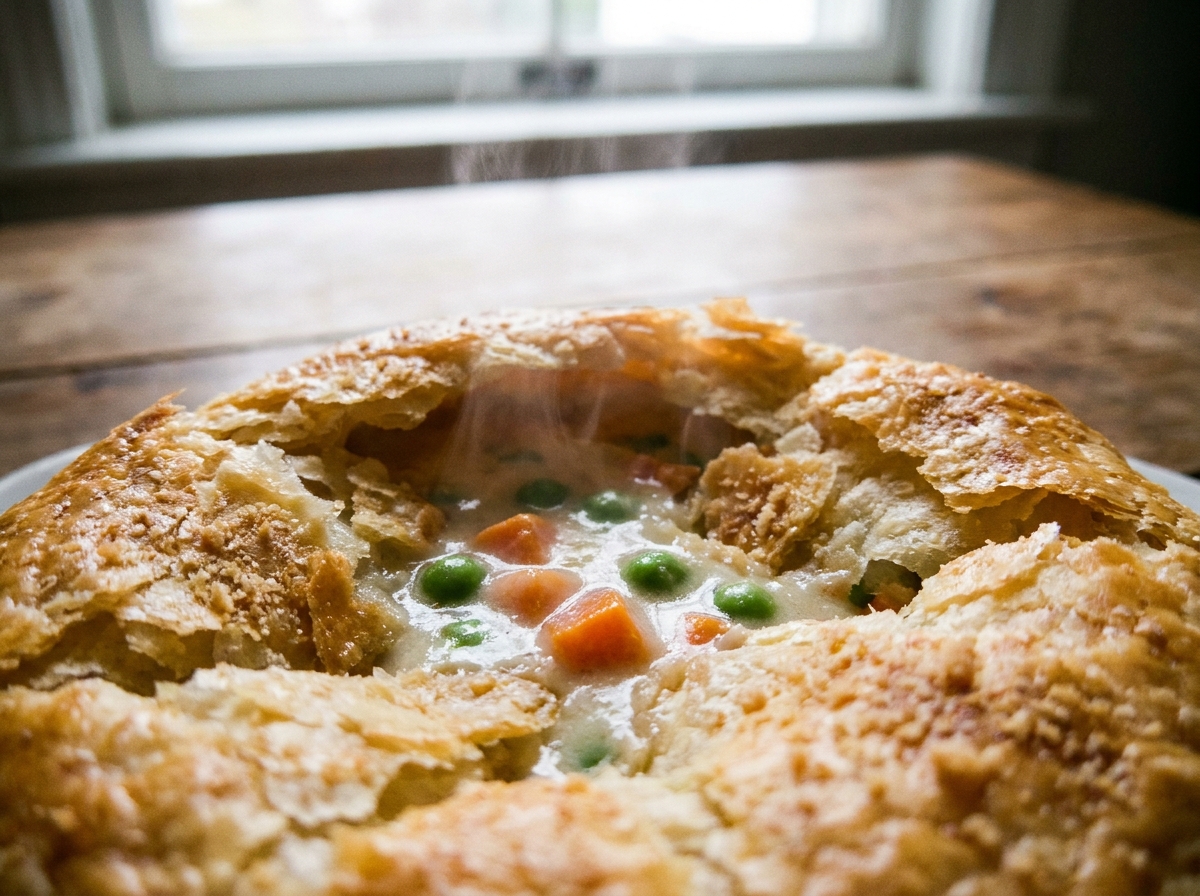
- Rest before slicing. Let the pie stand for at least 15–20 minutes. This allows the filling to settle and makes cleaner slices.
How to Keep the Bottom Crust from Getting Soggy
A thick filling is the first defense against a soggy crust. If the sauce is thin before baking, simmer it a little longer. Let very hot filling cool briefly before adding it to the pastry. A metal pie plate heats quickly and can help the bottom crust bake through. You can also partially blind-bake the bottom crust for 8–10 minutes if sogginess has been a recurring problem; line it with parchment and pie weights, then remove the weights before filling.
Tips for the Best Results
- Dice vegetables evenly so they soften at the same rate.
- Whisk the broth in gradually to prevent lumps in the sauce.
- Do not overfill the pie plate; leave room for bubbling.
- Cut steam vents in the top crust so the pastry does not become damp underneath.
- Allow the pie to rest before cutting. Slicing immediately can cause the filling to run.
Easy Chicken Pot Pie Variations
- Turkey pot pie: Replace the chicken with cooked turkey, especially after a holiday meal.
- Herb version: Add a little chopped parsley, sage, or rosemary with the thyme.
- Cheddar crust: Sprinkle a small amount of shredded cheddar over the filling before adding the top crust, or use a cheese pastry.
- Individual pot pies: Divide the filling among oven-safe ramekins and top each with pastry. Reduce baking time and check for bubbling filling and golden pastry.
- Top-crust-only pie: Skip the bottom crust and place pastry over the filling in a baking dish for an easier version.
Make-Ahead Instructions
Prepare the filling up to 2 days ahead, cool it promptly, and refrigerate in a covered container. When ready to bake, warm it until just loose enough to spread, then assemble with cold pastry. You can also assemble an unbaked pie and refrigerate it for a short period before baking, provided the filling is cold and the pastry remains firm. For best pastry texture, bake soon after assembly.
Storage and Reheating
Refrigerate leftover pie within 2 hours in a covered container and use within 3–4 days. Reheat individual slices in a 350°F (175°C) oven until hot in the center; this helps the crust regain some crispness. A microwave is quicker but softens the pastry.
To freeze, cool the pie completely and wrap it well, or freeze individual portions in airtight containers. Use within 2 months for best quality. Thaw overnight in the refrigerator and reheat until hot throughout. The texture of the sauce may change slightly after freezing.
Frequently Asked Questions
Can I use raw chicken in the filling?
For this method, use fully cooked chicken. Raw chicken may not cook evenly inside a thick filling. Cook it separately to 165°F (74°C) before adding.
Why is my pot pie filling runny?
The sauce may not have simmered long enough, or the pie may have been sliced before resting. Thicken the sauce on the stovetop until it coats a spoon and allow the baked pie to rest before serving.
Can I use puff pastry?
Yes. Use puff pastry as a top crust over the filling in a baking dish. Follow the package guidance and bake until puffed and golden, making sure the filling is hot.
Can I make this without peas?
Absolutely. Replace them with corn, green beans, or another vegetable, or leave them out.
Recipe Notes
Use cooked chicken and a properly thickened sauce. Cool the filling slightly before assembling, vent the top crust, and rest the baked pie before slicing. These details help create a creamy filling and a flaky crust.
Final Thoughts
Homemade chicken pot pie is a practical, satisfying dinner that turns simple chicken and vegetables into something special. With a thick, well-seasoned filling and a golden crust, it is a reliable choice for family meals, weekend cooking, and using up leftover chicken.
Choosing Between a Bottom-and-Top Crust and a Biscuit Topping
A traditional double-crust pie gives you pastry on the bottom and top, while a biscuit topping creates a more casual casserole-style dinner. For a biscuit version, transfer the thick filling to a baking dish, arrange biscuit dough over the surface with small gaps between pieces, and bake according to the biscuit recipe until the biscuits are golden and the filling bubbles. Avoid covering the entire surface with an unbaked, dense layer of dough; small gaps let steam escape and help the topping bake evenly.
How to Adjust the Filling Before Baking
If the filling seems too thick after cooling, stir in a few tablespoons of broth or milk until it loosens. If it is too thin, return it to the saucepan and simmer gently, stirring often, before it goes into the crust. Taste it before assembly because pastry itself is not heavily seasoned. A little extra black pepper, thyme, or parsley can make the chicken and vegetables taste more distinct.
Leave a Reply