
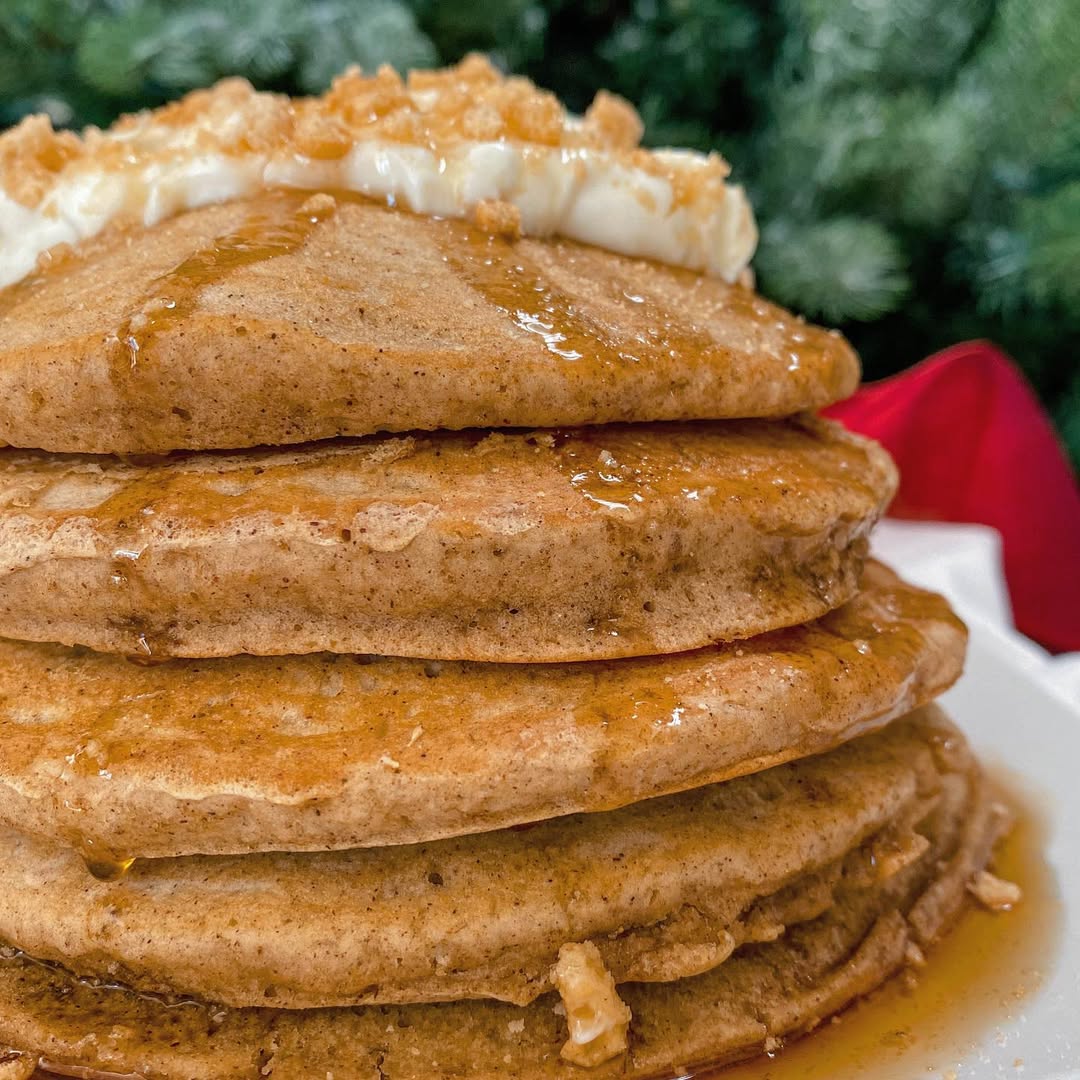
Fluffy gingerbread pancakes bring the cozy flavor of gingerbread cookies to the breakfast table. Molasses gives them their signature deep sweetness, while ground ginger, cinnamon, and a little nutmeg create a warm spice blend. They cook up soft and tender with lightly golden edges, making them a lovely choice for a winter weekend, Christmas morning, or a special brunch.
The key to fluffy pancakes is a thick but pourable batter, fresh leavening, and a light hand when mixing. You do not need special equipment or complicated steps. Serve the pancakes with maple syrup, a little butter, or cinnamon whipped cream. For a festive breakfast, add sliced pears, toasted pecans, or a dusting of powdered sugar.
What Makes These Gingerbread Pancakes Fluffy?
Baking powder provides most of the lift, while baking soda reacts with the acidic molasses and buttermilk to help the pancakes rise and brown. The batter should be mixed only until the dry ingredients are moistened. A few small lumps are fine; overmixing develops gluten and can make pancakes tough. Letting the batter rest briefly also gives the flour time to hydrate.
Ingredients You’ll Need
- 1 1/2 cups all-purpose flour: Provides the structure. Spoon it into the measuring cup and level it rather than packing it down.
- 2 tablespoons packed brown sugar: Adds sweetness and complements the molasses.
- 1 tablespoon baking powder: Helps the pancakes rise.
- 1/2 teaspoon baking soda: Reacts with the buttermilk and molasses.
- 1 1/2 teaspoons ground ginger: The defining gingerbread spice.
- 1 teaspoon ground cinnamon: Adds warmth and sweetness.
- 1/4 teaspoon ground nutmeg and 1/4 teaspoon fine salt: Round out the flavor.
- 1 large egg: Helps bind the batter.
- 1 1/4 cups buttermilk: Keeps the pancakes tender and reacts with the baking soda.
- 1/4 cup unsulphured molasses: Gives the pancakes their classic gingerbread taste and color. Avoid blackstrap molasses, which can taste too bitter.
- 3 tablespoons melted unsalted butter: Adds richness. Let it cool slightly before mixing.
- 1 teaspoon vanilla extract: Softens and rounds out the spices.
- Butter or neutral oil for the griddle: Use a thin coating to prevent sticking.
Ingredient Notes and Substitutions
Molasses: Regular unsulphured molasses is best for a balanced gingerbread flavor. Blackstrap molasses is darker, less sweet, and more bitter, so it is not the best substitute here. If you only have blackstrap, use a smaller amount and expect a stronger flavor.
Buttermilk: If you do not have buttermilk, add 1 tablespoon lemon juice or white vinegar to a measuring cup, then add enough milk to reach 1 1/4 cups. Let it stand for 5–10 minutes before using. The texture may be slightly different from cultured buttermilk.
Spices: Adjust ginger and cinnamon to taste, but keep the overall dry ingredient balance. A small pinch of cloves or allspice can add a deeper holiday flavor.
How to Make Fluffy Gingerbread Pancakes
- Combine the dry ingredients. In a large bowl, whisk together the flour, brown sugar, baking powder, baking soda, ginger, cinnamon, nutmeg, and salt. Break up any brown-sugar lumps so the spices distribute evenly.
- Mix the wet ingredients. In a second bowl, whisk the egg, buttermilk, molasses, melted butter, and vanilla until smooth. Make sure the melted butter is not hot, or it may cook the egg when combined.
- Make the batter. Pour the wet mixture into the dry ingredients. Fold gently with a spatula or whisk just until no large pockets of dry flour remain. The batter should be thick and may contain a few small lumps. Do not beat it until completely smooth.
- Rest briefly. Let the batter stand for 5–10 minutes. This short rest allows the flour to hydrate and gives the leavening time to begin working. Avoid leaving the batter for a long time because the pancakes may lose some of their lift.
- Preheat the griddle. Heat a nonstick skillet or griddle over medium to medium-low heat. Lightly grease it with butter or neutral oil. The surface is ready when a small drop of water sizzles gently rather than evaporating instantly.
- Portion the pancakes. Scoop about 1/4 cup of batter for each pancake onto the hot surface, leaving space between them. Spread very thick batter slightly with the back of the measuring cup, but do not press it flat.
- Cook the first side. Cook for about 2–3 minutes, or until bubbles appear on the surface and the edges begin to look set. Gingerbread batter is darker than plain pancake batter, so use the edges and bubbles as cues rather than waiting for a pale surface.
- Flip once. Slide a thin spatula underneath and flip gently. Cook the second side for another 1–2 minutes, until the center is cooked through. Adjust the heat if the outside darkens before the inside cooks.
- Keep warm and repeat. Transfer cooked pancakes to a wire rack set over a baking sheet in a 200°F oven while you finish the remaining batter. Avoid stacking them tightly, which can trap steam and soften the edges.
- Serve. Serve warm with butter and maple syrup, or add whipped cream, toasted pecans, or fresh fruit.
Tips for Tender, Evenly Cooked Pancakes
- Measure flour accurately: Too much flour makes the batter heavy. Spoon flour into the cup and level it.
- Do not overmix: Stop when the dry ingredients are incorporated. A few lumps are better than a tough pancake.
- Use moderate heat: Molasses and brown sugar can make the outside brown quickly. Medium-low heat gives the centers time to cook.
- Wait for the edges: Flip when bubbles appear and the edges look set, not simply after a fixed amount of time.
- Grease lightly: Too much butter can burn between batches. Wipe the pan and add a thin fresh coating as needed.
Serving Ideas
Maple syrup and butter are classic, but gingerbread pancakes pair especially well with toppings that add freshness or crunch. Try sautéed apples, sliced pears, orange segments, toasted pecans, or walnuts. A spoonful of plain or lightly sweetened Greek yogurt adds a tangy contrast. For a holiday brunch, serve them with scrambled eggs, breakfast sausage, and fresh fruit.
Make-Ahead and Storage
Make ahead: For the best rise, mix the dry ingredients in advance and store them in an airtight container. Refrigerate the wet ingredients separately, then combine them shortly before cooking. Fully mixed pancake batter is best cooked soon after mixing because the leavening begins reacting once the wet and dry ingredients meet.
Refrigerate: Cool leftover pancakes, then store them in an airtight container in the refrigerator for up to 3 days.
Freeze: Place cooled pancakes in a single layer on a baking sheet and freeze until firm. Transfer to a freezer bag with parchment between layers. Freeze for up to 2 months for best quality.
Reheat: Warm refrigerated or frozen pancakes in a toaster, toaster oven, or microwave until heated through. A toaster gives the edges a little more texture.
Easy Gingerbread Pancake Variations
- Extra-spiced: Add a small pinch of ground cloves or allspice for a deeper gingerbread profile.
- Chocolate chip: Sprinkle a few mini chocolate chips onto each pancake after pouring the batter onto the griddle.
- Pear gingerbread: Add finely diced pear to the batter or serve the pancakes with warm sautéed pears.
- Whole wheat blend: Replace up to 1/2 cup of the all-purpose flour with whole wheat flour. The pancakes will be slightly heartier.
- Dairy-free: Use an unsweetened plant-based milk soured with lemon juice and a dairy-free butter alternative. Flavor and browning may vary.
Common Problems and How to Fix Them
Pancakes are dense: The batter may have been overmixed, the flour may have been packed into the measuring cup, or the baking powder may be old. Mix gently and check that your leavening is fresh.
Outside browns too quickly: Lower the heat. Molasses naturally darkens the batter, so a medium-low setting is often more reliable than high heat.
Pancakes spread too much: The batter may be too thin. Add flour 1 tablespoon at a time, folding gently, until it thickens. Avoid adding too much or the pancakes may become heavy.
Centers are raw: Cook over lower heat for longer. Thick pancakes need time for heat to reach the middle before the outside becomes too dark.
Frequently Asked Questions
Can I make gingerbread pancakes without molasses?
Molasses gives the characteristic gingerbread flavor and color. You can substitute dark brown sugar and a little maple syrup in a pinch, but the taste will be different and less deeply spiced.
Can I make the batter the night before?
It is better to combine the dry and wet ingredients separately and refrigerate them. Mix them just before cooking so the baking powder and baking soda retain more of their lifting power.
Are gingerbread pancakes supposed to be dark?
Yes. Molasses and brown sugar make the batter darker than standard pancakes. Watch for bubbles, set edges, and a cooked center rather than relying only on color.
Can I use a pancake mix?
You can add ginger, cinnamon, and a little molasses to a plain pancake mix, but follow the package liquid ratios and avoid adding so much molasses that the batter becomes too thin.
How do I keep pancakes warm for a group?
Place them in a single layer on a wire rack over a baking sheet in a 200°F oven. This keeps them warm without trapping as much steam as a covered plate.
Recipe Notes
Use unsulphured molasses, fresh baking powder, and moderate griddle heat. Mix the batter gently and cook the pancakes until the edges set and the centers are cooked through. Serve immediately or freeze cooled pancakes for a quick breakfast later.
Final Thoughts
Fluffy gingerbread pancakes turn a familiar breakfast into something that feels special without requiring complicated preparation. Their warm spices and molasses flavor are ideal for cold mornings, holiday breakfasts, and weekend brunch. Keep the toppings simple with butter and syrup, or dress them up with fruit and toasted nuts for a festive plate.
Leave a Reply