
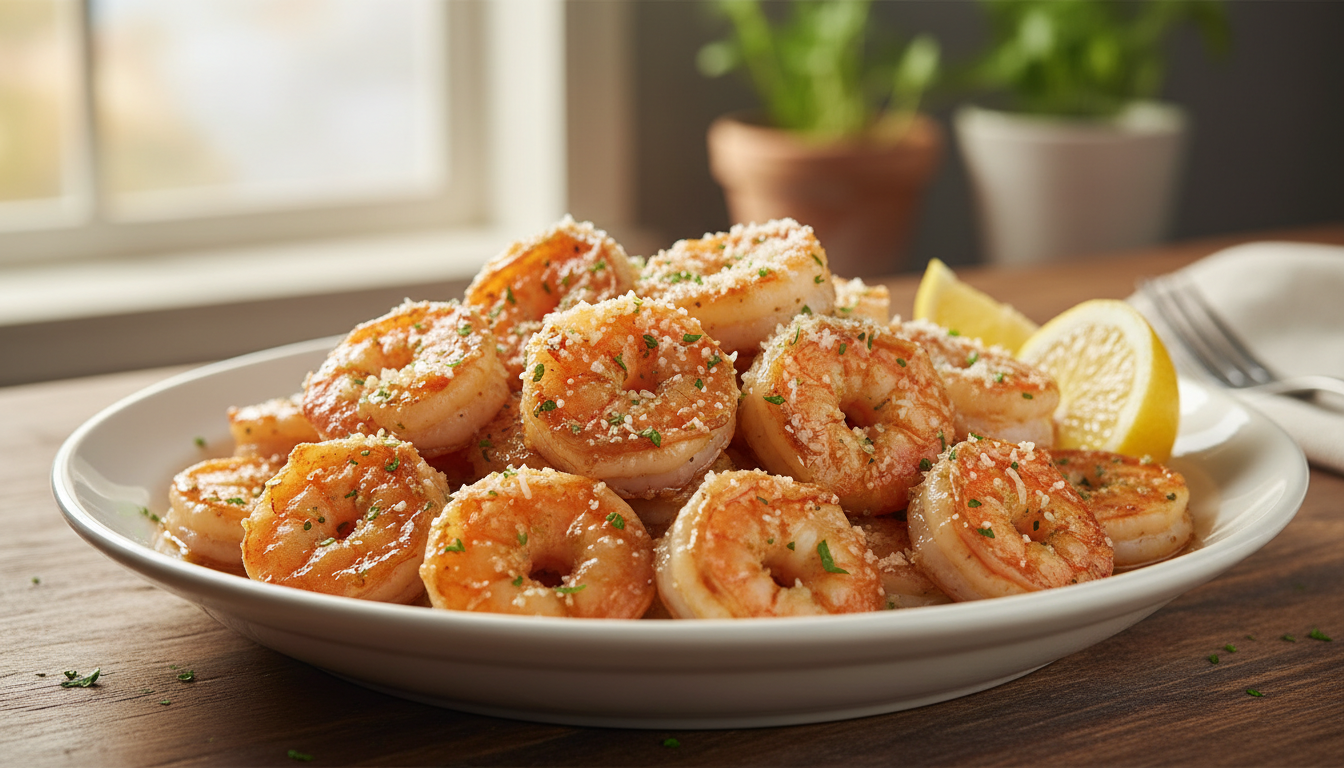
This garlic Parmesan shrimp recipe is a fast, flavorful way to turn a pound of shrimp into a satisfying dinner. The shrimp cook in minutes, then get coated in a buttery garlic sauce brightened with lemon and finished with finely grated Parmesan and fresh parsley. It feels special enough for company but is simple enough for a busy weeknight.
The key is to prepare everything before the shrimp hit the pan. Shrimp cook quickly, and garlic can turn bitter if it browns too much. With a hot skillet, a short cooking time and a little reserved pasta water or broth if needed, you can make a glossy sauce without overcooking the seafood.
Why You’ll Love This Garlic Parmesan Shrimp
- Quick: The complete dish takes about 20 minutes, including prep.
- Simple ingredients: Butter, garlic, lemon, Parmesan and parsley make a big impact.
- Flexible: Serve it with pasta, rice, crusty bread or vegetables.
- Easy to adjust: Add red pepper flakes for heat or extra lemon for a brighter finish.
Ingredients You’ll Need
- 1 pound large shrimp, peeled and deveined, tails on or off
- 1 tablespoon olive oil
- 3 tablespoons unsalted butter, divided
- 4 garlic cloves, finely minced
- ¼ teaspoon kosher salt, plus more to taste
- ¼ teaspoon black pepper
- ¼ teaspoon paprika (optional)
- ¼ teaspoon red pepper flakes (optional)
- ¼ cup low-sodium chicken broth or seafood stock
- ⅓ cup finely grated Parmesan cheese
- 1 tablespoon fresh lemon juice, plus lemon wedges to serve
- 2 tablespoons chopped fresh parsley
Ingredient Notes and Substitutions
Shrimp: Large shrimp, usually labeled 21–25 per pound, are a good size for this recipe. Frozen shrimp work well; thaw them overnight in the refrigerator or place them in a sealed bag in cold water until thawed. Pat them thoroughly dry so they sear instead of steaming.
Parmesan: Freshly grated Parmesan melts more smoothly than shelf-stable grated cheese. Add it off the heat to help prevent clumping. If you only have pre-grated Parmesan, use a little less and sprinkle it in gradually.
Butter and oil: Olive oil helps raise the fat’s tolerance for the initial sear, while butter provides flavor. You can use all butter, but keep the heat moderate.
Broth: Seafood stock adds depth, but low-sodium chicken broth or even a splash of water will loosen the pan sauce. Avoid adding too much; the sauce should lightly coat the shrimp.
Equipment
- Large skillet, preferably stainless steel or nonstick
- Paper towels
- Sharp knife and cutting board
- Microplane or fine grater for Parmesan and lemon zest
- Tongs or a wide spatula
How to Make Garlic Parmesan Shrimp
- Prepare the shrimp. If using frozen shrimp, thaw them completely. Remove shells and devein if needed, then pat dry with paper towels. Season with salt, black pepper and paprika. Dry shrimp are important because excess moisture prevents browning and can dilute the sauce.
- Get the finishing ingredients ready. Mince the garlic, grate the Parmesan, chop the parsley and squeeze the lemon. Keep them close to the stove. The cooking moves quickly once the shrimp are in the skillet.
- Sear the first side. Heat the olive oil and 1 tablespoon of butter in a large skillet over medium-high heat. When the butter is melted and the pan is hot, add the shrimp in a single layer. Work in batches if necessary; overcrowding causes the shrimp to release moisture and steam. Cook for about 1–2 minutes, until the underside turns pink and opaque around the edges.
- Turn and finish cooking. Flip the shrimp and cook for another 30–90 seconds, depending on their size. Transfer them to a clean plate as soon as they are opaque and just curled into a loose C shape. They will return to the pan later, so avoid cooking them until tightly curled.
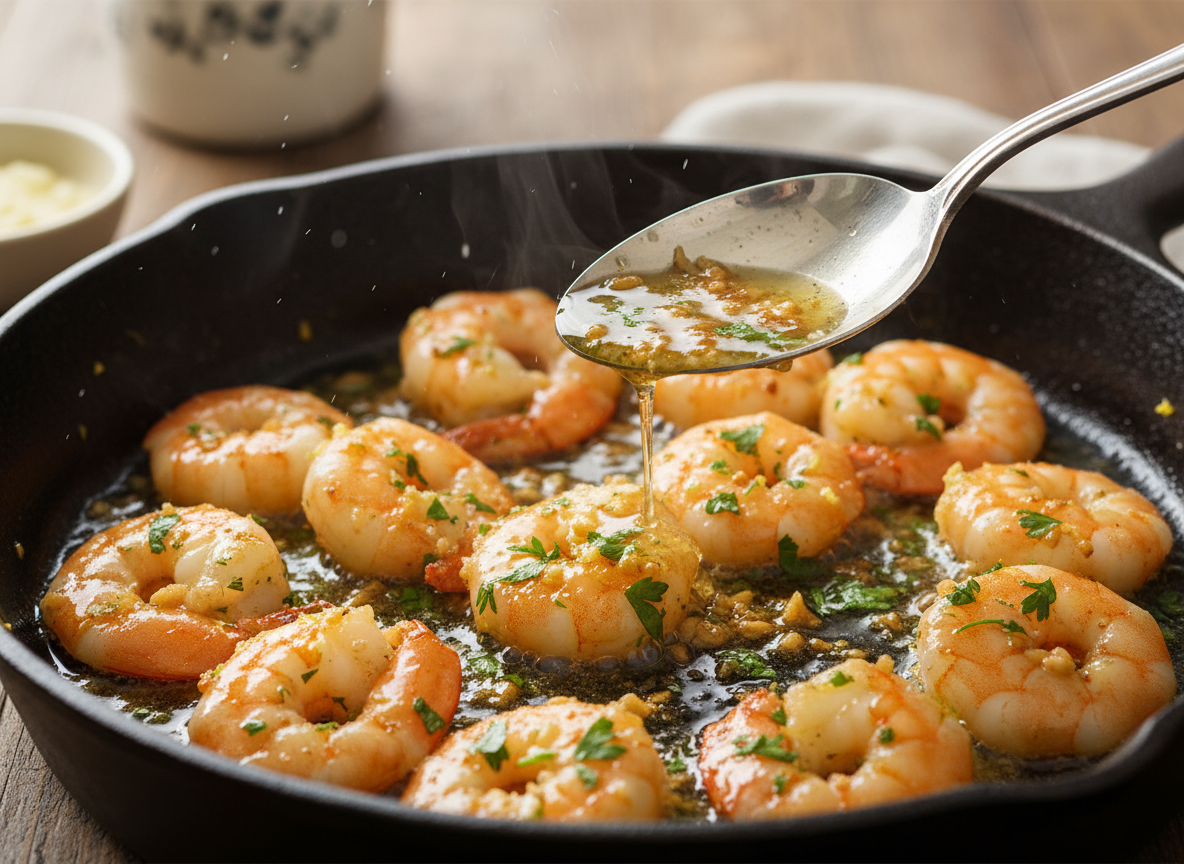
- Make the garlic butter base. Reduce the heat to medium-low. Add the remaining 2 tablespoons butter. Stir in the minced garlic and red pepper flakes, if using. Cook for about 30 seconds, just until fragrant. Do not let the garlic become dark brown.
- Loosen the sauce. Pour in the broth and scrape up any flavorful browned bits from the bottom of the skillet. Let it bubble gently for 1–2 minutes so it reduces slightly. Turn the heat to low.
- Add Parmesan and lemon. Stir in the lemon juice. Remove the skillet from direct heat and gradually add the Parmesan, stirring until it is incorporated. If the sauce looks too thick, add a tablespoon of warm broth or water at a time. Avoid boiling the cheese sauce.
- Return the shrimp. Add the shrimp and any juices on the plate. Toss gently for 30–60 seconds, just until warmed through and coated. Finish with parsley and taste for salt, pepper and lemon.
Tips for Tender, Flavorful Shrimp
- Do not overcook. Shrimp are done when the flesh is opaque and the thickest part reaches 145°F (63°C). They cook quickly, so watch the pan rather than relying only on the timer.
- Dry before seasoning. Removing surface moisture helps the shrimp make contact with the skillet and develop better flavor.
- Use moderate heat for garlic. Garlic burns faster than shrimp cook. Lower the heat before adding it.
- Grate the cheese finely. Fine shreds melt more evenly and are less likely to form clumps.
- Add cheese off the heat. High heat can cause Parmesan to seize or become grainy.
- Keep the sauce light. This is a buttery pan sauce, not a thick cream sauce. Add liquid gradually only if needed.
What to Serve with Garlic Parmesan Shrimp
For a complete meal, spoon the shrimp and sauce over linguine, angel hair or fettuccine. Reserve a little pasta cooking water to help the sauce cling to the noodles. Rice, orzo and creamy polenta are also good at catching the garlic butter. For a lighter plate, pair the shrimp with roasted asparagus, sautéed green beans, zucchini or a crisp green salad.
Warm crusty bread is especially useful for soaking up the remaining sauce. If serving this as an appetizer, leave the tails on and provide small forks or cocktail picks, with lemon wedges on the side.
Variations to Try
- Creamy version: Stir 2–3 tablespoons of heavy cream into the broth before adding Parmesan. Keep the heat low and do not boil.
- Lemon-forward: Add ½ teaspoon finely grated lemon zest with the parsley for a brighter citrus aroma.
- Spicy shrimp: Increase the red pepper flakes or add a pinch of cayenne.
- Garlic herb: Add a small amount of chopped basil or chives with the parsley.
- With pasta: Toss cooked pasta directly into the skillet with a splash of pasta water, then fold in the shrimp at the end.
Make-Ahead, Storage and Reheating
This recipe is best cooked just before serving because shrimp can become rubbery when reheated. You can make prep easier by peeling and deveining the shrimp, mincing the garlic, grating the cheese and chopping the parsley up to a day ahead. Store each ingredient covered in the refrigerator.
Refrigerate leftovers in an airtight container within 2 hours of cooking and use within 2 days. Reheat gently in a covered skillet over low heat with a teaspoon or two of water or broth, just until warmed. Avoid high heat and repeated reheating. Freezing the finished dish is not recommended because the shrimp texture and Parmesan sauce may change after thawing.
Frequently Asked Questions
Can I use frozen shrimp?
Yes. Thaw them fully before cooking and pat them dry. Cooking shrimp while still icy can release excess water into the skillet and make the sauce thin.
Should I use cooked shrimp?
Raw shrimp are best because they absorb flavor as they cook. If using precooked shrimp, make the sauce first and fold them in only at the end until heated through. Do not sear them for the full cooking time.
Why did my Parmesan turn grainy?
The pan may have been too hot, or the cheese may have been added too quickly. Take the skillet off the heat, use finely grated cheese and stir it in gradually. A small splash of warm broth can help loosen the sauce.
Can I make this without broth?
Yes. Use water, a splash of dry white wine or a little pasta water. Add just enough to create a light sauce.
How do I know when shrimp are done?
The flesh should be opaque with a pearly-white center and the shrimp should form a loose C shape. For a temperature check, the thickest part should reach 145°F (63°C).
Recipe at a Glance
Prep time: 10 minutes
Cook time: 8–10 minutes
Total time: About 20 minutes
Yield: 4 servings
Method: Stovetop
Quick Method Summary
Season and quickly sear dry shrimp. Set aside, gently cook garlic in butter, add broth and lemon, then stir in Parmesan off the heat. Return shrimp to the skillet briefly, toss to coat and finish with parsley.
A Simple Dinner Worth Repeating
Garlic Parmesan shrimp shows how a handful of everyday ingredients can make a meal feel special without a long cooking session. Keep the shrimp tender, let the garlic stay pale and fragrant, and add the Parmesan gently at the end. Serve it with pasta, rice or vegetables, and bring the skillet to the table while the sauce is still warm.
Leave a Reply