
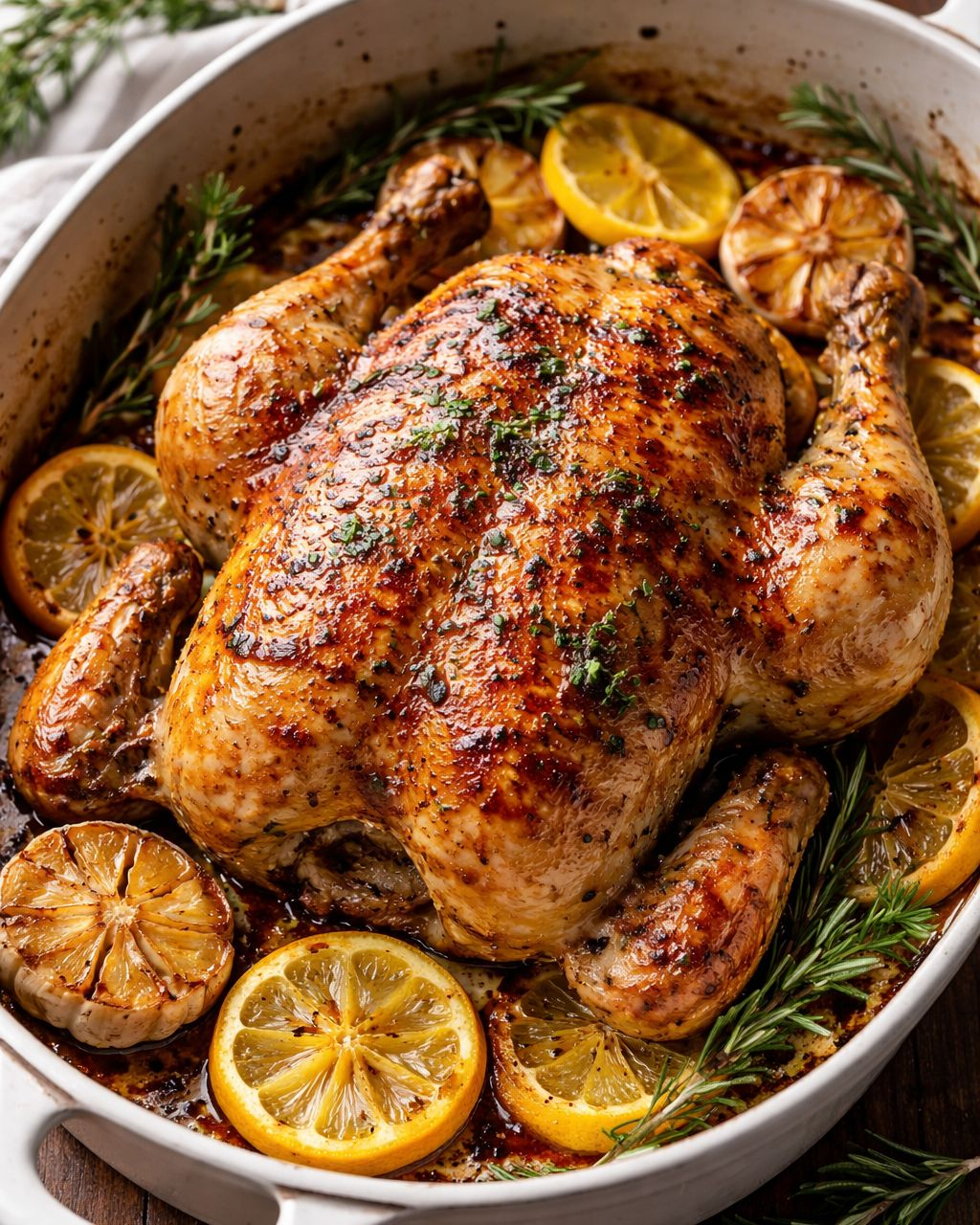
A beautifully roasted chicken has a way of making an ordinary dinner feel special. The skin turns golden and crisp, the kitchen fills with the aroma of garlic and herbs, and the meat becomes tender enough to serve alongside almost any favourite side dish.
This roast chicken with herbs is made with fresh rosemary, thyme, parsley, garlic, lemon, and butter. The herb butter seasons the chicken while helping the skin brown, while lemon and garlic add fragrance from the inside. The method is straightforward enough for a Sunday family dinner but attractive enough to serve when guests come over.
You don’t need complicated ingredients or special equipment. The important details are drying the chicken properly, seasoning it generously, allowing enough space for hot air to circulate, and checking the internal temperature rather than relying on cooking time alone.
Why You’ll Love This Herb Roast Chicken
This recipe combines familiar ingredients to create a balanced, savoury flavour.
- Fresh herbs add fragrance: Rosemary and thyme bring an earthy, aromatic flavour, while parsley adds a fresh note.
- Garlic and lemon brighten the flavour: Garlic provides savoury depth, and lemon balances the richness of the butter.
- Herb butter helps season the meat: Spreading some butter beneath the breast skin brings flavour closer to the meat.
- The method is uncomplicated: Most of the preparation involves seasoning the chicken. The oven does the rest.
- It’s versatile: Serve it with roasted vegetables, potatoes, rice, salads, or your favourite family sides.
Ingredients You’ll Need
For this recipe, choose a whole chicken weighing approximately 4–5 pounds (1.8–2.3 kg). A fully thawed chicken is easier to season evenly and roast predictably.
For the chicken
- 1 whole chicken, approximately 4–5 pounds
- 2 tablespoons olive oil
- 1 teaspoon salt, or to taste
- ½ teaspoon freshly ground black pepper
- 1 teaspoon paprika
- ½ teaspoon onion powder
For the herb butter
- 4 tablespoons unsalted butter, softened
- 3 garlic cloves, finely minced
- 1 tablespoon fresh rosemary, finely chopped
- 1 tablespoon fresh thyme leaves
- 1 tablespoon fresh parsley, chopped
- 1 teaspoon lemon zest
- 1 tablespoon lemon juice
For the chicken cavity
- ½ lemon, cut into wedges
- ½ small onion, cut into wedges
- 3 garlic cloves, lightly crushed
- 2–3 fresh rosemary sprigs
- 2–3 fresh thyme sprigs
Optional vegetables for the roasting pan
- 2 carrots, cut into large pieces
- 1 onion, cut into wedges
- 2 celery stalks, cut into large pieces
Ingredient Notes and Substitutions
Whole chicken: A chicken weighing 4–5 pounds is a convenient size for a family meal. If yours is larger or smaller, allow for a different roasting time and use a thermometer to check doneness.
Butter: Softened unsalted butter is easy to combine with the herbs and spread beneath the skin. Salted butter can also work, but reduce the additional salt slightly.
Rosemary and thyme: These herbs give roast chicken its classic savoury aroma. Fresh herbs are especially fragrant, but dried herbs can be used when fresh ones are unavailable. Use smaller quantities of dried herbs because their flavour is more concentrated.
Parsley: Parsley adds freshness and balances the stronger rosemary and thyme. If you don’t have it, you can leave it out.
Lemon: Lemon zest adds aromatic citrus flavour, while the juice brings a little acidity. Orange zest can provide a different citrus note, although it will make the flavour sweeter.
Paprika: Paprika contributes colour and mild warmth. Smoked paprika can be used if you enjoy a subtle smoky flavour.
Olive oil: Oil helps coat the skin and encourages browning. Melted butter can also be used, although the herb butter already provides plenty of richness.
How to Make Roast Chicken with Herbs
Step 1: Prepare the chicken
Preheat your oven to 425°F (220°C).
Remove the chicken from its packaging and take out any giblets stored inside the cavity. Pat the outside and inside of the chicken dry using paper towels.
Drying the skin is important. Excess surface moisture can interfere with browning, so take time to pat the chicken thoroughly.
Place the chicken breast-side up on a roasting rack set inside a roasting pan. If you don’t have a rack, you can arrange large pieces of onion, carrot, and celery underneath the chicken to lift it slightly from the bottom of the pan.
Step 2: Make the herb butter
In a small bowl, combine the softened butter, minced garlic, chopped rosemary, thyme leaves, parsley, lemon zest, and lemon juice.
Mix until the herbs and garlic are evenly distributed throughout the butter.
The mixture should be soft enough to spread easily. If the butter is too cold, leave it at room temperature for a few minutes before mixing.
Step 3: Season beneath and over the skin
Gently loosen the skin over the chicken breast using your fingers. Work slowly to avoid tearing it.
Spread some of the herb butter underneath the skin, distributing it over the breast meat as evenly as possible. Rub the remaining herb butter over the outside of the chicken.
Mix the salt, black pepper, paprika, and onion powder together. Sprinkle this seasoning over the entire chicken, including the legs and wings.
Drizzle the olive oil over the skin and rub gently to distribute it.
Seasoning both beneath and over the skin gives the chicken flavour throughout rather than leaving all the seasoning on the surface.
Step 4: Add lemon, garlic, and herbs
Place the lemon wedges, onion wedges, crushed garlic cloves, rosemary sprigs, and thyme sprigs inside the chicken cavity.
These aromatics add fragrance as the chicken roasts.
Avoid packing the cavity tightly. Leave enough room for hot air to circulate inside.
If you prefer a neater presentation, tuck the wing tips underneath the chicken. You can also tie the legs loosely together with kitchen twine, although this is optional.
Step 5: Roast until golden and cooked through
Place the chicken in the preheated oven, breast-side up.
Roast at 425°F (220°C). A 4–5-pound chicken may take approximately 1 hour 15 minutes to 1 hour 40 minutes, but the actual time depends on its size, shape, starting temperature, and your oven.
As the chicken cooks, the skin should gradually become golden brown. The pan juices will collect underneath, and the herbs will release their aroma.
If the skin becomes deeply browned before the meat is cooked, loosely cover the browned areas with foil and continue roasting.
The most reliable way to check doneness is with an instant-read food thermometer. Insert it into the thickest part of the breast and the innermost part of the thigh, avoiding the bone. Both should reach at least 165°F (74°C).
Do not rely on the colour of the juices or the appearance of the skin alone to determine whether the chicken is safe to eat.
Step 6: Rest before carving
Remove the chicken from the oven once it reaches the safe internal temperature.
Transfer it to a carving board and let it rest for approximately 15–20 minutes before cutting.
Resting allows the juices to redistribute and makes the chicken easier to carve. Avoid cutting into it immediately, as juices can run out onto the board.
Step 7: Carve and serve
Remove the legs and thighs first, then separate the wings. Slice the breast meat against the grain into even portions.
Arrange the chicken on a serving platter and spoon over a little of the pan juice if desired.
Garnish with fresh parsley, rosemary, or lemon wedges. Serve while warm with your favourite side dishes.
Tips for the Best Roast Chicken
Start with a dry chicken. Patting the skin dry is one of the simplest ways to encourage browning. If you have time, you can refrigerate the uncovered chicken on a tray for several hours before roasting, keeping it safely chilled.
Use softened butter. Soft butter spreads more easily beneath the skin and helps distribute the herbs evenly.
Don’t overcrowd the roasting pan. Leave space around the chicken so hot air can circulate. If adding vegetables, arrange them around the bird rather than piling them on top.
Use a thermometer. Chicken size and oven performance vary. Checking the internal temperature is more reliable than following a fixed roasting time.
Let the chicken rest. Give it time before carving to help retain moisture.
Watch the skin near the end. If it browns too quickly, cover the affected areas loosely with foil rather than lowering the temperature drastically.
Common Mistakes to Avoid
- Skipping the drying step: Wet skin is less likely to become crisp and golden.
- Using cold, hard butter: It is difficult to spread evenly beneath the skin.
- Overfilling the cavity: Too many aromatics can restrict airflow and affect how evenly the chicken cooks.
- Guessing doneness: A browned exterior does not guarantee that the centre has reached a safe temperature.
- Carving too soon: Cutting immediately after roasting allows more juices to escape.
- Using too much dried rosemary: Dried rosemary has a concentrated flavour and can become overpowering if used in excess.
What to Serve with Herb Roast Chicken
Roast chicken works with a wide range of sides, so you can build the meal around what you already have.
- Roasted potatoes: Their crisp edges and fluffy centres complement the tender chicken.
- Garlic mashed potatoes: A creamy side dish that pairs naturally with the herb butter and roasting juices.
- Roasted carrots: Their natural sweetness balances the savoury herbs.
- Steamed green beans: A simple vegetable side that keeps the meal fresh.
- Garden salad: Lettuce, cucumber, tomatoes, and a light dressing add contrast.
- Rice: Plain steamed rice or seasoned rice makes the meal filling and easy to serve to a family.
For a special dinner, arrange the carved chicken on a large platter with roasted vegetables and fresh herbs.
Variations to Try
Lemon Garlic Roast Chicken
For a stronger citrus flavour, add extra lemon zest to the butter and place a few additional lemon wedges around the chicken in the roasting pan.
Garlic Butter Roast Chicken
If you prefer a richer garlic flavour, increase the garlic slightly and use a little extra herb butter beneath the breast skin.
Mediterranean-Style Roast Chicken
Add chopped oregano to the herb mixture and serve the finished chicken with roasted tomatoes, olives, and potatoes.
Spicy Herb Roast Chicken
Add a little cayenne pepper or chilli flakes to the seasoning mixture. Adjust the amount to suit your preferred heat level.
How to Store and Reheat Leftovers
Allow leftover chicken to cool slightly, then refrigerate it promptly in shallow, airtight containers. Refrigerate within two hours of cooking, or within one hour if the surrounding temperature is above 90°F (32°C).
Refrigerated cooked chicken should generally be used within 3–4 days.
For longer storage, freeze the meat in airtight, freezer-safe containers or bags. For best quality, use frozen cooked chicken within approximately 2–6 months.
To reheat, place the chicken in an oven-safe dish with a small splash of broth or water. Cover loosely with foil and heat until the centre reaches 165°F (74°C). The microwave can also be used for individual portions, provided the chicken is heated evenly to 165°F.
Frequently Asked Questions
Should I cover roast chicken while it cooks?
Usually, no. Roasting uncovered helps the skin brown. If the skin becomes too dark before the chicken is cooked through, loosely cover the browned areas with foil.
Should I put butter under the chicken skin?
Yes. Gently spreading herb butter beneath the breast skin helps season the meat directly. Take care not to tear the skin.
Can I use dried herbs instead of fresh herbs?
Yes. Dried rosemary and thyme can be used, although their flavour is more concentrated. Start with smaller amounts and adjust to taste.
How do I know when roast chicken is done?
Use an instant-read thermometer. Check the thickest part of the breast and the innermost part of the thigh, without touching bone. Both locations must reach at least 165°F (74°C).
Can I prepare the chicken ahead of time?
You can mix the herb butter and prepare the seasoning ahead. You can also season the chicken and refrigerate it covered before roasting. Keep raw poultry refrigerated and avoid leaving it at room temperature for extended periods.
Why is my roast chicken skin not crispy?
Excess moisture, overcrowding, and insufficient browning can all contribute. Pat the chicken dry, allow room around it in the roasting pan, and roast uncovered.
Final Thoughts
Roast chicken with herbs is a practical recipe to keep in your regular dinner rotation. Rosemary, thyme, garlic, lemon, and butter give the chicken a fragrant, savoury flavour, while a hot oven helps create the golden skin that makes a roast so appealing.
Serve it with potatoes and vegetables for a comforting family meal, or arrange it on a platter for a special occasion. Once you understand the basic preparation and use a thermometer to check doneness, the method is easy to adapt with different herbs and seasonings.
Leave a Reply