
A Comforting Classic Pot Roast
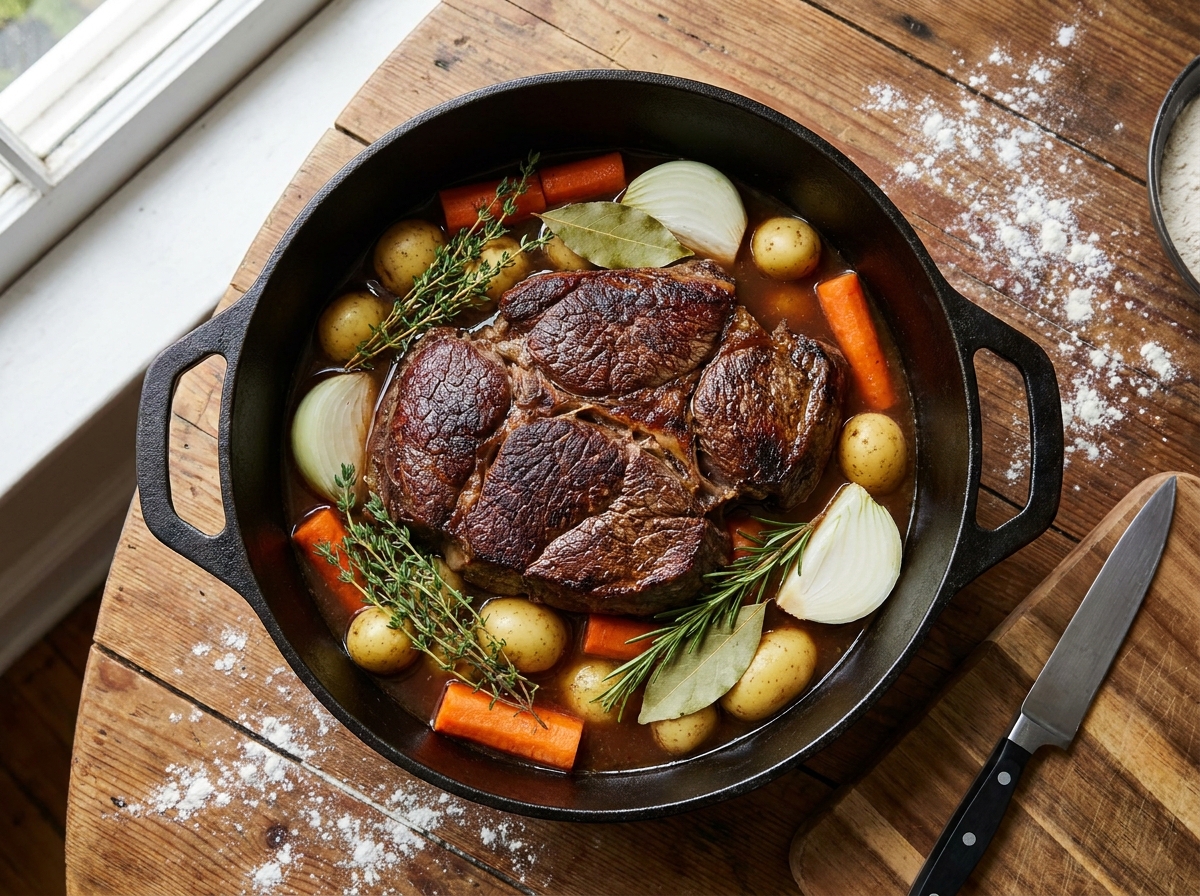
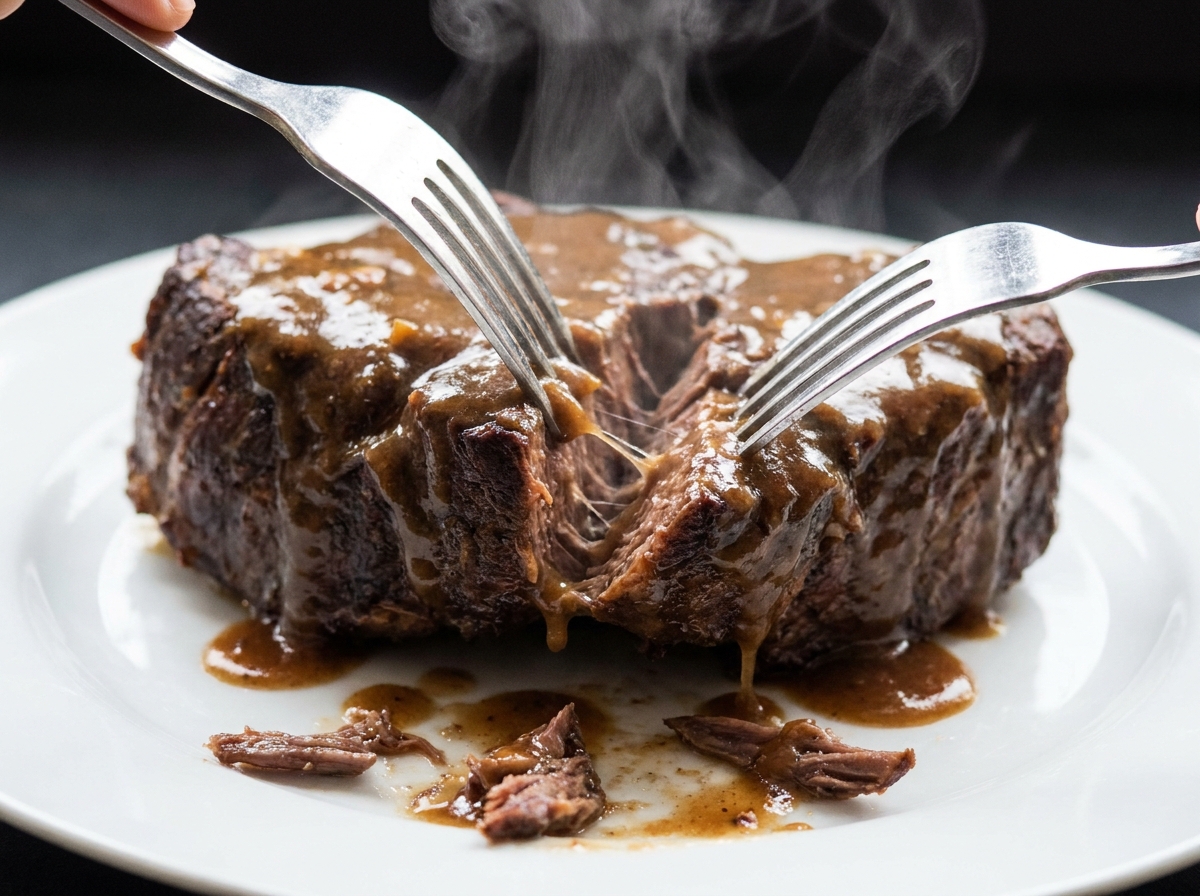
Few meals feel as welcoming as a pot roast slowly cooking until the beef is tender enough to pull apart with a fork. The meat, carrots, potatoes, and onions cook together in a savory broth that gradually becomes a rich, spoonable gravy. It is the kind of practical, comforting dinner that works for a Sunday family meal but is simple enough to prepare for a relaxed weeknight when you have time for a low, slow cook.
This recipe uses a well-marbled beef chuck roast, which is especially suited to braising. Rather than becoming dry when cooked for a long time, the connective tissue gradually softens and helps create a moist, flavorful result. A quick sear builds a deeper flavor before the beef goes into the oven with broth, aromatics, and herbs. The vegetables are added at the right stage so they become tender without completely falling apart.
Why This Pot Roast Works
- Chuck roast is ideal for braising: Its marbling and connective tissue become tender during slow cooking.
- Searing builds flavor: Browning the beef creates savory browned bits that enrich the cooking liquid.
- One-pot convenience: The beef and vegetables cook together, making serving and cleanup easier.
- Flexible cooking method: Use a Dutch oven in the oven or adapt the recipe for a slow cooker.
- Excellent leftovers: The meat reheats well and can be used in sandwiches, bowls, or shepherd’s pie.
Ingredients You’ll Need
- 3½–4 pounds boneless beef chuck roast
- 2 teaspoons kosher salt, or to taste
- 1 teaspoon freshly ground black pepper
- 2 tablespoons olive oil or another high-heat cooking oil
- 1 large yellow onion, cut into thick wedges
- 4 cloves garlic, minced or lightly crushed
- 2 tablespoons tomato paste
- 1 tablespoon Worcestershire sauce
- 2 cups low-sodium beef broth
- ½ cup dry red wine or additional beef broth
- 1 tablespoon fresh thyme leaves, or 1 teaspoon dried thyme
- 1 teaspoon dried rosemary, or 2 small fresh sprigs
- 2 bay leaves
- 1½ pounds Yukon Gold or red potatoes, halved or quartered
- 4 large carrots, peeled and cut into thick pieces
- 2 celery ribs, cut into large pieces
- 1 tablespoon chopped fresh parsley, for serving
Ingredient Notes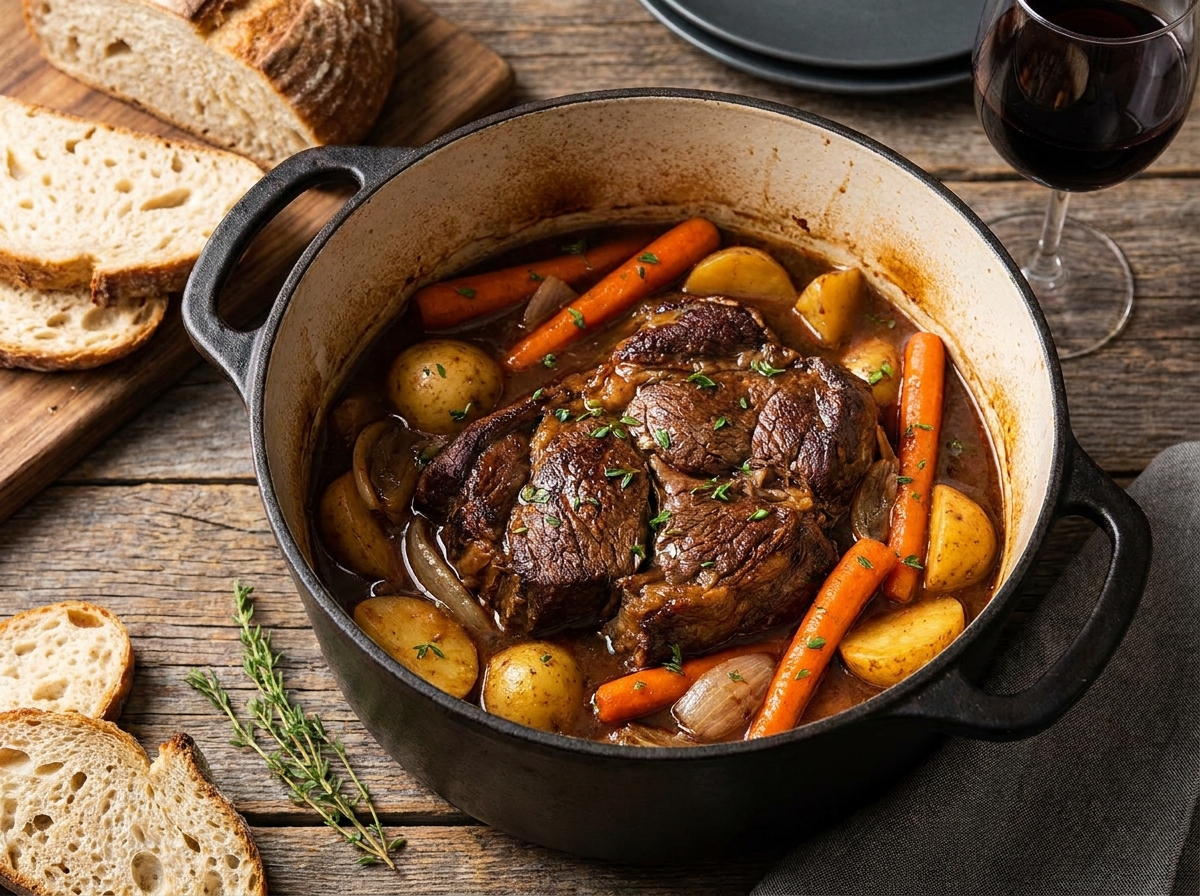
Choose a chuck roast with visible marbling and fairly even thickness. A leaner cut may not become as succulent during a long braise. Yukon Gold potatoes hold their shape nicely and have a naturally buttery texture; red potatoes are another good choice. If you prefer russet potatoes, cut them into large pieces and add them later because they soften more quickly.
Red wine adds depth, but it is not essential. Replace it with more beef broth if you do not cook with wine. Low-sodium broth gives you better control over the final salt level, especially as the cooking liquid reduces.
Equipment
A heavy Dutch oven with a tight-fitting lid is ideal because it browns the beef and holds a steady temperature in the oven. You will also need tongs, a sharp knife, a cutting board, and a ladle. If using a slow cooker, sear the roast in a skillet first for the best flavor, then transfer everything to the cooker.
How to Make Classic Pot Roast
- Prepare the beef. Remove the roast from its packaging and pat it very dry with paper towels. Trim only very large, hard pieces of surface fat; leave the marbling. Season all sides with salt and black pepper. Let it stand while you prepare the vegetables, but keep the total time at room temperature within safe food-handling limits.
- Preheat the oven. Heat the oven to 300°F. Position a rack in the lower-middle part of the oven so the covered Dutch oven fits comfortably.
- Sear the roast. Heat the oil in a Dutch oven over medium-high heat. When hot, add the roast and brown it for about 4–5 minutes per side, including the edges. Work patiently and avoid moving the meat too soon; a good crust develops when the beef makes steady contact with the pan. Transfer the roast to a plate.
- Cook the aromatics. Reduce the heat to medium. Add the onion and celery and cook for 3–4 minutes, scraping up browned bits from the bottom. Stir in the garlic and tomato paste and cook for about 1 minute until fragrant.
- Deglaze the pan. Pour in the red wine, if using, and scrape the bottom of the pot with a wooden spoon. Let it bubble for 2 minutes. Add the beef broth, Worcestershire sauce, thyme, rosemary, and bay leaves.
- Return the beef to the pot. Nestle the roast into the liquid. The liquid should come partway up the sides of the meat rather than completely submerge it. Cover with the lid and carefully transfer the pot to the oven.
- Braise until nearly tender. Cook for about 2 hours, then check the roast. Cooking time varies with thickness and the particular cut. Continue cooking until the meat is beginning to soften but is not yet falling apart.
- Add the vegetables. Arrange the carrots and potatoes around the roast, pushing them into the cooking liquid. Cover and return the pot to the oven for another 60–90 minutes, or until the beef is fork-tender and the vegetables are cooked through. If the vegetables are already tender before the beef, remove them with a slotted spoon and keep them covered while the meat finishes.
- Rest the roast. Transfer the beef to a board or serving platter and let it rest for about 10–15 minutes. Remove the bay leaves and herb stems. Slice the beef against the grain or pull it into large pieces with two forks.
- Finish the gravy. Skim excess fat from the surface of the cooking liquid. Taste and adjust the salt and pepper. For a thicker gravy, remove a little hot liquid, whisk it with 1 tablespoon cornstarch until smooth, then stir the mixture back into the simmering liquid. Simmer briefly until thickened. Add more slurry only if needed.
- Serve. Arrange the beef and vegetables on a warm platter. Spoon gravy over the top and sprinkle with fresh parsley. Serve the remaining gravy at the table.
How to Make Pot Roast in a Slow Cooker
Season and sear the roast in a skillet as described above. Cook the onion, celery, garlic, and tomato paste in the same skillet, then deglaze with the wine or a little broth. Transfer the mixture to a slow cooker, add the remaining broth, Worcestershire sauce, and herbs, and place the roast on top. Cook on LOW for about 8–10 hours or HIGH for about 4–6 hours, checking for tenderness rather than relying only on the clock. Add the potatoes and carrots during the final 3–4 hours on LOW, or when there is enough time for them to become tender without disintegrating. Slow cookers vary, so follow your appliance guidance and ensure the beef reaches a safe temperature and becomes fork-tender.
Tips for Tender, Flavorful Pot Roast
- Do not skip the sear. Browning adds a roasted, savory flavor that the broth alone cannot provide.
- Choose the right cut. Chuck roast is a reliable option for long, moist cooking. Very lean steaks are not ideal substitutes.
- Keep the pot covered. A tight lid helps retain moisture and maintain a steady braising environment.
- Cook until tender, not just until a timer ends. If the roast is still tough, it often needs more time rather than less.
- Cut vegetables into large pieces. Larger pieces are less likely to become mushy during the long cook.
- Rest before slicing. A short rest makes the roast easier to handle and serve.
Easy Pot Roast Variations
Garlic herb pot roast: Add extra garlic, fresh rosemary, and thyme. Finish with chopped parsley for a fresh herbal note.
Mushroom pot roast: Brown 8 ounces of sliced mushrooms after searing the beef. Add them with the onion or during the last hour for a more noticeable mushroom texture.
Tomato-rich pot roast: Add a can of drained diced tomatoes or a little extra tomato paste for a deeper, slightly tangy gravy.
Gluten-free pot roast: Check that the broth and Worcestershire sauce are gluten-free, and thicken the gravy with cornstarch rather than wheat flour.
Low-carb plate: Cook the roast with carrots, celery, and onions, then serve it with mashed cauliflower or sautéed green beans instead of potatoes.
What to Serve with Pot Roast
The potatoes and carrots make this a complete meal, but pot roast also pairs well with buttered green beans, roasted Brussels sprouts, a crisp green salad, or warm dinner rolls. If you make extra gravy, serve it with mashed potatoes or spoon it over the beef at the table. A simple vegetable side adds freshness to the rich braised meat.
Storage, Freezing, and Reheating
Let leftovers cool slightly, then refrigerate them promptly in shallow airtight containers. Store the beef with some cooking liquid so it stays moist. Refrigerated pot roast is best used within 3–4 days. For longer storage, freeze portions with gravy in freezer-safe containers for about 2–3 months for best quality. Thaw overnight in the refrigerator.
Reheat gently in a covered saucepan or Dutch oven over low heat with a splash of broth or water until hot throughout. Individual portions can be microwaved in a covered microwave-safe dish, stirring or turning the food partway through. Reheat leftovers to 165°F. Avoid boiling the beef vigorously, which can make the meat seem dry and break the vegetables apart.
Frequently Asked Questions
What is the best cut of beef for pot roast?
Boneless beef chuck roast is one of the best choices because it has enough marbling and connective tissue to become tender during slow braising. Brisket or bottom round can also be used, but their texture and cooking needs differ.
Why is my pot roast still tough?
It likely needs more time. Chuck roast can remain firm before the connective tissue has softened. Keep it covered and continue cooking, checking every 20–30 minutes until a fork slides in easily.
Should the roast be completely covered with broth?
No. Pot roast is usually braised with liquid coming partway up the sides of the meat. The covered pot traps steam and cooks the upper surface while the lower portion sits in the flavorful liquid.
Can I make pot roast a day ahead?
Yes. Cool and refrigerate the beef in its cooking liquid. The flavors develop overnight, and the chilled fat is easy to remove from the surface before reheating. Warm gently until hot throughout.
Can I cook it without wine?
Absolutely. Replace the wine with additional beef broth. A small splash of balsamic vinegar can add complexity, but it is optional.
Final Thoughts
Classic pot roast is a dependable comfort-food dinner built on simple ingredients and patient cooking. Searing the beef, braising it gently, and adding the vegetables at the right time creates a tender main dish with a flavorful gravy. Serve it straight from the pot for a relaxed family meal, or make it ahead and reheat it for an easy gathering dinner.
Leave a Reply