
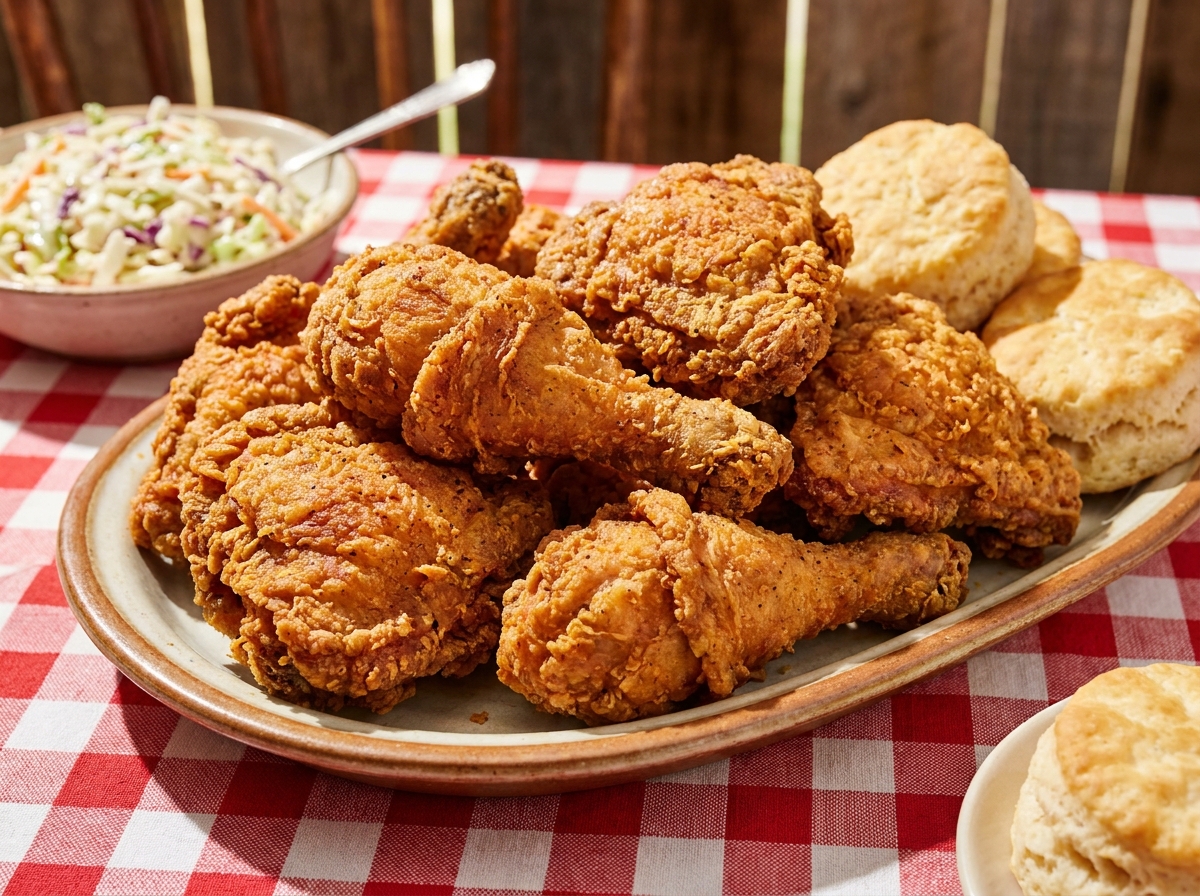
Classic Southern Fried Chicken at Home
Southern fried chicken is loved for its contrast: a deeply golden, crunchy crust around tender, juicy chicken. The best results come from seasoning the chicken well, allowing it time in a buttermilk marinade, and frying at a steady temperature. The coating should be flavorful without being heavy, and the chicken should cook through without the crust becoming too dark.
This recipe uses bone-in, skin-on chicken pieces for traditional flavor and texture. A combination of flour and a little cornstarch creates a crisp coating, while paprika, garlic powder, onion powder, black pepper, and cayenne provide a balanced seasoning. Buttermilk helps the coating cling and adds a gentle tang.
Ingredients
For the Chicken and Marinade
- 3½–4 pounds bone-in, skin-on chicken pieces
- 2 cups buttermilk
- 1 tablespoon hot sauce, optional
- 1½ teaspoons kosher salt
- 1 teaspoon black pepper
- ½ teaspoon paprika
For the Coating
- 2 cups all-purpose flour
- ½ cup cornstarch
- 2 teaspoons paprika
- 1½ teaspoons garlic powder
- 1½ teaspoons onion powder
- 1 teaspoon kosher salt, plus more to taste
- 1 teaspoon black pepper
- ½ teaspoon dried thyme
- ½ teaspoon cayenne pepper, optional
- ½ teaspoon baking powder, optional for a lighter, craggy crust
For Frying
- Neutral oil with a high smoke point, such as peanut, canola, or vegetable oil
- Flaky or fine salt for finishing, as needed
Best Chicken Pieces to Use
A mix of thighs, drumsticks, and breasts gives variety. Thighs and drumsticks are forgiving because their higher fat and connective tissue help them remain juicy. Breast pieces cook more quickly and can dry out if left in the oil too long. If using very large breasts, cut them into smaller portions so they cook at a similar rate to the other pieces. Keep the pieces reasonably uniform in size for more even frying.
How to Make Southern Fried Chicken
- Season and marinate. Pat the chicken dry. In a large bowl, whisk together buttermilk, hot sauce if using, salt, pepper, and paprika. Add the chicken and turn to coat. Cover and refrigerate for at least 4 hours, preferably overnight. Keep raw chicken refrigerated throughout marinating.
- Prepare the seasoned flour. In a wide, shallow dish, whisk together flour, cornstarch, paprika, garlic powder, onion powder, salt, black pepper, thyme, cayenne, and baking powder if using. Mix thoroughly so the seasoning is distributed evenly.
- Create a craggy coating. Drizzle 1–2 tablespoons of the buttermilk marinade into the flour mixture and rub it through with your fingertips. Small flour clumps create the craggy bits that become extra crisp during frying. Do not pour raw chicken marinade back into the flour after dredging.
- Dredge the chicken. Remove one piece of chicken from the marinade, allowing excess to drip off. Press it firmly into the seasoned flour, turn, and press again so all surfaces are coated. Shake off only the loose excess. Place on a wire rack and repeat. Let the coated pieces rest for 10–15 minutes while you heat the oil; this helps the coating adhere.
- Heat the oil. Pour oil into a heavy Dutch oven or deep, sturdy pot, filling it no more than halfway. Heat to 325°F–350°F, checking with a deep-fry thermometer. The oil temperature will drop when chicken is added, so allow room for recovery. Never leave hot oil unattended.
- Fry in batches. Carefully lower a few pieces into the oil using tongs. Do not crowd the pot; crowded chicken lowers the oil temperature and can make the crust greasy. Maintain the oil around 325°F–350°F, adjusting the burner as needed. Turn the pieces occasionally for even browning.
- Cook to a safe internal temperature. Cooking time varies with piece size and oil temperature. Use an instant-read thermometer inserted into the thickest part without touching bone. Chicken must reach at least 165°F. Thighs and drumsticks are often more tender at a higher temperature, but 165°F is the minimum safe temperature.
- Drain and season. Transfer cooked chicken to a wire rack set over a rimmed baking sheet. A rack allows air to circulate and helps keep the bottom crisp. Season lightly with salt while hot if needed. Avoid stacking the pieces or covering them tightly, which traps steam.
- Rest before serving. Let the chicken rest for several minutes so the juices settle and the crust firms. Serve warm.
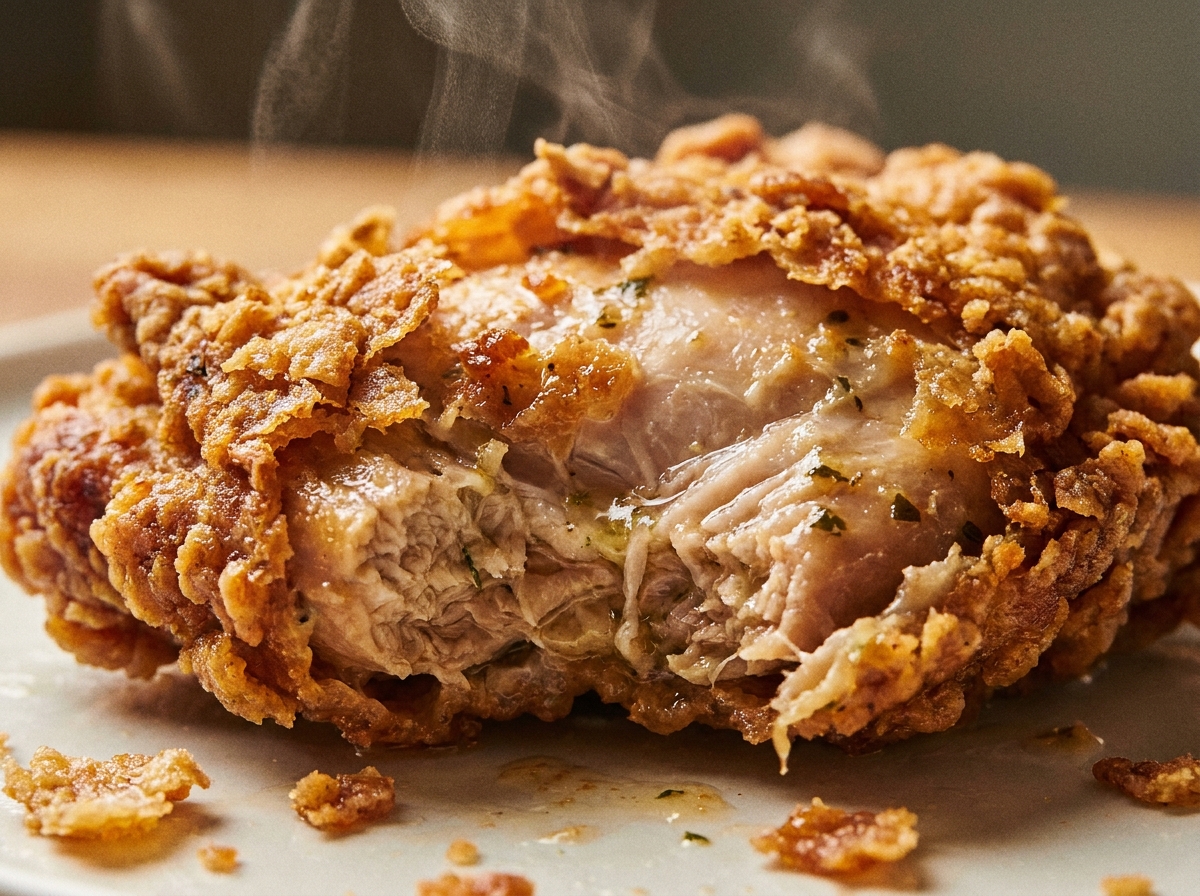
How to Keep Fried Chicken Crispy
- Use a thermometer. Oil that is too cool leads to greasy coating; oil that is too hot browns the outside before the chicken cooks.
- Fry in small batches. Leave space around each piece so the oil temperature can recover.
- Drain on a wire rack. Paper towels can trap steam underneath the chicken. A rack keeps air moving around the crust.
- Do not cover hot chicken. Covering traps moisture and softens the coating.
- Keep cooked batches warm carefully. If necessary, hold them on a rack in a 200°F oven while the remaining pieces cook. Do not leave chicken at room temperature for extended periods.
Common Mistakes to Avoid
Skipping the marinade: A buttermilk soak seasons the chicken and helps the flour coating adhere. Even a few hours is useful, though overnight gives more time for the flavors to develop.
Using too much flour: A thick, loose layer can turn pasty. Press the coating onto the chicken, then shake away flour that has not adhered.
Frying at an uncontrolled temperature: A thermometer is more reliable than judging the oil by appearance. Adjust heat between batches.
Judging doneness by color: Golden coating does not guarantee cooked chicken. Always check the internal temperature with a food thermometer.
Overcrowding the pot: Too many pieces at once cause a large temperature drop and uneven cooking.
Seasoning and Flavor Variations
Extra spicy: Increase the cayenne and add hot sauce to the buttermilk. Keep the salt balanced so the heat does not overpower the chicken.
Herb-forward: Add dried oregano, sage, or a little rosemary to the flour mixture.
Black pepper chicken: Increase freshly ground black pepper and reduce the cayenne for a peppery rather than hot crust.
Gluten-free option: Use a trusted gluten-free all-purpose flour blend and cornstarch. Results vary by blend, so check that the mixture is suitable for frying.
What to Serve with Southern Fried Chicken
Classic sides include mashed potatoes and gravy, coleslaw, biscuits, collard greens, corn on the cob, macaroni and cheese, potato salad, or green beans. A tangy slaw or pickles cut through the richness of the fried coating. For a casual meal, serve the chicken with biscuits and honey or hot sauce.
Storage and Reheating
Refrigerate leftover chicken within 2 hours of cooking in a shallow airtight container. Use within 3–4 days. For longer storage, freeze cooled pieces in freezer-safe packaging; separate layers with parchment to prevent sticking. For best quality, use within about 2–3 months.
To reheat while preserving the crust, place chicken on a wire rack over a baking sheet and warm in a 350°F oven until hot throughout. Check the thickest part with a thermometer; reheated leftovers should reach 165°F. An air fryer can also crisp the outside. Avoid covering the chicken while reheating because trapped steam softens the crust. The microwave is fastest but produces a softer coating.
Frequently Asked Questions
How long should chicken sit in buttermilk?
Four hours is a useful minimum, while overnight is convenient for deeper seasoning. Keep it covered in the refrigerator and do not leave raw chicken at room temperature to marinate.
Can I use boneless chicken?
Yes. Boneless thighs or breasts cook faster, so watch the oil temperature and check internal temperature early. Smaller pieces are also useful for chicken tenders or sandwiches.
Why does the coating fall off?
The chicken may be too wet, the flour may not have been pressed on firmly, or the pieces may have been moved too much immediately after entering the oil. Let dredged chicken rest briefly before frying and handle it gently.
Can I fry the chicken in a shallow pan?
A deep, heavy pot is generally safer and provides more even heat. If shallow-frying, use a sturdy high-sided skillet, enough oil to come partway up the pieces, and turn carefully. Never fill a pan too high with oil.
What oil is best?
Choose a neutral oil with a high smoke point, such as canola, peanut, or vegetable oil. Use enough oil for steady frying and avoid overheating it.
Final Thoughts
Southern fried chicken rewards a little preparation. A well-seasoned buttermilk marinade, a flour-and-cornstarch coating, and controlled frying temperature make the difference between a pale, greasy crust and crisp, golden chicken. Use a thermometer for both the oil and the meat, fry in batches, and serve with fresh, classic sides for a satisfying meal.
Safe Frying Setup and Oil Management
Before heating the oil, set up the work area: place the seasoned flour near the chicken, keep a clean tray for coated pieces, and position a wire rack over a baking sheet for cooked chicken. Use long tongs and keep water away from hot oil. Lower chicken into the pot slowly and gently, moving it away from you to reduce splashing. If the oil smokes, turn off the heat and let it cool; do not add water.
Use a thermometer to monitor the oil between batches. The temperature drops when cold chicken enters the pot, so allow it to recover before adding another batch. If the oil becomes full of burnt flour particles, carefully let it cool and replace it rather than letting those particles darken the next batch.
Keeping Different Pieces Cooking Evenly
Try to fry similar-sized pieces together. Drumsticks and thighs generally need longer than small wings, while large breast pieces may brown before their centers are cooked. If the crust is becoming too dark before the chicken reaches 165°F, transfer the pieces to a rack in a 325°F oven to finish cooking. Check each piece individually, especially when the sizes vary.
What to Do with Leftover Fried Chicken
Cold leftover fried chicken can be served in a picnic-style meal with biscuits, pickles, and slaw. You can also remove the meat from the bones and add it to a salad, sandwich, or wrap. For the best texture, reheat the chicken in the oven or air fryer rather than adding it cold to a hot dish. Discard chicken that has been left at room temperature beyond the recommended food-safety window.
Leave a Reply