
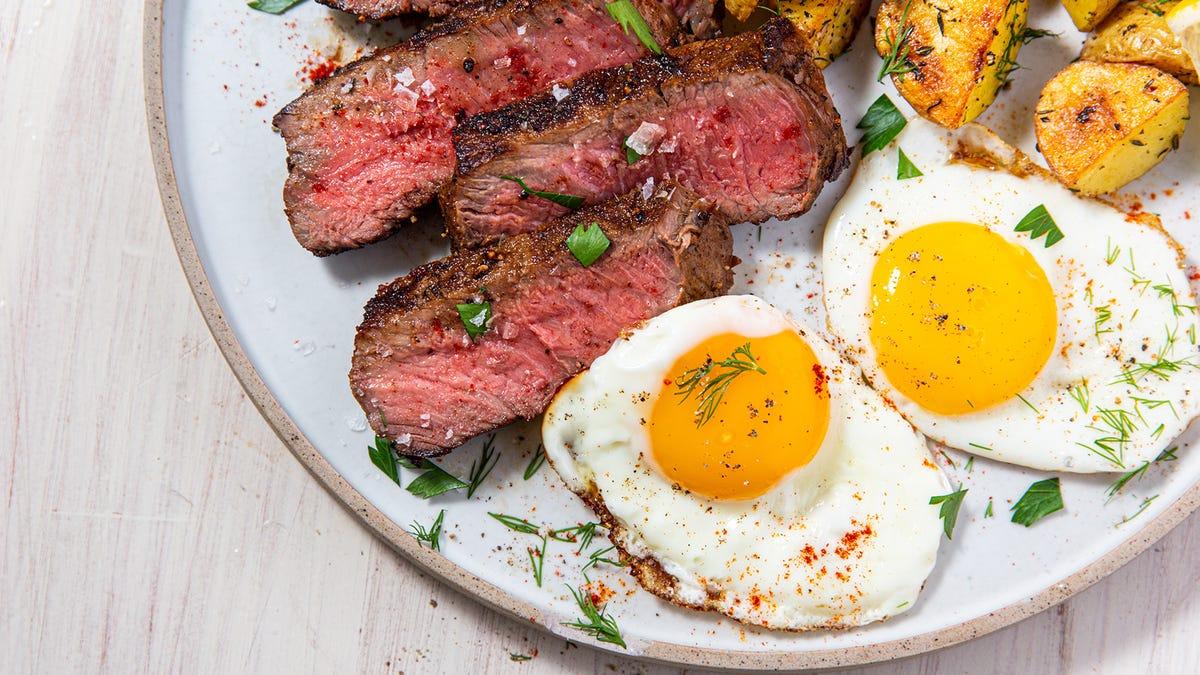
Steak and eggs is a classic breakfast that feels special without requiring a complicated menu. A well-seared steak, eggs cooked just the way you like them, and a few simple sides make a satisfying meal for a weekend brunch, hearty breakfast, or breakfast-for-dinner night.
This recipe uses a tender New York strip or ribeye steak, a hot skillet, and a short resting period to build a flavorful crust while keeping the center juicy. The eggs cook in the same pan after the steak rests, allowing the meal to come together with minimal cleanup. You will also find practical guidance for choosing steak, adjusting doneness, and timing the eggs.
Why You’ll Love This Steak and Eggs Recipe
- Simple but satisfying: Steak and eggs rely on a handful of ingredients and straightforward cooking techniques.
- Flexible portions: Use one larger steak to share or individual steaks for separate plates.
- Easy to customize: Choose sunny-side-up, over-easy, scrambled, or poached eggs.
- One-skillet approach: Sear the steak first, rest it, then cook the eggs in the same pan.
Choosing the Best Steak for Steak and Eggs
New York strip and ribeye are excellent choices because they are flavorful and cook well in a skillet. Ribeye has more marbling, which gives it a rich taste; strip steak is usually a little leaner but still tender. Sirloin is a more budget-friendly option, especially when sliced against the grain before serving. Choose steaks that are fairly even in thickness so they cook consistently.
A steak around 1 to 1 1/4 inches thick is a useful size for pan-searing. Very thin steaks cook quickly and can be harder to brown without overcooking. If the steak is thick, you may need to finish it in a moderately hot oven after searing.
Ingredients You’ll Need
- 2 beef steaks, about 8 ounces each, such as New York strip, ribeye, or sirloin
- 1 tablespoon neutral high-heat oil, such as avocado or canola oil
- 1 tablespoon unsalted butter
- 2 garlic cloves, lightly crushed, optional
- 2 sprigs fresh thyme or rosemary, optional
- 1/2 teaspoon kosher salt, or to taste
- 1/2 teaspoon freshly ground black pepper, or to taste
- 4 large eggs
- 1 to 2 teaspoons butter or oil for cooking the eggs, as needed
- Chopped chives or parsley, optional, for serving
Ingredient Notes and Substitutions
Steak: Use a cut you enjoy and can fit comfortably in your skillet without crowding. If using a leaner cut such as sirloin, avoid cooking it far beyond your preferred doneness because it can become firm.
Oil: Choose an oil that tolerates high heat. Extra-virgin olive oil is less ideal for a very hot sear because it can smoke more readily. A neutral oil helps the steak brown cleanly.
Butter: Butter adds flavor during the final basting stage. Add it after the initial sear rather than at the beginning, so it is less likely to burn.
Eggs: Large eggs work well for this recipe. Cook them in a little butter or oil after the steak has been removed from the skillet. If you prefer firm yolks and whites, cook them until both are set.
How to Make Steak and Eggs
1. Bring the steak toward room temperature briefly
Remove the steak from the refrigerator while you prepare the other ingredients, usually about 15 to 20 minutes. You do not need to leave it out for an extended period. Pat the surface very dry with paper towels; moisture on the surface can prevent a good sear.
2. Season the steak
Season both sides with kosher salt and freshly ground black pepper. Press the seasoning lightly so it adheres. If your steak is especially thick, season the edges too. Prepare the eggs and herbs nearby so you can cook them quickly after the steak rests.
3. Heat the skillet
Place a heavy skillet, preferably cast iron or stainless steel, over medium-high to high heat. Add the neutral oil. When the oil shimmers, carefully lay the steak in the pan, placing it away from you to reduce splatter. Do not move it immediately; allow the surface to develop a brown crust.
4. Sear the first side
Cook for about 3 to 4 minutes, depending on thickness and heat, until the underside is deeply browned. Turn the steak with tongs and sear the second side for another 2 to 4 minutes. Cooking time is only a guide: pan temperature, steak thickness, and starting temperature all affect the result.
5. Add butter and baste
Lower the heat slightly. Add the butter, crushed garlic, and thyme or rosemary if using. When the butter foams, tilt the pan carefully and spoon the melted butter over the steak for about 30 to 60 seconds. This adds flavor and helps finish the surface. Avoid letting the butter turn black or smoke heavily.
6. Check the temperature and rest the steak
Use an instant-read thermometer inserted into the thickest part from the side. For food safety, whole cuts of beef should reach at least 145°F and rest for at least 3 minutes. If you prefer a different doneness, understand that lower temperatures are below the USDA safe minimum. Transfer the steak to a clean plate or board and let it rest while you cook the eggs. Resting helps the juices settle and keeps the steak from losing as much moisture when sliced.
7. Cook the eggs
Reduce the skillet heat to medium-low. If the pan has excessive browned butter or burnt bits, carefully wipe it out; otherwise, leave a little flavorful fat behind. Add a small amount of butter or oil. Crack in the eggs, leaving space between them. For sunny-side-up eggs, cook gently until the whites are set. For over-easy eggs, carefully flip and cook briefly on the other side. For food safety, cook eggs until the whites and yolks are firm, especially when serving people at higher risk from foodborne illness.
8. Plate and serve
Place the eggs on warm plates. Serve the steak whole or slice it against the grain into strips. Add chopped chives or parsley, a little black pepper, and any sides you like. Serve promptly while the eggs are warm.
How to Get a Good Steakhouse-Style Sear
- Dry the surface thoroughly. Excess moisture creates steam and delays browning.
- Preheat the skillet. A properly heated pan helps the steak brown quickly.
- Do not overcrowd the pan. Cook steaks in batches if necessary so the pan temperature stays high.
- Wait before turning. The steak will release more easily once a crust has formed.
- Use a thermometer. Timing alone cannot reliably tell you the internal temperature.
- Rest before slicing. Give the steak at least the recommended 3-minute food-safety rest after it reaches 145°F.
Steak Doneness and Food Safety
Many diners have a preferred steak doneness, but color is not a reliable way to confirm food safety. Use a food thermometer in the thickest part of the steak. U.S. food-safety guidance recommends a minimum internal temperature of 145°F for beef steaks, followed by a 3-minute rest. Ground beef has a different safety target and should not be treated like a whole steak.
Eggs also require care. The FDA advises cooking eggs until the whites and yolks are firm. If you prefer runny yolks, use pasteurized eggs when appropriate and consider the additional food-safety risk, particularly for young children, older adults, pregnant people, and anyone with a weakened immune system.
Easy Steak and Eggs Variations
Garlic herb steak and eggs: Finish the steak with butter, garlic, thyme, and rosemary as described above.
Spicy steak and eggs: Add a pinch of cayenne to the steak seasoning and serve with hot sauce or sliced jalapeños.
Steak and scrambled eggs: Whisk the eggs with a small splash of milk if desired. Cook them over low heat, stirring gently, until softly set or fully cooked to your preference.
Steak and eggs with chimichurri: Spoon a little parsley-based chimichurri over the rested steak for a fresh, tangy contrast. Keep the sauce separate until serving.
Breakfast bowl: Slice the steak and serve it over roasted potatoes or breakfast hash with eggs and sliced green onions.
What to Serve with Steak and Eggs
For a classic diner-style plate, add crispy breakfast potatoes, hash browns, or buttered toast. Sautéed mushrooms, wilted spinach, roasted tomatoes, or sliced avocado add color and freshness. If you want a lighter plate, serve the steak and eggs with a simple green salad or fresh fruit.
Make-Ahead and Leftover Tips
Steak and eggs are best cooked just before serving. You can make the meal easier by seasoning the steak shortly before cooking, washing and chopping herbs, and preparing any sides in advance. Avoid cooking the eggs ahead if you want their best texture.
Refrigerate leftover steak promptly in a shallow airtight container and use within 3 to 4 days. Store eggs separately. Reheat steak gently in a covered skillet over low heat with a teaspoon of water or broth, or enjoy it cold in a salad or breakfast wrap. Reheat leftovers to 165°F. Cooked eggs can become rubbery when reheated, so use gentle heat and avoid repeated reheating.
Frequently Asked Questions
What is the best steak for steak and eggs?
Ribeye and New York strip are flavorful choices for skillet cooking. Sirloin is a more economical option. Choose a steak with an even thickness so it cooks consistently.
Can I cook steak and eggs in the same pan?
Yes. Cook the steak first, transfer it to a clean plate to rest, and then cook the eggs in the same skillet. Lower the heat before adding the eggs so the leftover pan fat does not burn them.
How long should steak rest before serving?
For food safety, USDA guidance calls for a 3-minute rest after a whole beef steak reaches 145°F. A thicker steak may benefit from a little additional resting time for serving quality.
How do I keep steak from becoming tough?
Choose a suitable cut, avoid overcooking, use a thermometer, and slice against the grain when serving. Resting the steak before cutting also helps preserve its juices.
Can I use frozen steak?
Thaw steak safely in the refrigerator before cooking for more even results. Pat it dry before seasoning and searing. Cooking from frozen is possible with a different method, but it is not the approach used in this recipe.
What sides go well with steak and eggs?
Breakfast potatoes, hash browns, toast, sautéed mushrooms, spinach, tomatoes, and fresh fruit all pair well. Choose one or two sides depending on how hearty you want the meal to be.
Classic Steak and Eggs Recipe
Prep time: 10 minutes
Cook time: 15 to 20 minutes
Total time: About 25 to 30 minutes, plus resting
Yield: 2 servings
Ingredients
- 2 beef steaks, about 8 ounces each, such as strip, ribeye, or sirloin
- 1 tablespoon neutral high-heat oil
- 1 tablespoon unsalted butter
- 2 garlic cloves, lightly crushed, optional
- 2 sprigs thyme or rosemary, optional
- 1/2 teaspoon kosher salt
- 1/2 teaspoon black pepper
- 4 large eggs
- 1 to 2 teaspoons butter or oil for the eggs
- Chopped chives or parsley, optional
Instructions
- Pat steaks dry and season both sides with salt and pepper.
- Heat a heavy skillet over medium-high to high heat. Add oil, then sear steaks for about 3 to 4 minutes on the first side.
- Turn and cook another 2 to 4 minutes, adjusting for thickness. Lower heat, add butter, garlic, and herbs, and baste briefly.
- Check the thickest part with a thermometer. For food safety, cook whole beef steaks to 145°F and rest for at least 3 minutes.
- Transfer steak to a clean plate to rest. Reduce skillet heat to medium-low and add a little butter or oil if needed.
- Crack in eggs and cook until the whites and yolks are firm, or to your preference while considering food-safety guidance.
- Serve eggs with the rested steak. Slice steak against the grain if desired and garnish with herbs.
Cook’s note: Steak thickness and stove heat affect cooking time. Use a thermometer rather than relying on minutes alone. Keep the steak resting while the eggs cook so both components reach the table warm.
Final Thoughts
Steak and eggs is a simple meal that rewards good timing. Dry the steak well, give it a hot skillet for a flavorful crust, check its temperature, and let it rest while the eggs cook. Add potatoes, toast, or fresh vegetables to make the plate your own, and serve everything while it is warm.
Helpful References
- USDA Food Safety and Inspection Service: To What Temperature Should I Cook Beef? — safe temperature and resting guidance for whole beef steaks.
- U.S. Food and Drug Administration: Safe Food Handling — safe minimum internal temperatures for meat and eggs.
- FoodSafety.gov: Safe Minimum Internal Temperatures — quick reference for meat, eggs, and leftovers.
Leave a Reply