
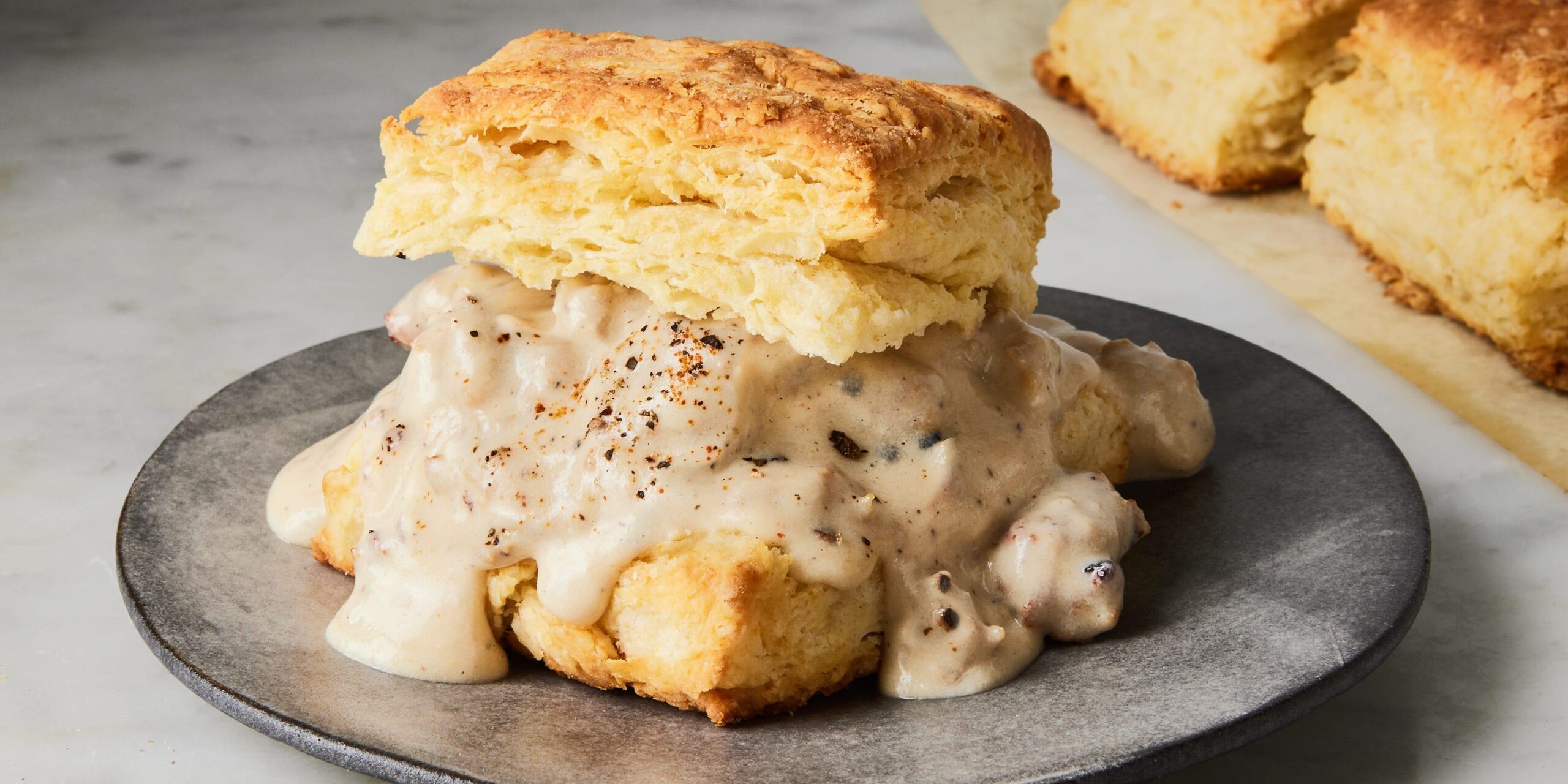
Few breakfasts feel as comforting as warm Southern biscuits covered with creamy sausage gravy. The biscuits should be tall, tender, and flaky, while the gravy should be savory, peppery, and thick enough to coat a spoon without turning pasty. This homemade Southern biscuits and gravy recipe brings both parts together with straightforward ingredients and a practical timeline.
You can bake the biscuits while the sausage gravy simmers, so breakfast comes together in about 45 to 55 minutes. The method also explains how to keep the dough tender, prevent lumpy gravy, and adjust the consistency if it thickens while you prepare the table.
Why You’ll Love This Southern Biscuits and Gravy
- Classic comfort-food flavor: Buttermilk biscuits pair with a rich, peppery gravy made from breakfast sausage.
- Made from everyday ingredients: Flour, butter, buttermilk, milk, and sausage do most of the work.
- Two parts, one easy schedule: Bake the biscuits as the gravy cooks on the stovetop.
- Flexible seasoning: Adjust the black pepper, sage, and cayenne to suit your taste.
What Makes Biscuits and Gravy a Southern Favorite?
Biscuits and gravy is a familiar Southern American breakfast built around tender baking-powder biscuits and a creamy white gravy, often made with pork breakfast sausage. The sausage browns in a skillet, leaving flavorful drippings that help form the base of the gravy. Flour thickens the mixture, milk makes it creamy, and plenty of black pepper gives it its characteristic savory bite.
Families and restaurants make the dish in different ways. Some prefer a simple milk gravy with sausage and pepper; others add sage, a little cayenne, or onion. This version keeps the flavor traditional and the technique approachable.
Ingredients You’ll Need
For the buttermilk biscuits
- 2 cups all-purpose flour, plus a little extra for shaping
- 1 tablespoon baking powder
- 1/2 teaspoon baking soda
- 3/4 teaspoon fine salt
- 1 teaspoon granulated sugar, optional
- 6 tablespoons cold unsalted butter, cut into small cubes or grated
- 3/4 to 1 cup cold buttermilk
- A little buttermilk or milk for brushing the tops, optional
For the sausage gravy
- 1 pound bulk pork breakfast sausage
- 1/4 cup all-purpose flour
- 2 1/2 to 3 cups whole milk, warmed slightly
- 1/2 teaspoon freshly ground black pepper, or more to taste
- 1/4 teaspoon dried sage, optional
- A small pinch of cayenne pepper, optional
- Salt, only if needed after tasting
Ingredient Notes and Substitutions
Buttermilk: Cold buttermilk adds moisture and acidity. Its acidity works with the baking soda to support a tender biscuit crumb. If you do not have buttermilk, stir 2 teaspoons of lemon juice or white vinegar into 3/4 cup milk and let it stand for about 5 minutes. The result is a useful substitute, although cultured buttermilk gives the most dependable flavor.
Butter: Keep it cold until it goes into the flour. Small pieces of butter create pockets that help the biscuits bake up tender and layered. If the butter begins to soften while you work, chill the bowl briefly.
Breakfast sausage: Bulk pork breakfast sausage is convenient because it browns into small pieces. Mild sausage gives you control over the seasoning; hot sausage makes a spicier gravy. Turkey breakfast sausage can be used, but it may release less fat, so add a little butter or oil if the skillet looks dry.
Milk: Whole milk produces a rich, smooth gravy. Two-percent milk works too, although the result may be slightly lighter. Warm milk gently rather than boiling it.
How to Make Southern Biscuits and Gravy
1. Heat the oven and prepare the pan
Heat the oven to 425°F. Line a baking sheet with parchment paper or leave it ungreased. Measure the biscuit ingredients before starting so the dough can be mixed quickly while the butter is cold.
2. Combine the dry ingredients
Whisk the flour, baking powder, baking soda, salt, and optional sugar in a large bowl. This distributes the leavening evenly and helps the biscuits rise consistently.
3. Cut in the cold butter
Add the cold butter. Use a pastry cutter, two forks, or your fingertips to work it into the flour until the mixture resembles coarse crumbs, with a few pea-sized pieces remaining. Do not rub it until completely smooth; visible bits of butter help create a tender texture.
4. Add the buttermilk and shape the dough
Pour in 3/4 cup cold buttermilk and stir gently until a shaggy dough forms. Add a little more only if there are many dry patches that will not come together. Turn the dough onto a lightly floured surface and gently bring it together. Pat it into a rectangle about 3/4 inch thick. Fold it in half, rotate it, and pat it out once more. This simple fold helps create layers without extensive kneading.
5. Cut and bake the biscuits
Cut rounds with a floured biscuit cutter, pressing straight down without twisting. Twisting can compress the edges and interfere with an even rise. Place the biscuits on the baking sheet with a little space between them, or close together for softer sides. Gather scraps gently and cut any remaining biscuits without repeatedly kneading the dough. Brush the tops lightly with buttermilk if desired. Bake for 12 to 16 minutes, until risen and golden on top.
6. Brown the sausage
While the biscuits bake, place the sausage in a large skillet over medium heat. Break it into small crumbles with a wooden spoon and cook until browned and cooked through, stirring occasionally. If there is an unusually large amount of grease, spoon off some, but leave enough fat in the pan to help the flour form the gravy base.
7. Make the gravy base
Sprinkle the flour evenly over the sausage. Stir for about 1 to 2 minutes so the flour coats the meat and cooks briefly. This step helps prevent a raw flour taste. Gradually pour in the warm milk, stirring constantly and scraping the bottom of the skillet as you go.
8. Simmer until creamy
Bring the mixture to a gentle simmer, then lower the heat. Stir frequently for about 5 to 8 minutes, until the gravy thickens enough to coat the back of a spoon. Add black pepper, sage, and cayenne if using. Taste before adding salt because breakfast sausage can already be salty.
9. Serve warm
Split the warm biscuits and arrange them on plates. Spoon the sausage gravy over the cut sides, adding extra black pepper if you like. Serve immediately while the biscuits are tender and the gravy is hot.
Tips for Flaky Biscuits and Smooth Gravy
- Keep the biscuit ingredients cold. Cold butter and buttermilk help the dough stay workable and support a tender bake.
- Handle the dough gently. Mix only until it comes together. Too much kneading can make biscuits dense.
- Do not twist the cutter. Press straight down and lift to help the biscuits rise evenly.
- Use a gradual pour for the milk. Adding it slowly while stirring helps the gravy stay smooth.
- Cook the flour briefly. Stirring the flour with the sausage for a minute or two improves the flavor of the finished gravy.
- Adjust thickness at the end. If gravy becomes too thick, stir in a splash of milk. If it is too thin, simmer gently for another minute or two.
- Season after tasting. Sausage brands vary in salt and spice, so add salt only when needed.
Easy Variations
Spicy sausage gravy: Use hot breakfast sausage or add a little extra cayenne and cracked black pepper.
Herb sausage gravy: Add a small amount of dried sage or fresh thyme. Start lightly so the herbs do not overpower the sausage.
Turkey sausage version: Replace pork sausage with turkey breakfast sausage. Add a teaspoon of butter or oil if needed to provide enough fat for the flour.
Drop biscuits: If you do not want to cut dough, make a slightly softer biscuit dough and drop spoonfuls onto the baking sheet. They will have a more rustic shape but still work well with gravy.
Eggs on the side: Serve with fried or scrambled eggs for a larger breakfast. The yolk from a sunny-side-up egg also makes a rich addition.
What to Serve with Biscuits and Gravy
Because biscuits and gravy is hearty, fresh or lightly seasoned sides balance the plate. Try scrambled eggs, fresh fruit, sliced tomatoes, sautéed greens, or a simple fruit salad. For a diner-style breakfast, add breakfast potatoes or hash browns. Coffee, tea, or orange juice are easy drink pairings.
Make-Ahead, Storage, and Reheating
You can bake the biscuits a day ahead and keep them in an airtight container at room temperature once completely cool. Rewarm them in a 300°F oven for about 5 to 8 minutes. For longer storage, freeze baked biscuits in a freezer-safe bag for up to about 2 months and thaw or reheat before serving.
Refrigerate leftover sausage gravy promptly in a covered container and use within 3 to 4 days. Reheat it in a saucepan over low heat, stirring often and adding a little milk to restore its consistency. The gravy will thicken as it cools, which is normal. Reheat leftovers until steaming hot. For best texture, store biscuits and gravy separately and assemble just before eating.
Frequently Asked Questions
Why are my biscuits dense instead of fluffy?
Dense biscuits usually come from overworking the dough, using warm butter, or adding too much flour while shaping. Mix gently, keep the ingredients cold, and pat the dough rather than kneading it like bread.
Why is my sausage gravy lumpy?
Lumps can form when milk is added too quickly or the flour is not stirred evenly into the sausage fat. Add warm milk gradually while stirring. If small lumps remain, whisk the gravy gently until smooth.
Can I make biscuits and gravy without pork?
Yes. Turkey breakfast sausage is a practical substitute. You can also make a meat-free pepper gravy by using butter in place of sausage drippings and following the same flour-and-milk method.
Can I use self-rising flour?
You can, but adjust the recipe because self-rising flour already contains salt and leavening. For the most predictable result, use all-purpose flour with the baking powder, baking soda, and salt listed above.
How do I fix gravy that is too thick?
Whisk in warm milk a tablespoon or two at a time until it reaches the consistency you want. Warm it gently afterward and taste again for seasoning.
Can I freeze sausage gravy?
You can freeze it, although milk-based gravy may separate slightly when thawed. Thaw it in the refrigerator, reheat slowly, and whisk while adding a little milk to bring it back together. The texture is usually best when freshly made or refrigerated.
Southern Biscuits and Sausage Gravy Recipe
Prep time: 20 minutes
Cook time: 20 to 25 minutes
Total time: About 45 minutes
Yield: 6 servings
Ingredients
Biscuits: 2 cups all-purpose flour; 1 tablespoon baking powder; 1/2 teaspoon baking soda; 3/4 teaspoon salt; 1 teaspoon sugar, optional; 6 tablespoons cold unsalted butter; 3/4 to 1 cup cold buttermilk.
Gravy: 1 pound bulk pork breakfast sausage; 1/4 cup all-purpose flour; 2 1/2 to 3 cups whole milk; 1/2 teaspoon black pepper; 1/4 teaspoon dried sage, optional; pinch of cayenne, optional; salt to taste.
Instructions
- Heat oven to 425°F and line a baking sheet with parchment.
- Whisk flour, baking powder, baking soda, salt, and optional sugar. Cut in cold butter until coarse crumbs form.
- Stir in 3/4 cup buttermilk, adding more only as needed. Gently pat dough to 3/4-inch thickness, fold once, and pat out again.
- Cut biscuits without twisting. Bake 12 to 16 minutes until risen and golden.
- Meanwhile, brown sausage in a skillet over medium heat, breaking it into small pieces.
- Sprinkle flour over the sausage and stir for 1 to 2 minutes.
- Gradually add warm milk while stirring. Simmer 5 to 8 minutes until thickened.
- Season with pepper, sage, cayenne, and salt as needed. Split warm biscuits and spoon gravy over them.
Cook’s note: Biscuit dough should look slightly shaggy rather than smooth. Gravy thickens as it stands, so keep a little extra milk nearby for loosening it before serving.
Final Thoughts
Homemade Southern biscuits and gravy is all about a few simple techniques: cold butter, gentle handling, properly browned sausage, and milk added gradually to the skillet. Once you know those basics, this satisfying breakfast is easy to make on a weekend morning or whenever you want a comforting, filling meal.
Helpful References
- The Kitchn: Biscuits and Gravy — technique and ingredient inspiration for biscuits and sausage gravy.
- Epicurious: Biscuits and Gravy — additional guidance on biscuit preparation and gravy consistency.
- FoodSafety.gov: Safe Minimum Internal Temperatures — food-safety temperature guidance for meat and leftovers.
Leave a Reply