
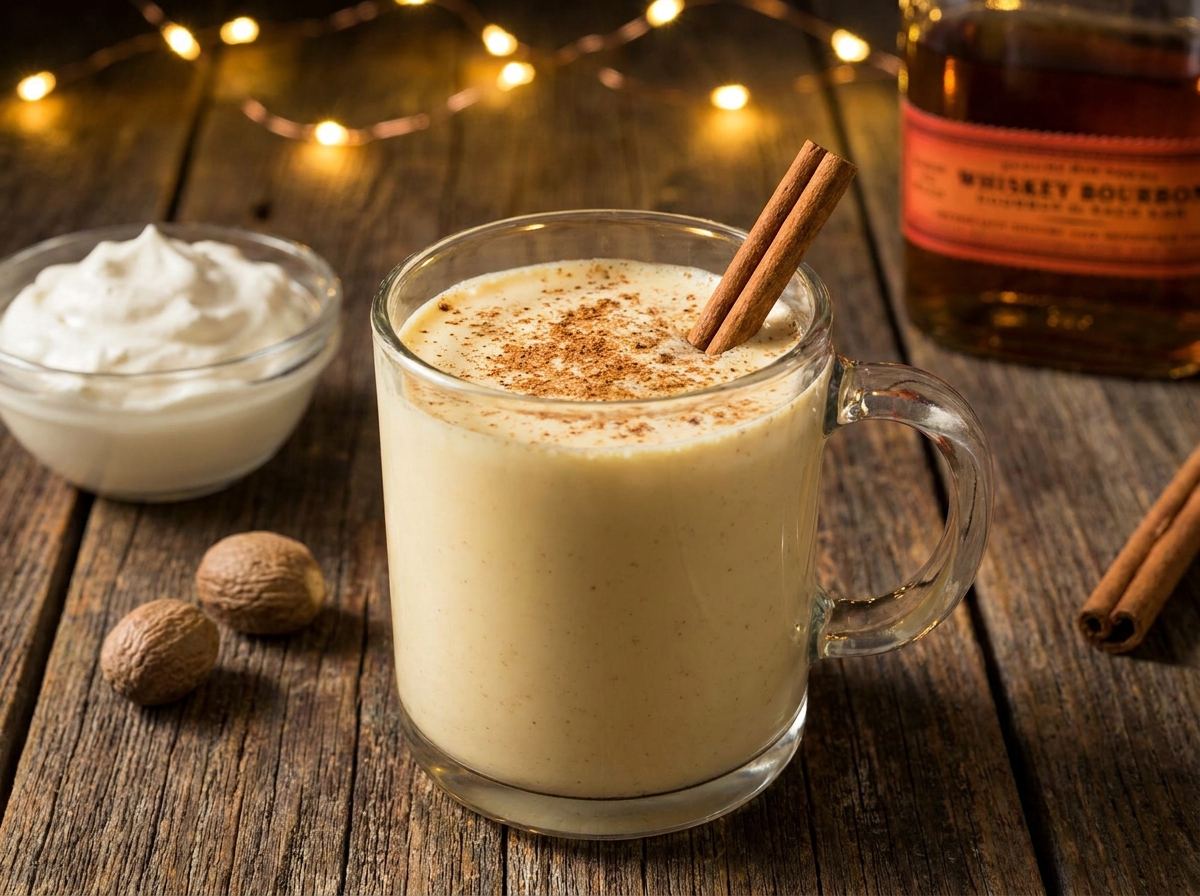
Homemade creamy eggnog is a classic holiday drink with a silky texture, rich dairy flavor, and gentle notes of vanilla and nutmeg. Making it at home gives you control over the sweetness and spice, and the result tastes wonderfully fresh. The process is straightforward: gently cook an egg-yolk custard with milk and cream, flavor it, then chill it until smooth and cold.
This recipe is nonalcoholic, making it suitable for family gatherings. It uses a cooked custard method rather than raw eggs, but careful temperature control is still important. Once chilled, the eggnog thickens slightly and develops a fuller flavor. Serve it in small glasses with a little freshly grated nutmeg for a traditional holiday treat.
Why You’ll Love This Homemade Eggnog
- Rich and creamy: Egg yolks and cream create a smooth custard-like consistency.
- Made with familiar ingredients: Milk, cream, eggs, sugar, vanilla, and nutmeg form the base.
- Adjustable flavor: Control the sweetness and amount of spice.
- Make-ahead friendly: Chill it before serving so the flavor and texture can develop.
- Nonalcoholic: Enjoy it as a family-friendly holiday drink.
Ingredients You’ll Need
- 6 large egg yolks: Give eggnog its signature richness and help thicken the custard.
- 1/2 cup granulated sugar: Sweetens the drink and helps create a smooth yolk mixture.
- 3 cups whole milk: Forms the main liquid base. Whole milk gives the best balance of body and drinkability.
- 1 cup heavy cream: Adds richness and a velvety mouthfeel.
- 1 teaspoon vanilla extract: Adds warmth and rounds out the dairy flavor.
- 1/2 teaspoon ground nutmeg, plus more for serving: Provides the familiar eggnog aroma.
- 1/4 teaspoon ground cinnamon: Optional, for a gentle extra layer of spice.
- Small pinch of salt: Balances the sweetness.
Ingredient Notes
Egg yolks: Separate the eggs while cold, then let the yolks sit briefly so they are easier to whisk. Save the whites for another recipe. Use clean, fresh eggs and cook the mixture to the recommended temperature.
Milk and cream: Whole milk and heavy cream make a classic rich eggnog. You can replace some cream with milk for a lighter drink, although the texture will be thinner. Lower-fat milk can also be used, but it will not taste as full-bodied.
Nutmeg: Freshly grated whole nutmeg has a particularly fragrant flavor. Ground nutmeg is convenient and works well. Start with the amount listed, then add a little more after chilling if you prefer a stronger spice note.
How to Make Homemade Creamy Eggnog
- Whisk the yolks and sugar. Place the egg yolks in a medium heatproof bowl. Add the sugar and whisk until the mixture becomes slightly paler, thick, and smooth. Set the bowl near the stove.
- Warm the dairy. In a saucepan, combine the milk, cream, nutmeg, cinnamon if using, and salt. Heat over medium-low, stirring occasionally, until steaming and small bubbles appear around the edge. Do not bring it to a rolling boil.
- Temper the yolks. While whisking the yolks constantly, slowly pour in a small ladleful of the hot milk mixture. Continue adding the hot liquid in a thin stream, whisking all the time. This gradually warms the eggs and helps prevent scrambling.
- Return to the saucepan. Pour the tempered yolk mixture back into the saucepan. Set the heat to low and cook, stirring continuously with a heatproof spatula, scraping the bottom and corners.
- Cook to a safe temperature. Heat the custard gently until it reaches 160°F, checking with an instant-read thermometer. Do not let it boil. The mixture should lightly coat the back of a spoon, but temperature is the more reliable safety check.
- Add vanilla. Remove the saucepan from the heat and stir in the vanilla extract. If you notice small cooked-egg pieces, strain the mixture through a fine-mesh sieve into a clean bowl.
- Cool safely. Set the bowl in an ice bath and stir occasionally to help it cool quickly. Transfer it to a covered container and refrigerate promptly. Do not leave eggnog at room temperature for extended periods.
- Chill thoroughly. Refrigerate until cold, at least 4 hours. The eggnog will thicken slightly as it chills. Stir or whisk before serving.
- Serve. Pour into small glasses and finish with freshly grated nutmeg. Keep the remaining eggnog refrigerated while serving.
How to Get a Smooth, Creamy Texture
Low, steady heat is essential. High heat can cause the yolks to curdle before the mixture thickens evenly. Tempering the eggs gradually and stirring constantly helps create a smooth custard. Straining is a useful final step if you want an especially silky texture. Remember that homemade eggnog thickens as it cools, so do not keep cooking it simply because it seems thinner than expected while warm.
Food Safety and Storage
Because this recipe contains eggs and dairy, handle it like a perishable custard. Cook the egg mixture to 160°F, cool it promptly, and refrigerate it in a clean, covered container at 40°F or below. Do not leave it out at room temperature for more than 2 hours, or 1 hour if the surrounding temperature is above 90°F.
For best quality, enjoy homemade eggnog within 2–3 days. Stir before serving because a little separation can occur during storage. Discard it if it has been left out too long or develops an unusual smell, appearance, or texture. Do not rely on smell alone to determine whether an improperly stored eggnog is safe.
Make-Ahead Tips
Eggnog is best made several hours before serving because chilling allows the custard to become cold and the flavors to settle. You can prepare it the day before, cool it quickly, and refrigerate it overnight. Keep it covered and give it a good stir before pouring. If it becomes thicker than you like, whisk in a small splash of cold milk just before serving.
Easy Variations
- Extra-spiced eggnog: Add a tiny pinch of ground cloves or allspice along with the nutmeg. These spices are strong, so use them sparingly.
- Maple eggnog: Replace part of the granulated sugar with pure maple syrup. The flavor will be slightly different and the texture may be a little looser.
- Lighter eggnog: Replace some of the heavy cream with additional whole milk. It will be less rich but still creamy.
- Chocolate eggnog: Whisk 1–2 tablespoons cocoa powder into a little warm milk until smooth, then add it to the dairy mixture before tempering.
- Warm eggnog: Gently heat an individual serving over low heat, stirring constantly. Do not boil it or reheat the entire batch repeatedly.
How to Serve Eggnog
Serve eggnog well chilled in small glasses because it is rich. A light dusting of nutmeg is traditional, while a cinnamon stick can make a simple garnish. It pairs nicely with gingerbread cookies, shortbread, sugar cookies, fruitcake, and other holiday desserts. For a party, keep the serving pitcher nested in a bowl of ice and return it to the refrigerator between servings.
Frequently Asked Questions
Does homemade eggnog contain raw eggs?
This recipe uses egg yolks, but they are cooked with the dairy mixture to 160°F. That is different from a raw-egg eggnog recipe. Use a thermometer to verify the temperature.
Why is my eggnog too thick?
Egg yolks thicken the custard as it cooks, and the mixture thickens further when chilled. Whisk in a little cold milk until it reaches the consistency you prefer.
Can I use whole eggs instead of yolks?
Whole eggs will change the texture and flavor. Yolks are used here for a rich, smooth result. For a whole-egg version, use a recipe formulated with the correct proportions and cooking method rather than substituting one-for-one.
Can I make eggnog without heavy cream?
Yes. Replace the cream with whole milk for a lighter drink. It will be less rich and somewhat thinner.
Can I freeze homemade eggnog?
Freezing is not recommended for the best texture. Dairy custards can separate or become grainy after thawing. It is better to make a smaller batch and enjoy it fresh.
Recipe Notes
Temper the yolks slowly, stir continuously over low heat, and use a thermometer to bring the custard to 160°F. Cool promptly, refrigerate, and serve chilled with freshly grated nutmeg. Keep the drink cold while serving.
Final Thoughts
Homemade creamy eggnog is a festive holiday classic that feels special without requiring complicated ingredients. The gently cooked custard method gives it a smooth, rich texture, while vanilla and nutmeg provide the familiar seasonal flavor. Make it ahead, chill it thoroughly, and serve in small glasses alongside your favorite holiday treats.
Why the Tempering Step Matters
Tempering is the gradual process of warming the yolks with hot dairy before returning them to the saucepan. Pouring all the hot milk into the yolks at once can cook the surface of the eggs and create little scrambled pieces. A slow stream, constant whisking, and low heat make the process much more forgiving. If you are new to custard-making, keep the saucepan on a low setting and use a thermometer rather than guessing from thickness alone.
Adjusting the Consistency Before Serving
Eggnog naturally becomes thicker as it chills. If you prefer a drinkable, lighter consistency, whisk in cold milk a tablespoon at a time until it pours easily. If you like a richer dessert-style serving, leave it as prepared and serve smaller portions. Avoid adding large amounts of milk all at once because it can dilute the spice and vanilla flavor.
Serving for a Holiday Gathering
Pour eggnog into a chilled pitcher and set it over a bowl of ice for serving. Keep the main container refrigerated and refill the serving pitcher in smaller amounts rather than leaving the whole batch out. Offer freshly grated nutmeg on the side so guests can add as much as they like. Small glasses are ideal because the drink is rich and satisfying in modest portions.
Leave a Reply