
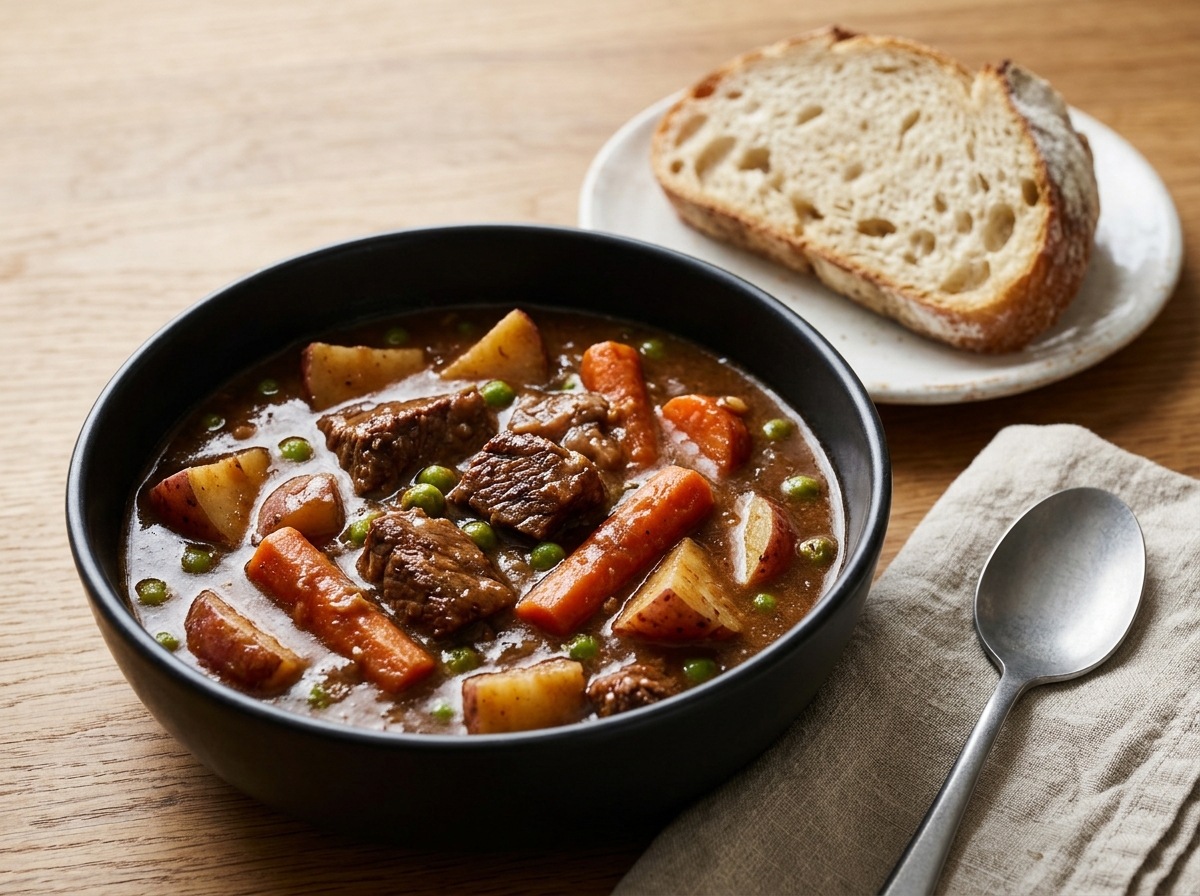
Classic beef stew is the kind of satisfying meal that makes a cool evening feel a little more welcoming. Tender pieces of beef simmer with potatoes, carrots, onion, and garlic in a savory broth until the meat is easy to cut with a spoon and the vegetables are soft without falling apart. A little tomato paste, Worcestershire sauce, and herbs build a rounded, slow-cooked flavor without making the recipe complicated.
The most important parts of a good stew are choosing a suitable cut of beef, browning it well, and allowing enough time for it to become tender. This is not a recipe to rush with high heat. A gentle simmer gives the connective tissue time to soften and helps the broth develop a rich taste.
Why You’ll Love This Beef Stew
- One-pot comfort: The beef and vegetables cook together, making a complete dinner with straightforward cleanup.
- Deep flavor: Browning the beef and vegetables creates the savory foundation for the broth.
- Flexible ingredients: You can adjust the vegetables and herbs based on what you have.
- Excellent leftovers: The flavor develops as the stew rests, making it a practical make-ahead meal.
Best Beef for Stew
Beef chuck is an excellent choice because it contains connective tissue and marbling that become tender during slow cooking. Cut it into evenly sized pieces so they cook at a similar rate. Pre-cut stew meat can work, but the pieces may come from different cuts and vary in tenderness. If using it, trim unusually large pieces and allow extra cooking time if needed.
Ingredients You’ll Need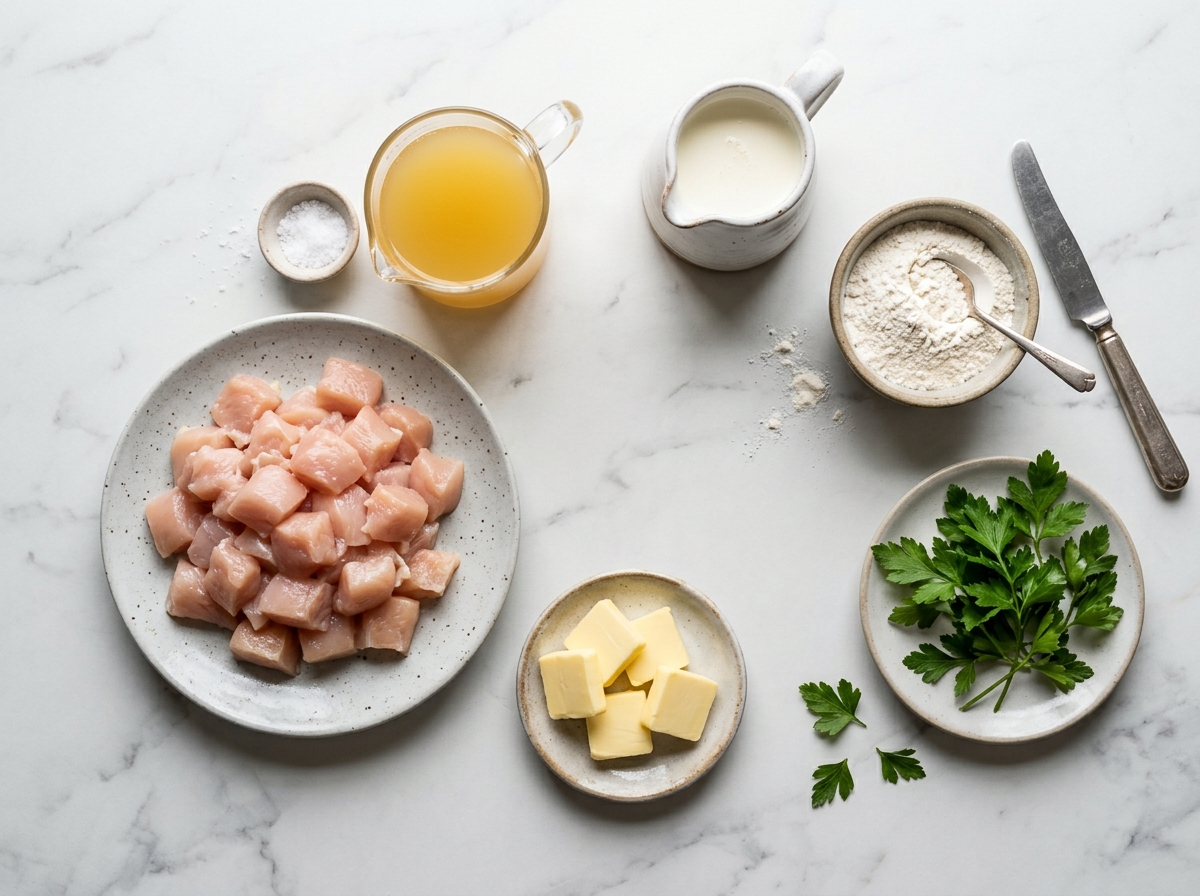
- 2 pounds beef chuck: Cut into 1½-inch cubes. Pat dry before browning.
- 2 tablespoons all-purpose flour: Helps lightly coat the beef and gives the broth body.
- 2 tablespoons neutral oil: For browning the meat.
- 1 large yellow onion: Diced for a savory base.
- 3 garlic cloves: Minced.
- 2 tablespoons tomato paste: Adds depth and a gentle sweetness.
- 4 cups beef broth: Choose a lower-sodium broth so you can control seasoning.
- 1 tablespoon Worcestershire sauce: Adds savory complexity.
- 1 teaspoon dried thyme and 1 bay leaf: Classic stew aromatics.
- 4 carrots: Cut into thick slices.
- 1½ pounds Yukon Gold potatoes: Cut into bite-size chunks.
- 1 cup peas: Frozen peas are convenient; add near the end.
- Salt and black pepper: To taste.
- 2 tablespoons chopped parsley: Optional garnish.
Ingredient Notes and Substitutions
Yukon Gold potatoes hold their shape while becoming creamy inside. Russet potatoes also work, but they soften more readily and can thicken the stew as they break down. Use fresh thyme in place of dried if desired; use about three sprigs. For a gluten-free version, omit the flour and thicken the finished stew with a cornstarch slurry. Check the broth and Worcestershire label if you need to avoid specific allergens.
How to Make Beef Stew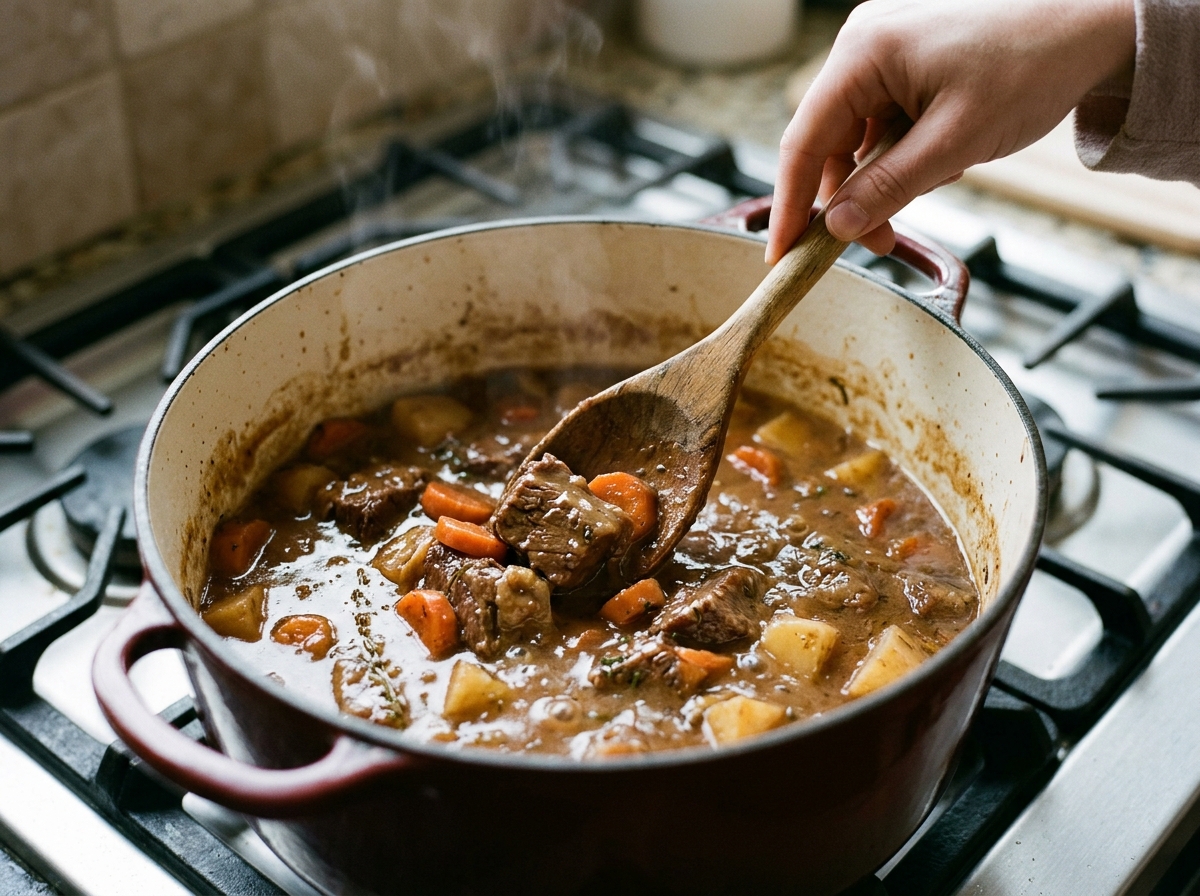
- Prepare the beef. Pat the beef cubes dry with paper towels. Season with salt and pepper, then toss lightly with the flour. Dry surfaces brown more effectively than wet ones.
- Brown in batches. Heat the oil in a heavy Dutch oven over medium-high heat. Add enough beef to cover the bottom without crowding. Brown on several sides, then transfer to a plate. Repeat with the remaining beef, adding a little oil if the pot looks dry.
- Cook the aromatics. Reduce the heat to medium. Add the onion and cook for 4–5 minutes, scraping up browned bits. Stir in the garlic and tomato paste and cook for about 1 minute.
- Build the broth. Pour in a small amount of beef broth and scrape the bottom of the pot to release the browned bits. Add the remaining broth, Worcestershire sauce, thyme, bay leaf, and browned beef with any accumulated juices.
- Simmer the beef. Bring the liquid just to a gentle simmer. Cover partially and cook over low heat for about 1½ hours, stirring occasionally. Avoid a vigorous boil, which can make the meat tough before its connective tissue softens.
- Add the firm vegetables. Stir in the carrots and potatoes. Continue simmering for 30–40 minutes, or until the beef is fork-tender and the vegetables are cooked through.
- Finish with peas. Stir in the peas during the final 3–5 minutes. Remove the bay leaf. Taste the broth and adjust salt and pepper.
- Adjust the consistency. If the stew is thinner than you like, simmer uncovered for a few minutes. For a thicker finish, mash a few potato pieces against the side of the pot and stir them into the broth, or use a small cornstarch slurry.
- Rest and serve. Let the stew stand for 5–10 minutes, then sprinkle with parsley and serve hot.
Tips for Tender Beef and Flavorful Gravy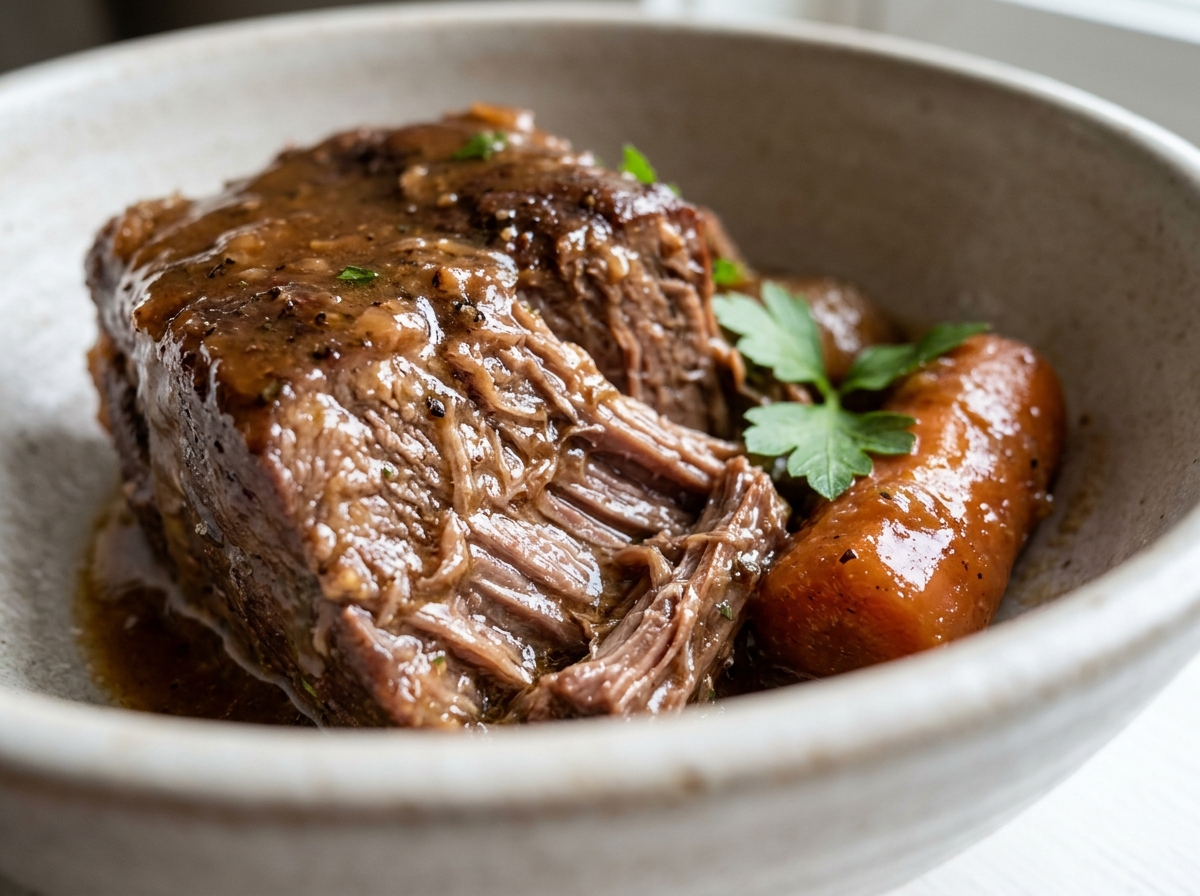
- Dry the beef before seasoning so it browns instead of steaming.
- Brown in batches; an overcrowded pot releases moisture and prevents a good sear.
- Keep the stew at a gentle simmer. If it boils hard, lower the heat.
- Cut carrots and potatoes into generous pieces so they do not disappear during the long cook.
- Season in stages, then make the final adjustment after the broth has reduced.
Slow Cooker Instructions
Brown the beef in a skillet and soften the onion with the garlic and tomato paste. Transfer everything to a slow cooker with the broth, Worcestershire sauce, thyme, bay leaf, carrots, and potatoes. Cover and cook on LOW for 7–8 hours or HIGH for about 4–5 hours, until the beef is tender. Add peas during the final 15 minutes. Slow cookers vary, so use tenderness rather than the clock as your final guide.
Easy Variations
- Mushroom beef stew: Brown 8 ounces sliced mushrooms after the beef and add them with the broth.
- Red wine version: Replace up to ½ cup of broth with dry red wine; simmer it briefly after deglazing before adding the rest of the liquid.
- Extra vegetables: Add celery with the onion or green beans during the final 15 minutes.
- Herb-forward: Add rosemary with the thyme, using a small sprig so it does not overpower the broth.
What to Serve with Beef Stew
Serve beef stew in wide bowls with crusty bread, dinner rolls, biscuits, or a simple green salad. If the stew is especially hearty, a crisp vegetable side such as green beans or roasted broccoli balances the meal. The broth is delicious spooned over a little extra mashed potato or rice.
Make-Ahead, Storage, and Reheating
Beef stew can be made a day ahead and refrigerated after cooling promptly. Store it in an airtight container in the refrigerator for 3–4 days. Reheat gently on the stovetop until steaming hot, adding a splash of broth or water if it has thickened. Microwave individual portions in a covered, microwave-safe bowl, stirring partway through.
For longer storage, freeze cooled stew in meal-size containers for up to 2–3 months for best quality. Potatoes may become slightly softer after freezing. Thaw overnight in the refrigerator and reheat thoroughly. Do not leave cooked stew at room temperature for more than 2 hours.
Frequently Asked Questions
Why is my stew meat still tough?
It may need more time. Chuck becomes tender as its connective tissue slowly breaks down. Keep the stew at a gentle simmer and continue cooking until a fork passes through the beef easily.
Can I use a different cut of beef?
Beef chuck is the most reliable choice, but brisket or round can work. Leaner cuts may not become as succulent, so avoid very quick-cooking steak cuts.
How can I thicken beef stew without flour?
Mix 1 tablespoon cornstarch with 1 tablespoon cold water, stir it into simmering stew, and cook briefly until thickened. Add gradually because the broth will continue to thicken as it stands.
Can I leave out the peas?
Yes. They are a finishing vegetable, not essential to the stew. Try green beans or simply omit them.
Recipe Notes
Use beef chuck, brown it in batches, and cook at a gentle simmer until fork-tender. Add potatoes and carrots after the beef has had time to soften, then add peas at the end. Adjust the broth thickness and seasoning just before serving.
Final Thoughts
This beef stew is a dependable, hearty dinner built from familiar ingredients and patient cooking. Once the beef is tender and the vegetables have absorbed the savory broth, you have a satisfying one-pot meal that works for family dinners, relaxed weekends, and make-ahead lunches.
How to Build More Flavor into the Stew
If you have time, let the browned beef develop a deep crust before turning it. Those browned bits on the bottom of the pot are concentrated flavor, so scrape them up when adding the broth rather than washing the pot. Taste the liquid after the vegetables soften; potatoes absorb seasoning, and the broth may need another pinch of salt or pepper at the end. If the stew tastes flat, a small splash of Worcestershire sauce or a little fresh lemon juice can brighten it without making it taste sour.
Can I Make Beef Stew in a Pressure Cooker?
Yes. Brown the beef using the sauté function, then soften the onion, garlic, and tomato paste. Add broth, Worcestershire sauce, thyme, and beef. Pressure cook on HIGH for about 35 minutes, then allow a natural release according to your appliance guidance. Add the carrots and potatoes and pressure cook briefly again, or cook them separately until tender to avoid over-softening. Appliance sizes and models vary, so follow the manufacturer’s minimum-liquid and pressure-cooking instructions.
Leave a Reply