
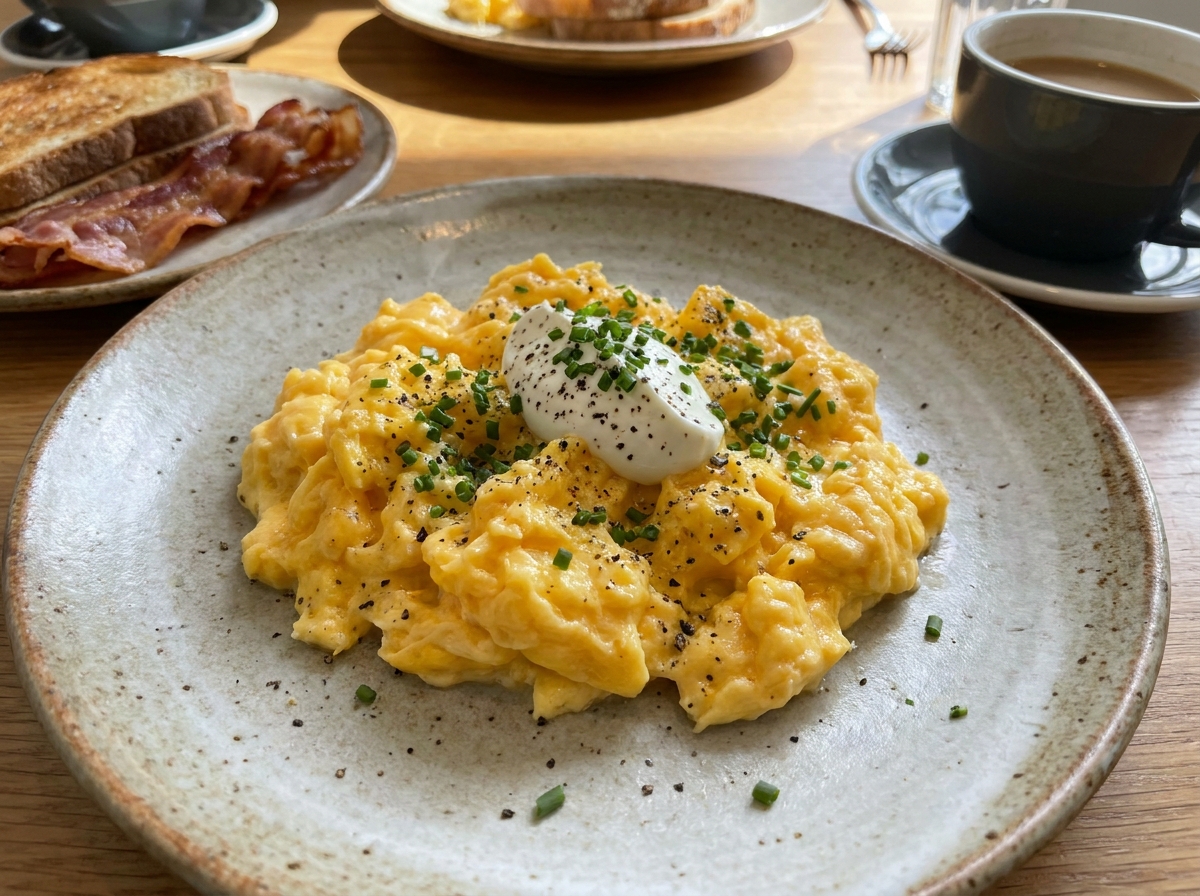
Scrambled eggs are one of the quickest breakfasts to make, but a few small choices determine whether they turn out soft and tender or dry and rubbery. The best everyday method uses fresh eggs, moderate-low heat, a little butter, and gentle stirring. The eggs should be removed from the pan while they still look slightly glossy because residual heat continues cooking them.
This basic recipe keeps the seasoning simple so the flavor of the eggs comes through. You can serve them on toast, alongside breakfast potatoes, or as part of a larger brunch. The same method also makes a good starting point for cheese, herbs, vegetables, or cooked breakfast meat.
Why You’ll Love This Scrambled Eggs Recipe
- Fast breakfast: The eggs cook in just a few minutes.
- Soft texture: Gentle heat helps prevent tough, dry curds.
- Easy to customize: Add cheese, herbs, vegetables, or your favorite seasoning.
- Everyday ingredients: Eggs, butter, salt, and pepper are all you need.
Ingredients You’ll Need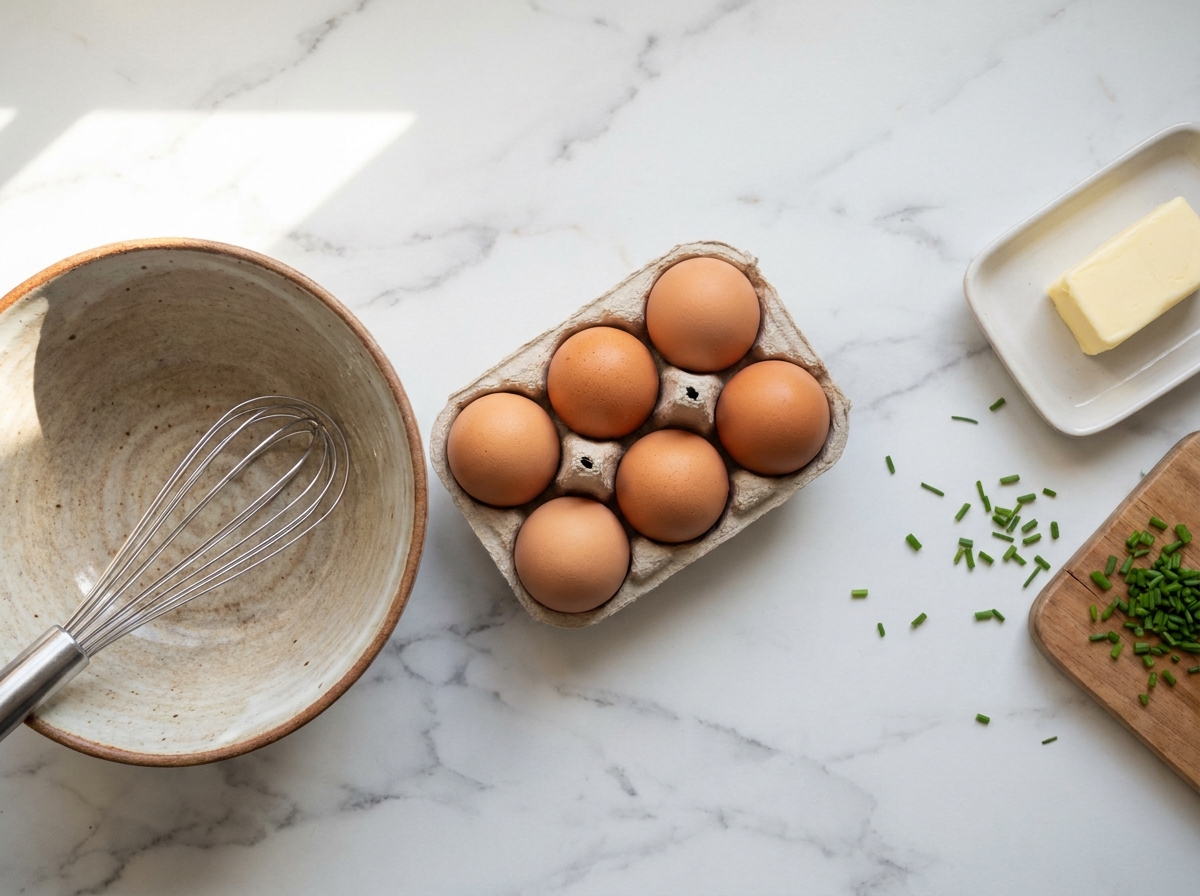
- 4 large eggs: Use fresh eggs and crack them into a bowl first.
- 1 tablespoon milk or cream: Optional. A small splash loosens the mixture, but it is not required.
- 1 tablespoon unsalted butter: Adds flavor and helps prevent sticking.
- ¼ teaspoon kosher salt: Adjust to taste.
- Freshly ground black pepper: To taste.
- 1 tablespoon chopped chives or parsley: Optional garnish.
Do You Need to Add Milk?
No. Eggs can become tender without milk or cream. A small amount can make the mixture slightly looser, but too much liquid may release moisture and create watery eggs. If you prefer a richer result, use a spoonful of cream. The more important factors are gentle heat and stopping the cooking at the right moment.
How to Make Fluffy Scrambled Eggs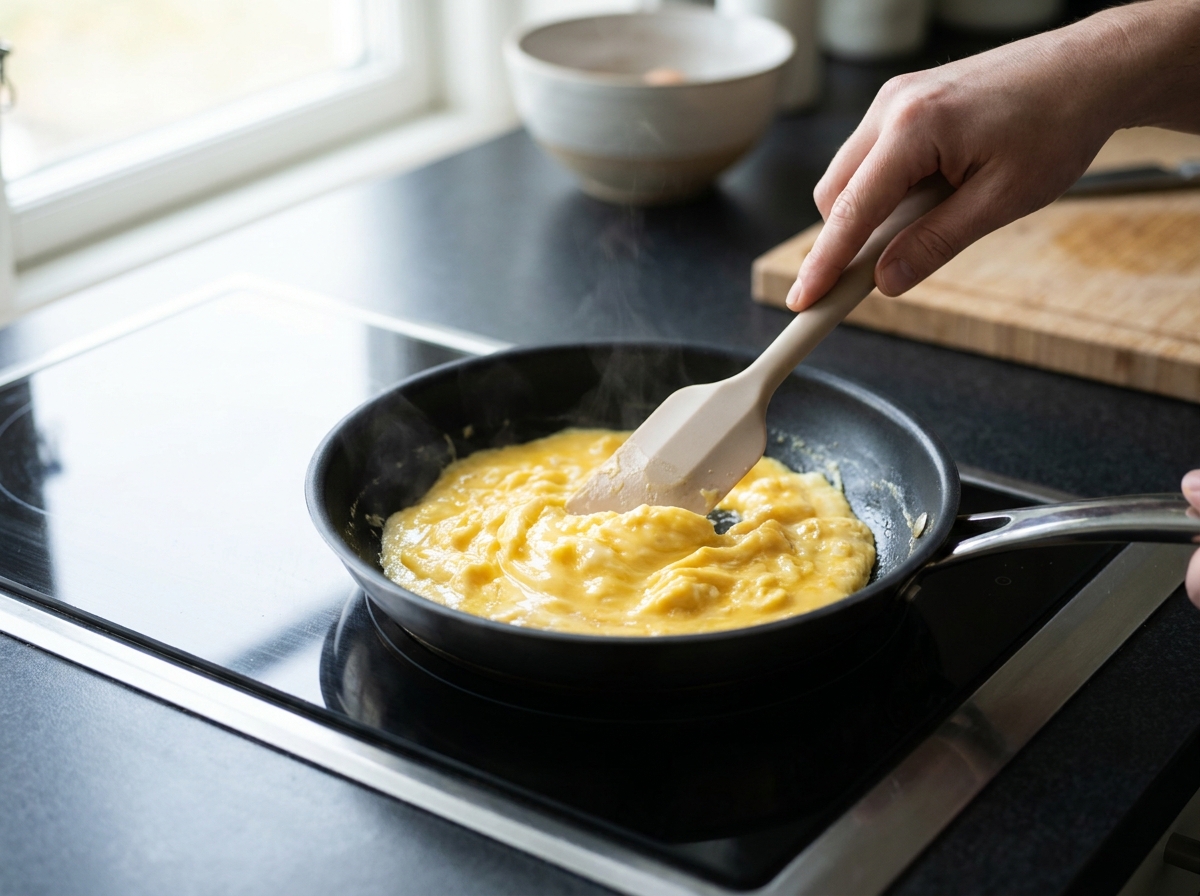
- Crack and inspect the eggs. Crack the eggs into a medium bowl rather than directly into the skillet. This makes it easier to remove any shell and check that the eggs look and smell fresh.
- Whisk gently. Add the milk or cream if using, plus a little salt and pepper. Whisk until the yolks and whites are combined and no large streaks remain. Avoid whipping so much that the mixture becomes excessively foamy.
- Warm the skillet. Place a nonstick skillet over medium-low heat. Add the butter and let it melt, swirling to coat the bottom. The butter should foam gently but should not brown.
- Add the eggs. Pour the egg mixture into the skillet. Let it sit undisturbed for a few seconds until a thin layer begins to set around the edges.
- Stir slowly. Use a silicone spatula to push the eggs from the edges toward the center, allowing uncooked egg to flow into the open spaces. Continue with slow, broad movements to form soft curds.
- Lower the heat if needed. If the eggs are setting too quickly or browning, reduce the heat. Slow cooking gives you more control over the final texture.
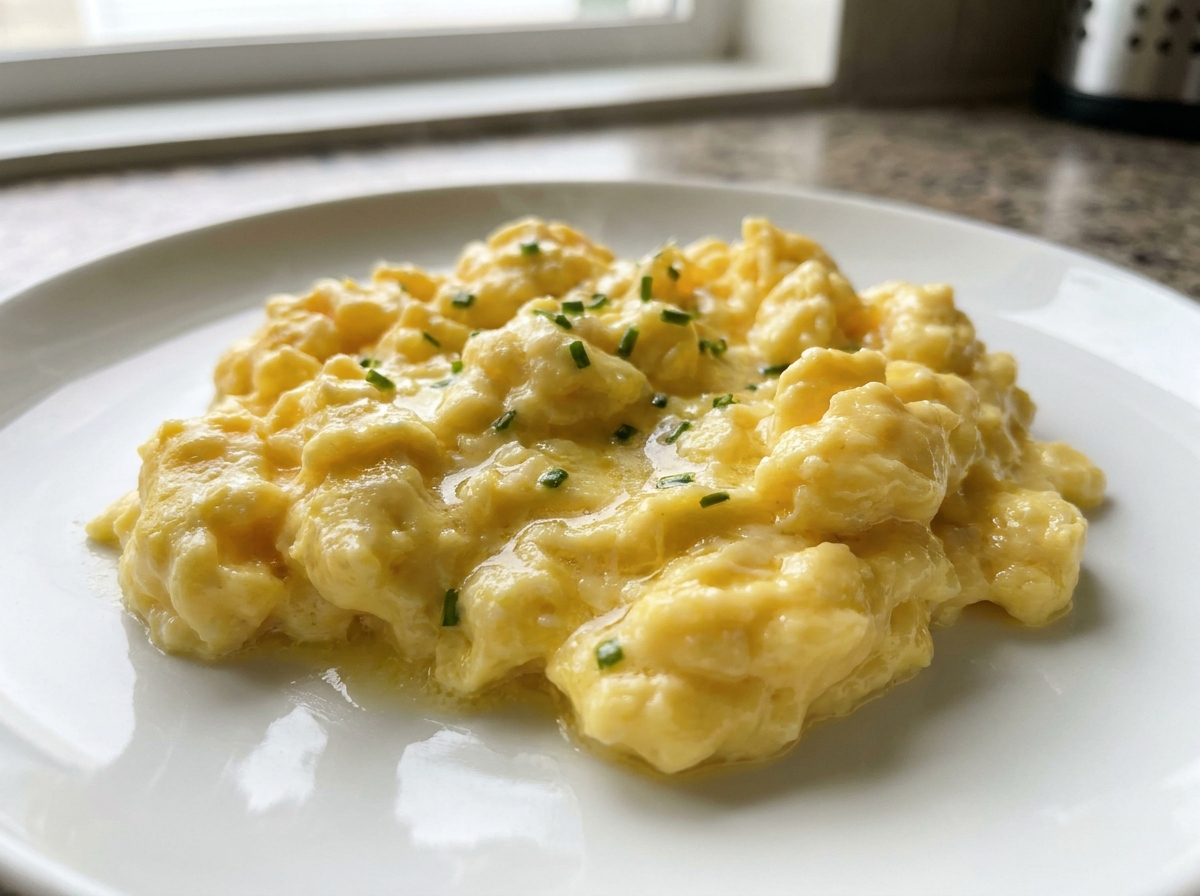
- Remove while glossy. When the eggs are mostly set but still look slightly moist, remove the pan from the heat. They will finish cooking from residual heat.
- Finish and serve. Taste and adjust the seasoning. Add chives or parsley and serve immediately.
Tips for Soft, Fluffy Eggs
- Use a nonstick skillet and a flexible spatula for easy movement.
- Cook over medium-low heat rather than rushing with high heat.
- Whisk the eggs just before cooking for an evenly blended mixture.
- Do not leave the eggs in the hot pan after they are done; transfer them to a plate.
- Cook in batches if making a large quantity. A crowded pan can cook unevenly.
Scrambled Egg Variations
- Cheesy scrambled eggs: Fold in ¼ cup shredded cheddar during the final moments so it melts without overcooking the eggs.
- Herb eggs: Add chopped chives, parsley, dill, or a little tarragon.
- Spinach and eggs: Wilt a handful of chopped spinach in the butter first, then add the egg mixture.
- Tomato and scallion: Cook finely diced tomato until some moisture evaporates, then add sliced scallions and eggs.
- Spicy eggs: Add a pinch of cayenne, smoked paprika, or a few drops of hot sauce.
- Smoked salmon: Fold small pieces of smoked salmon into the eggs after removing the pan from the heat.
What to Serve with Scrambled Eggs
Serve with buttered toast, English muffins, breakfast potatoes, bacon, sausage, avocado, fresh fruit, or sautéed vegetables. For a quick breakfast sandwich, spoon the eggs into a toasted roll with cheese. For brunch, pair them with pancakes or a breakfast casserole and a bowl of fruit.
Food Safety and Storage
Scrambled eggs are best served immediately. If you need to hold them briefly, keep them hot rather than leaving them at room temperature. Refrigerate leftovers promptly in a shallow airtight container and use within 3–4 days. Reheat gently in a skillet over low heat or in the microwave in short intervals, stirring between intervals. Reheated eggs may be firmer than freshly cooked eggs.
Frequently Asked Questions
Why are my scrambled eggs watery?
They may have been cooked too quickly, held too long, or mixed with too much added liquid. Use moderate-low heat, add only a small splash of milk if desired, and serve soon after cooking.
Why do scrambled eggs turn rubbery?
High heat and overcooking are common causes. Cook gently and remove the eggs while they still look slightly glossy.
Should I salt eggs before or after cooking?
Either works. Seasoning before cooking distributes the salt evenly; seasoning at the end lets you adjust precisely. Avoid adding so much salt that the eggs taste harsh.
Can I make scrambled eggs in advance?
They are best cooked fresh because their texture changes as they cool and reheat. For meal prep, prepare the add-ins ahead and cook the eggs shortly before serving.
Recipe Notes
Whisk the eggs until blended, cook them slowly in butter over medium-low heat, and remove the skillet while the curds are still slightly glossy. Serve immediately for the softest texture.
Final Thoughts
Good scrambled eggs do not need complicated ingredients. Gentle heat, a little butter, and a careful finish create soft curds that work for breakfast, brunch, or a quick meal any time of day. Once you learn to stop cooking just before the eggs look completely dry, the method becomes easy to repeat.
Choosing the Right Pan and Cooking Batch Size
A small or medium nonstick skillet is useful for four eggs or fewer because the mixture stays deep enough to form soft curds. If you are cooking for several people, use a larger pan and work in batches rather than piling a large quantity of eggs into a small skillet. A crowded pan takes longer to heat evenly and can leave some portions watery while others overcook. A silicone spatula is especially helpful because it reaches the curved sides and bottom without scratching a nonstick surface.
How to Add Vegetables Without Watery Eggs
Vegetables such as mushrooms, spinach, tomatoes, and zucchini release moisture as they cook. Sauté them separately first until excess liquid has evaporated, then add the eggs. This keeps the finished curds tender instead of watery. If using cheese, grate it finely so it melts quickly. Add delicate herbs after the eggs come off the heat to preserve their fresh flavor.
Serving Scrambled Eggs for a Group
For brunch, prepare the toast, toppings, and side dishes before cooking the eggs. Scrambled eggs lose their soft texture when held for a long time, so cook them as close to serving as possible. If you must hold them briefly, use a warm serving dish and keep them safely hot; do not leave them sitting at room temperature. Cook only as much as guests are likely to eat, then prepare another small batch if needed.
Ways to Make Breakfast More Convenient
Measure seasonings, chop herbs, and prepare any vegetables before heating the skillet. If you are serving eggs with toast, start the bread just before the eggs go into the pan so both are ready together. For a larger breakfast, cook bacon or sausage first, transfer it to a warm plate, and use a clean pan for the eggs. Avoid adding cold ingredients directly from the refrigerator in large amounts, because they can lower the pan temperature and slow cooking.
How to Choose the Texture You Prefer
For larger, pillowy curds, let the egg mixture sit briefly between slow folds so soft layers can form. For smaller, creamier curds, stir more continuously while keeping the heat low. Either approach works as long as the eggs cook gently and are removed before they become dry. If you prefer a firmer scramble, leave the eggs on the heat a little longer, stirring until no liquid egg remains.
Leave a Reply