
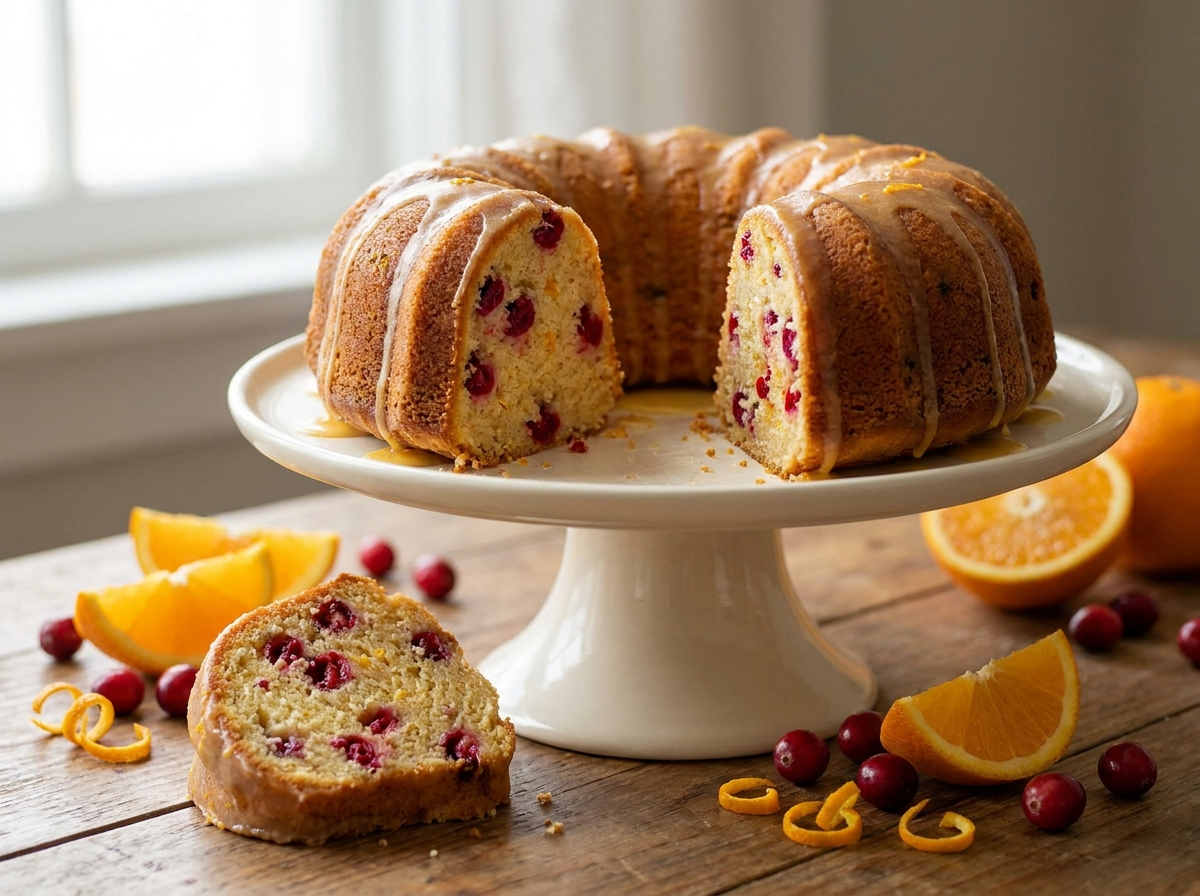
This Cranberry Orange Bundt Cake brings together two flavors that work especially well in cool-weather baking: tart cranberries and fragrant orange. The cake has a soft, buttery crumb with a gentle tang from sour cream, while orange zest and fresh juice give it a bright citrus flavor. Whole cranberries add little bursts of tartness throughout the slices, and a simple orange glaze finishes the cake with just enough sweetness.
Bundt cakes look impressive on a holiday table, but they are also practical because the pan creates a beautiful shape without requiring layers or elaborate frosting. The most important details are preparing the pan carefully, using room-temperature ingredients, and allowing the cake to cool before turning it out. Follow the steps below for a festive cake that is suitable for Thanksgiving, Christmas, brunch, or an everyday afternoon treat.
Why This Cranberry Orange Bundt Cake Works
- Balanced flavor: Orange adds fragrance and sweetness while cranberries bring a tart contrast.
- Moist texture: Butter provides richness, and sour cream helps keep the crumb tender.
- Beautiful without complicated decorating: The Bundt pan creates the shape, and a quick glaze does the rest.
- Flexible fruit options: Fresh or frozen cranberries can both be used.
- Good for gatherings: One cake makes multiple slices and can be baked ahead.
Ingredients You’ll Need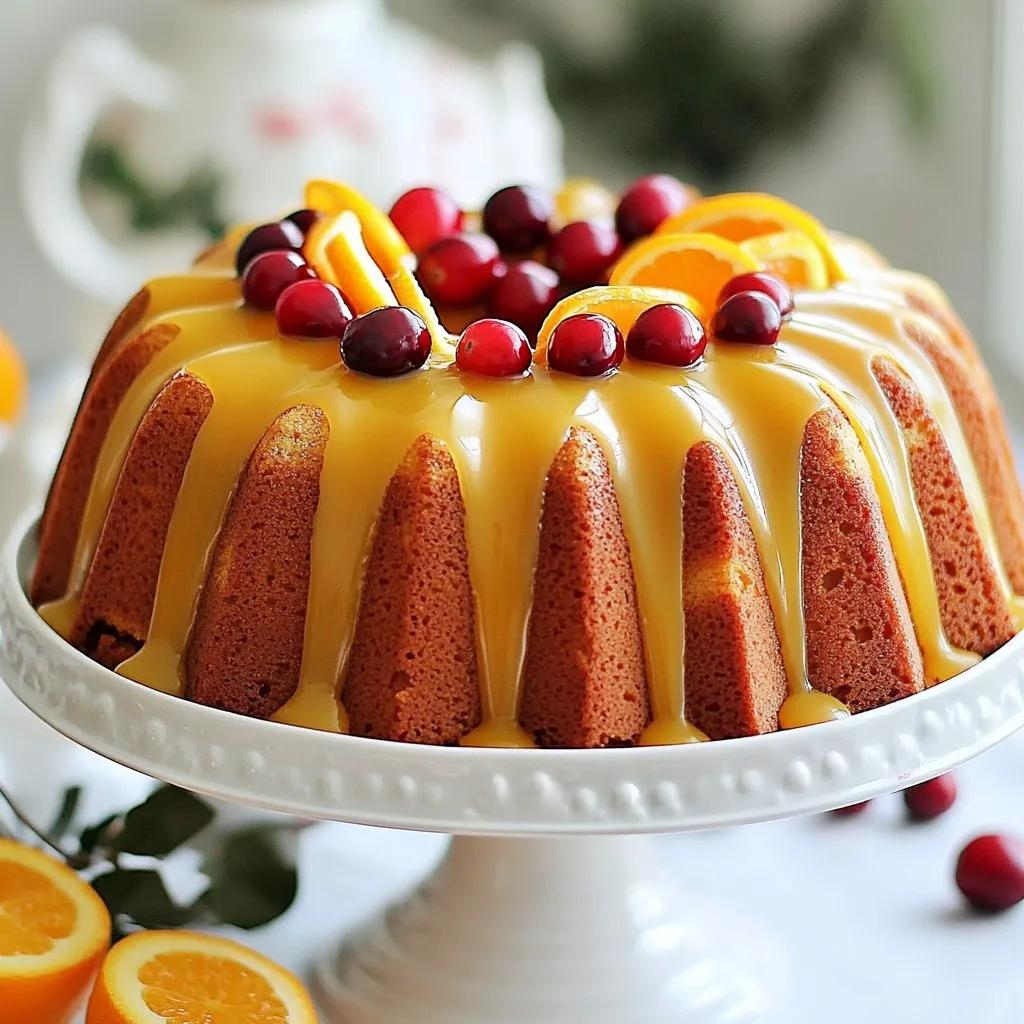
For the cake
- 2¾ cups (345 g) all-purpose flour, plus 1 tablespoon for the cranberries
- 2 teaspoons baking powder
- ½ teaspoon baking soda
- ½ teaspoon fine salt
- 1 cup (226 g) unsalted butter, softened
- 1¾ cups (350 g) granulated sugar
- 2 tablespoons finely grated orange zest, from about 2 oranges
- 4 large eggs, at room temperature
- 2 teaspoons vanilla extract
- ½ cup (120 ml) fresh orange juice
- 1 cup (240 g) full-fat sour cream, at room temperature
- 2 cups (200 g) fresh or frozen cranberries
For the orange glaze
- 1½ cups (180 g) powdered sugar, sifted
- 2–3 tablespoons fresh orange juice
- ½ teaspoon finely grated orange zest, optional
Ingredient Notes and Substitutions
Cranberries: Fresh cranberries give the cake a bright, tart flavor and hold their shape during baking. Frozen cranberries work too; add them straight from the freezer rather than thawing them first. Pat fresh berries dry after washing. If the berries are very large, you can cut some in half so the fruit is distributed more evenly.
Orange zest and juice: Zest the oranges before squeezing them. The colored outer peel contains fragrant oils that provide a stronger orange aroma than juice alone. Avoid grating deeply into the white pith, which can taste bitter. Fresh juice is preferred for the cake and glaze.
Sour cream: Full-fat sour cream contributes moisture and a slight tang. Plain full-fat Greek yogurt can be used in the same amount, although the flavor may be a little tangier and the crumb can differ slightly.
Butter: Use unsalted butter softened until it yields gently when pressed but is not oily or melted. Butter that is too cold will not cream properly; butter that is too warm will not hold enough air.
Bundt pan: This recipe is designed for a 10- to 12-cup Bundt pan. If your pan is smaller, do not fill it more than about two-thirds to three-quarters full. Bake any extra batter in a small loaf pan or muffin cups.
Equipment
Prepare a Bundt pan, a stand mixer or hand mixer, two mixing bowls, a whisk, a flexible spatula, a fine grater or zester, measuring cups and spoons, and a wire cooling rack. A pastry brush can help coat the detailed grooves of the pan with softened butter or baking spray.
How to Make Cranberry Orange Bundt Cake
1. Prepare the oven and Bundt pan
Heat the oven to 350°F (175°C), with a rack positioned near the center. Grease every part of a 10- to 12-cup Bundt pan, including the center tube and detailed grooves. Use baking spray made for baking or brush softened butter into the crevices, then dust lightly with flour and tap out the excess. Set the pan aside. Careful preparation is one of the best ways to prevent a Bundt cake from sticking.
2. Combine the dry ingredients
In a medium bowl, whisk together the flour, baking powder, baking soda, and salt. Whisking distributes the leavening evenly so the cake rises consistently. Set aside.
3. Infuse the sugar with orange zest
Place the granulated sugar and orange zest in the bowl of a stand mixer. Rub them together with your fingertips for about 30 seconds. The sugar should smell strongly of orange and look slightly damp. This simple step releases the aromatic oils from the zest and helps distribute the citrus flavor throughout the batter.
4. Cream the butter and sugar
Add the softened butter to the orange sugar. Beat on medium speed for about 3–4 minutes, scraping the bowl once or twice, until the mixture looks pale and fluffy. Creaming incorporates air that helps give the cake a lighter texture. Do not shorten this step, but avoid beating so long that the butter becomes warm and greasy.
5. Add the eggs and flavorings
Add the eggs one at a time, beating briefly after each addition and scraping down the bowl as needed. Mix in the vanilla and orange juice. The mixture may look slightly curdled at this stage, especially if the ingredients were not exactly the same temperature. That is usually fine; the flour mixture will bring the batter together.
6. Alternate the flour mixture and sour cream
With the mixer on low, add about one-third of the dry ingredients, followed by half of the sour cream. Add another third of the dry ingredients, the remaining sour cream, and then the final dry ingredients. Mix only until the flour disappears. Finish by folding the batter gently with a spatula to catch any flour near the bottom of the bowl. Overmixing after adding flour can make the cake tough.
7. Prepare and fold in the cranberries
Toss the cranberries with 1 tablespoon of flour. This light coating can help keep the berries distributed through the thick batter. Fold them in gently with a spatula, taking care not to crush them. If using frozen cranberries, work quickly so they remain frozen while being added.
8. Fill the pan and bake
Spoon the batter evenly into the prepared Bundt pan. Smooth the top and tap the pan gently on a folded kitchen towel to release large air pockets. Bake for approximately 50–60 minutes. Begin checking around 50 minutes: a wooden skewer inserted into a thick part of the cake should come out clean or with a few moist crumbs, not wet batter. The top should be golden and spring back lightly when touched.
9. Cool before turning out
Place the pan on a wire rack and let the cake cool for 15–20 minutes. Do not leave it in the pan for hours, because moisture can collect and make the cake harder to release. Run a thin, flexible spatula carefully around the outer edge and center tube if needed. Place the rack or a serving plate over the pan, hold both securely, and invert. Lift the pan slowly. If the cake does not release immediately, wait a moment and gently tap the pan; avoid shaking it forcefully.
10. Make the orange glaze
Once the cake is completely cool, whisk the powdered sugar with 2 tablespoons of orange juice and the optional zest. Add more juice a teaspoon at a time until the glaze is thick but pourable. A thicker glaze creates visible ribbons over the ridges; a thinner glaze runs down the sides more quickly.
11. Glaze and serve
Place the cooled cake on a serving plate. Drizzle the glaze slowly over the top, allowing it to flow naturally down the grooves. Let it set for 15–20 minutes before slicing. For a more festive presentation, add a few sugared cranberries or a little extra orange zest just before serving.
Tips for a Moist Cake and Clean Pan Release
- Grease the pan thoroughly. Pay special attention to the center tube and narrow grooves. A light coating in only the wide areas is not enough.
- Use room-temperature ingredients. Butter, eggs, and sour cream combine more evenly when they are not cold.
- Measure flour correctly. Spoon flour into the measuring cup and level it rather than packing it down. Too much flour can make the cake dry.
- Do not overmix. Once the flour is added, mix only until combined.
- Keep frozen cranberries frozen. Thawing can release extra moisture and tint the batter.
- Respect the cooling time. Allow the cake to rest briefly in the pan so it can firm up, then turn it out while it is still slightly warm.
- Glaze only when cool. Warm cake melts the glaze and makes it slide off rather than sit in attractive ribbons.
Fresh, Frozen, or Dried Cranberries?
Fresh cranberries provide the most pronounced tart pops and are especially good when they are in season. Frozen berries are a convenient year-round option and can be used in the same quantity without thawing. Dried cranberries are sweeter and chewier, so they will produce a different cake. If you use dried cranberries, start with about 1 cup and consider soaking them briefly in warm orange juice, then draining and drying them before folding them into the batter. The finished cake will be sweeter and have fewer juicy tart pockets.
Common Mistakes to Avoid
The cake sticks to the pan. This is usually caused by missed grooves, an unsuitable spray, or turning the cake out too early or too late. Grease carefully, flour the pan if needed, and follow the 15–20 minute cooling window.
The center is underbaked. Bundt cakes are thick, so the outside may look done before the middle is ready. Test in a thick section near the center, avoiding a cranberry if possible. If the top browns too quickly, loosely tent it with foil for the remaining baking time.
The crumb is dense or tough. Common causes include too much flour, overmixing, or butter that was too warm during creaming. Measure carefully and mix gently once the dry ingredients are added.
The berries sink. A thick batter and a light flour coating help, but some movement is normal. Fold the berries in at the end and distribute the batter evenly in the pan.
The glaze is too thin. Add more powdered sugar a tablespoon at a time. If it is too thick, add orange juice a few drops at a time.
Make-Ahead and Storage
Bake the cake one day ahead, let it cool completely, and store it covered at room temperature if your kitchen is cool. Add the glaze closer to serving for the neatest appearance. If your kitchen is warm or the cake will be kept longer, refrigerate it in an airtight container. Bring slices toward room temperature before serving for the best buttery texture.
Leftover cake can be stored covered at room temperature for about 2 days in a cool environment, or refrigerated for up to 5 days. For freezing, wrap the unglazed cake tightly in plastic wrap and then foil, or place slices in a freezer-safe container. Freeze for up to 2 months. Thaw overnight in the refrigerator or at room temperature while still wrapped. Add fresh glaze after thawing.
How to Serve Cranberry Orange Bundt Cake
Serve slices with coffee, black tea, or a mug of hot chocolate. For dessert, add a spoonful of softly whipped cream or a small scoop of vanilla ice cream. The tart cranberries and orange glaze make the cake flavorful enough to serve on its own, too. It is a lovely option for a holiday brunch, a dessert buffet, or a simple weekend bake.
This Cranberry Orange Bundt Cake is all about a tender crumb, bright citrus, and tart cranberry pieces in every slice. Prepare the pan carefully, avoid overmixing, and wait until the cake is fully cool before glazing. Those small details make the process easier and help the finished cake look as good as it tastes.
Leave a Reply