
Homemade Flavored Popcorn for Easy Snacking
Homemade popcorn is inexpensive, quick to make, and easy to customize. A pot of freshly popped kernels can become a sweet treat with cinnamon sugar, a savory snack with ranch seasoning, or a bold chili-lime mix for movie night. Making it at home also lets you control the salt, sweetness, and toppings instead of relying on a packaged flavor.
The secret to well-seasoned popcorn is getting the flavor to stick without making the kernels soggy. Start with freshly popped popcorn, remove unpopped kernels, and add melted butter or a light coating of oil in stages. Sprinkle dry seasonings gradually while tossing so the flavor is distributed across the bowl. For powdered cheese or ranch seasoning, a fine texture helps it cling to the popcorn.
Basic Stovetop Popcorn
Ingredients
- ½ cup popcorn kernels
- 2 tablespoons neutral oil, such as canola, avocado, or coconut oil
- Fine salt, to taste
- 2–3 tablespoons melted butter or additional oil, depending on the flavor
Instructions
- Heat the oil. Add the oil to a large, heavy-bottomed pot with a lid. Place 2 or 3 kernels in the pot and cover it.
- Test the temperature. When the test kernels pop, the oil is ready. Remove the pot from the heat for a few seconds, add the remaining kernels, and gently shake so they form an even layer.
- Pop the kernels. Return the pot to medium heat and keep the lid slightly ajar if your pot design allows safe steam release. Shake the pot gently every few seconds to prevent scorching. Keep your face and hands away from escaping steam.
- Listen for the popping to slow. When there are about 2–3 seconds between pops, remove the pot from the heat. Do not wait until every kernel pops, as the popcorn at the bottom may burn.
- Transfer and season. Pour the popcorn into a large bowl, leaving unpopped kernels behind. Drizzle with melted butter or oil and toss. Add fine salt or your chosen seasoning a little at a time.
Five Easy Homemade Popcorn Flavors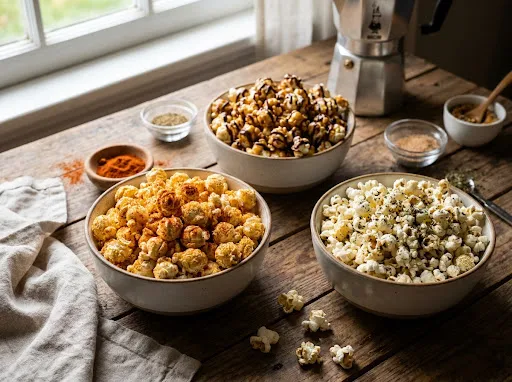
1. Classic Butter and Sea Salt
What you need: 2–3 tablespoons melted butter, ¼ teaspoon fine salt, and freshly popped popcorn.
Drizzle the butter over the popcorn in a thin stream while tossing. Sprinkle with fine salt, toss again, and taste before adding more. Fine salt sticks more evenly than coarse crystals. For a richer flavor, brown the butter gently in a small saucepan until it smells nutty, then let it cool for a moment before drizzling.
2. Cinnamon Sugar Popcorn
What you need: 2 tablespoons melted butter or coconut oil, 2 tablespoons granulated sugar, ½ teaspoon ground cinnamon, and a small pinch of salt.
Mix the sugar, cinnamon, and salt in a small bowl. Lightly coat warm popcorn with butter or coconut oil, then sprinkle the cinnamon mixture over it while tossing. Add the sugar gradually to avoid clumps. This flavor is best served soon after making it, while the coating is fragrant and the popcorn remains crisp.
3. Cheddar Cheese Popcorn
What you need: 2 tablespoons melted butter or neutral oil, 2–3 tablespoons finely powdered cheddar cheese seasoning, and a pinch of garlic powder if desired.
Use a light coating of butter or oil to help the cheese powder adhere. Sprinkle the powder in two or three additions, tossing between each. If using a packaged cheese powder, check its salt level before adding extra salt. A little smoked paprika can add color and a gentle smoky note.
4. Ranch Popcorn
What you need: 2 tablespoons melted butter or oil, 1–2 tablespoons dry ranch seasoning, and a pinch of black pepper.
Drizzle the popcorn lightly with butter or oil, then sprinkle on the ranch seasoning while tossing. Start with less seasoning and add more to taste because store-bought ranch mixes can be salty. For a homemade version, combine dried dill, parsley, garlic powder, onion powder, a little buttermilk powder, and salt. Keep homemade seasoning in an airtight container.
5. Chili Lime Popcorn
What you need: 1–2 tablespoons neutral oil or melted butter, ½ teaspoon chili powder, ¼ teaspoon smoked paprika, a pinch of cayenne, and finely grated lime zest.
Mix the dry spices together. Toss the popcorn with a small amount of oil, sprinkle over the seasoning, and toss again. Finish with finely grated lime zest. Avoid adding much fresh lime juice directly to the popcorn because liquid can soften it. If you want a stronger citrus flavor, use a little powdered lime or zest instead.
How to Make a Sweet Caramel-Style Popcorn
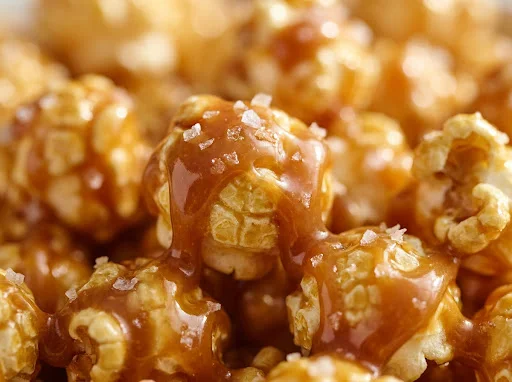
For a crunchy sweet popcorn treat, you can make a simple caramel coating. Combine ½ cup packed brown sugar, 4 tablespoons butter, and 2 tablespoons light corn syrup in a small saucepan. Heat over medium, stirring until the butter melts and the sugar dissolves. Bring to a gentle boil and cook briefly until smooth, taking care because the mixture becomes extremely hot. Remove from the heat and stir in ¼ teaspoon baking soda and a little vanilla; the mixture will foam. Pour carefully over about 8 cups of popped popcorn and toss with a heatproof spatula. Spread on a parchment-lined baking sheet and bake at 250°F for about 35–45 minutes, stirring every 15 minutes, until dry and crisp. Cool completely before breaking into pieces.
Hot sugar can cause serious burns. Use a deep saucepan, keep children away from the cooking area, and never taste the caramel while it is hot. For a simpler sweet snack, choose cinnamon sugar instead.
Tips for Crisp, Well-Seasoned Popcorn
- Use fresh kernels. Older kernels may pop poorly because they have lost moisture.
- Choose a large bowl. Extra room makes it easier to toss seasoning evenly.
- Season in layers. Add butter or oil and dry seasoning in small additions instead of dumping everything in one spot.
- Use fine powders. Finely ground seasoning clings better than large flakes.
- Avoid excess liquid. Too much butter, sauce, or citrus juice can make popcorn lose its crunch.
- Remove unpopped kernels. Transfer popcorn carefully so hard kernels remain in the pot.
- Serve promptly. Most buttered and seasoned popcorn tastes best soon after preparation.
Other Flavor Combinations to Try
Parmesan garlic: Toss with a little olive oil, finely grated Parmesan, garlic powder, and chopped parsley. Use a modest amount of cheese so the popcorn does not become heavy.
Maple pecan: Coat popcorn lightly with a maple-brown sugar glaze and add finely chopped toasted pecans. Cool the mixture on a lined tray before serving.
Everything bagel: Use a small amount of melted butter or oil and sprinkle with everything bagel seasoning. Check the salt level before adding more.
Smoky barbecue: Combine smoked paprika, garlic powder, onion powder, a little brown sugar, and chili powder. Toss with oil so the dry blend adheres.
Chocolate drizzle: Spread plain popcorn on parchment, drizzle with melted chocolate, and let it set. Add a small pinch of flaky salt for contrast. Keep the chocolate coating light so the popcorn remains easy to eat.
Sweet-and-spicy: Combine a little brown sugar, cinnamon, chili powder, and salt. Toss with lightly buttered popcorn for a balanced sweet heat.
Air-Popped and Microwave Options
If you have an air popper, follow the manufacturer’s directions and season the popcorn after popping. Since air-popped popcorn has little surface oil, a light mist of oil or a small amount of melted butter helps dry seasonings stick. You can also use plain microwave popcorn as a shortcut, choosing an unsalted or lightly salted variety so you can control the flavor. Avoid putting loose kernels in a microwave unless you are using a microwave-safe popcorn popper designed for that purpose.
Storage
Let popcorn cool completely before storing it. Place it in an airtight container at room temperature and keep it away from humidity. Plain popcorn can stay crisp for a few days when sealed well, while buttered popcorn is best eaten the same day. Caramel-coated popcorn keeps longer if fully cooled and stored in a dry airtight container. If it becomes soft, spread it on a baking sheet and warm it briefly in a low oven, watching carefully so the coating does not burn.
Frequently Asked Questions
Why is my homemade popcorn chewy?
Popcorn can become chewy when steam is trapped, when too much liquid topping is used, or when it is stored before cooling. Let steam escape while popping, use a light coating of butter or oil, and cool flavored popcorn before sealing it in a container.
How do I get seasoning to stick?
Use a small amount of melted butter or oil and toss the popcorn while adding the seasoning gradually. Very fine powders usually adhere better than coarse seasonings.
Can I make flavored popcorn ahead?
Dry-seasoned popcorn can be prepared a few hours ahead and stored airtight after cooling. Buttered popcorn is best close to serving time. Caramel popcorn can be made ahead once the coating has cooled and hardened completely.
What oil is best for popping corn?
Use a neutral oil with a suitable high smoke point, such as canola, avocado, or refined coconut oil. Avoid oils that smoke easily at stovetop popping temperatures.
Is homemade popcorn healthy?
Plain air-popped popcorn is a whole-grain snack and can be a source of fiber. The nutrition changes depending on how much butter, oil, sugar, cheese powder, or salt you add. Portion size and toppings make the biggest difference.
Final Thoughts
Homemade flavored popcorn is an easy way to turn a simple pantry staple into a snack that suits almost any craving. Start with freshly popped kernels, use just enough butter or oil to help the seasoning stick, and add flavor gradually. Whether you choose cheddar, ranch, cinnamon sugar, chili lime, or a crunchy caramel coating, making popcorn at home lets you create a bowl that tastes exactly the way you like it.
Leave a Reply